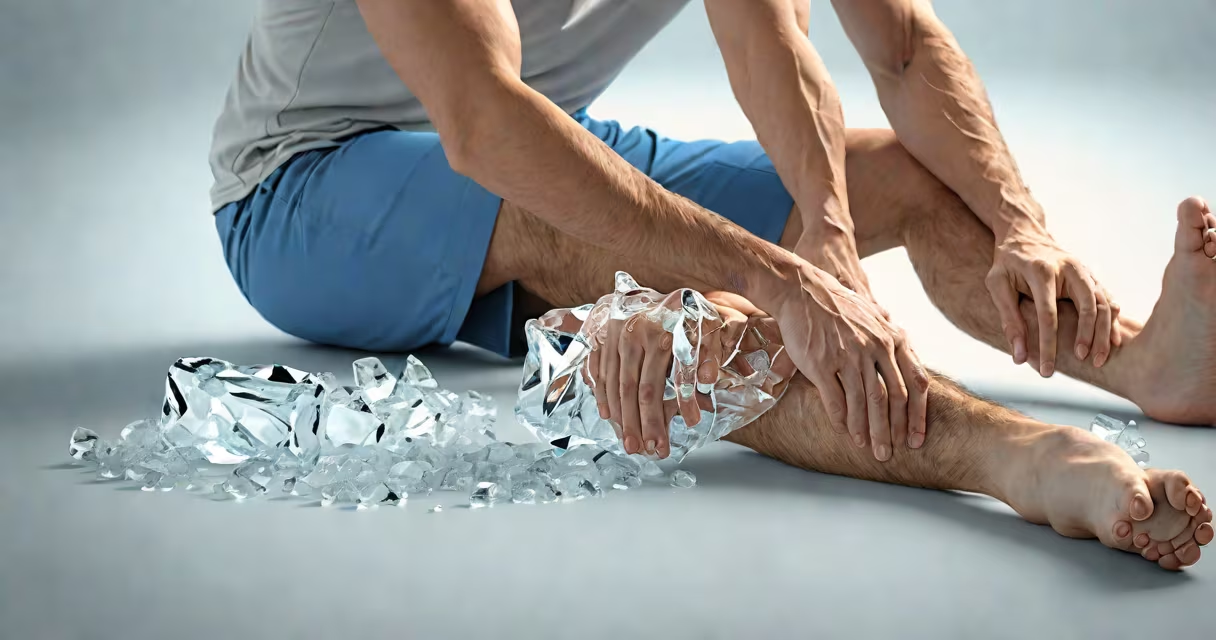
A groin pull, or groin strain, occurs when the muscles in the inner thigh are overstretched or torn, often during sudden movements like sprinting, kicking, or changing direction. It results in pain, tenderness, and reduced mobility in the upper inner leg near the pubic bone.
Immediate action reduces recovery time and prevents worsening. The RICE method-rest, ice, compression, and elevation-is the standard first response. Apply ice for 15-20 minutes every 2-3 hours during the first 48 hours. Avoid heat, massage, or stretching until inflammation subsides.
Most mild to moderate groin pulls heal within 2-6 weeks with proper care. Severe strains involving complete muscle tears may require medical evaluation and physical therapy. Returning to activity too soon increases risk of re-injury.
Groin pulls typically happen during explosive movements. A soccer player who cuts sharply to avoid a defender may feel a sudden pop or sharp sting in the inner thigh. Runners accelerating from a stop or dancers pivoting quickly can experience similar injuries.
The injury affects the adductor muscle group-adductor longus, brevis, and magnus-which pull the legs together. Overuse, poor warm-up, or muscle imbalances increase risk. Pain usually starts at the hip crease and radiates down the inner thigh.
Grade 1 strains involve minor tearing with mild pain and full function. Grade 2 strains cause moderate pain, swelling, and difficulty walking. Grade 3 strains involve complete rupture, severe pain, bruising, and inability to bear weight. Most cases are Grade 1 or 2.
For a groin pull, stop activity immediately. Lie down and apply ice to the injured area for 15-20 minutes every 2-3 hours for the first 48 hours. Use a cloth barrier to prevent frostbite.
Compression with an elastic bandage helps reduce swelling. Improve the leg above heart level when resting. Avoid activities that stretch the inner thigh-running, jumping, kicking, or side lunges-for at least 5-7 days.
After 48 hours, if swelling has decreased, begin gentle range-of-motion exercises. Sit on a chair and slowly bring your knees together. Hold for 5 seconds and release. Repeat 10 times twice daily. Progress to standing adduction exercises only when pain-free.
See a healthcare provider if pain persists beyond 10 days, worsens, or involves bruising, swelling, or inability to walk. Imaging such as MRI may be needed to rule out tendon tears or avulsion fractures, especially in athletes.
Physical therapists use targeted rehab programs. A 2021 study published in Journal of Orthopaedic & Sports Physical Therapy found that patients who began early controlled mobilization had faster return-to-sport times than those who rested completely for 10 days.
Return to sport should follow a step-by-step plan: pain-free walking → light jogging → sport-specific drills → full participation. Jumping and pivoting should not resume until strength and flexibility match the uninjured side.
| Recovery Phase | Duration | Activity Guidelines |
|---|---|---|
| Acute (0-3 days) | 3-5 days | Rest, ice, compression, elevation. No weight-bearing on injured leg. |
| Subacute (4-10 days) | 6-10 days | Gentle range-of-motion exercises. Begin light walking if pain-free. |
| Rehabilitation (11-21 days) | 2-3 weeks | Add resistance bands, single-leg balance drills, progressive strengthening. |
| Return to Activity (22+ days) | 3-6 weeks | Gradual reintroduction to sport-specific movements. Monitor for pain. |
Many people restart running or sports too soon. A 2019 study in British Journal of Sports Medicine found that 43% of athletes returned to play before full strength was restored, leading to reinjury rates of 31% within six months.
Applying heat too early worsens swelling. Heat increases blood flow, which can amplify inflammation in the acute phase. Wait until pain and swelling have reduced-usually after 48 hours-before using heat.
Stretching the groin during the first week can delay healing. The injured tissue is fragile. Stretching may cause micro-tears and prolong recovery. Focus on controlled motion and gradual progression instead.
I once pulled my groin during a pickup basketball game. I felt a sharp twinge when pivoting. I stopped, sat down, and applied ice. By day two, swelling had reduced. I began seated knee squeezes with a rolled towel between my knees-10 reps, twice daily.
After 10 days, I walked without limping. I added resistance band adductions at home. After three weeks, I returned to light jogging. Full return took five weeks. I avoided jumping until strength tests matched both sides.
Prevention includes changing warm-ups before activity. A 2020 review in Scandinavian Journal of Medicine & Science in Sports showed that athletes doing 10 minutes of changing warm-up before training reduced groin injury rates by 40%.
Strengthening the adductors and hip stabilizers reduces recurrence. Exercises like side-lying leg lifts, clamshells, and glute bridges improve neuromuscular control. Perform them 2-3 times weekly even after recovery.
For persistent pain beyond six weeks, consult a specialist. Chronic groin pain may stem from referred pain, nerve entrapment, or underlying structural issues-not just muscle strain.
Understanding what to do for a groin pull begins with stopping activity and protecting the injury. Follow the RICE protocol, progress gradually, and avoid returning too soon. If symptoms persist, seek professional guidance to ensure full recovery and prevent long-term issues.