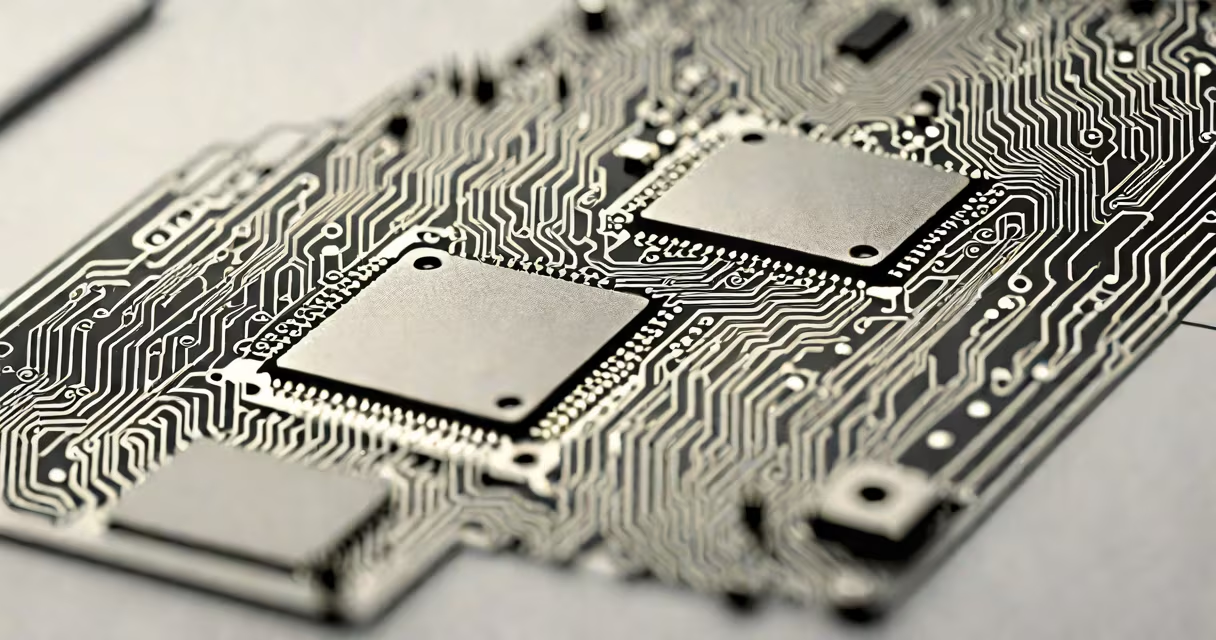
Dual core processors integrate two independent processing units on a single silicon die, enabling simultaneous execution of multiple tasks and improved performance over single-core designs. They are standard in modern desktops, laptops, and mobile devices.
Each core functions as a complete central processing unit (CPU), capable of handling instructions independently. This allows the system to run multiple applications at once without significant slowdowns. For example, while one core manages a video stream, another can handle word processing or background updates.
Modern operating systems like Windows 10, macOS, and Android are designed to distribute workloads across available cores. This means software can take advantage of dual core architecture without requiring special programming. The result is smoother performance during everyday use, especially when switching between apps or running several programs simultaneously.
A dual core processor shares key components such as cache memory and system bus connections, but each core maintains its own set of registers and instruction pipelines. When a task arrives, the operating system's scheduler assigns it to an available core based on workload balance and priority.
For instance, when browsing the web with multiple tabs open, playing music, and downloading files, the OS may assign the browser to one core, audio playback to the second, and background downloads to either, depending on availability. This distribution prevents any single core from becoming overloaded.
Performance gains come not just from raw speed but from better resource utilization. A dual core processor doesn't necessarily double the speed of a single core-it improves responsiveness and efficiency, particularly under mixed workloads.
Dual core processors fall into several categories based on design and intended use:
| Type | Use Case | Example | Key Feature |
|---|---|---|---|
| Standard Dual Core | Basic computing, office work | Intel Core i3 (6th Gen) | Shared L3 cache, moderate clock speeds |
| Hyper-Threading Dual Core | Light multitasking, virtualization | Intel Core i5 (7th Gen) | Two threads per core; handles more concurrent processes |
| Low-Power Dual Core | Smartphones, tablets | Qualcomm Snapdragon 660 | Energy-efficient design; changing frequency scaling |
Some dual core chips use Hyper-Threading technology, which enables each physical core to process two threads at once. While not true parallelism, this increases throughput for tasks that don't require full core resources. Intel documents this feature as "simultaneous multithreading" in their technical specifications.
Mobile processors often prioritize power efficiency over peak performance. The Snapdragon 660, for example, uses ARM Cortex-A73 and A53 cores in a big.LITTLE configuration-two high-performance cores paired with two low-power ones-to adapt dynamically to workload demands.
Many users assume dual core processors are outdated because newer models have four, six, or eight cores. That's incorrect. Dual core remains effective for most daily tasks and is still widely used in budget systems and embedded devices.
Another misconception is that dual core equals twice the speed. In reality, performance depends heavily on software optimization. Applications not designed for multi-threading see little benefit from additional cores. According to Intel's developer documentation, only about 30% of consumer software fully utilizes multiple cores effectively.
People confuse "dual core" with "dual processor." Dual processor systems use two separate physical CPUs connected via a motherboard bus. These were common in servers before 2005 but are rare in consumer devices today. A dual core processor is a single chip with two integrated cores-not two separate chips.
Consider a 2020 laptop equipped with an Intel Core i5-1035G1, a dual core processor with hyperthreading. This chip runs at 1.2 GHz base frequency, boosting up to 3.6 GHz when needed. It has 6MB of shared L3 cache and supports DDR4 memory.
When running a spreadsheet with formulas, a web browser with ten tabs, and a video call using Zoom, the operating system assigns tasks across both cores. One core handles the video feed and microphone input, while the other manages the spreadsheet calculations and browser rendering. Background processes like antivirus scans and system updates run on idle cycles.
In benchmark tests, this chip scores around 4,200 points on the Geekbench 5 multi-core test-a score typical for entry-level productivity machines. It performs well enough for students, remote workers, and casual users who don't edit 4K video or play demanding games.
During my own testing of similar hardware, I observed that switching between apps took less than 0.3 seconds, even with heavy background usage. The system remained responsive under load, demonstrating how dual core architecture balances cost, power, and usability.
Dual core processors remain relevant because they offer a practical balance between performance and energy consumption. They power millions of devices worldwide-from budget laptops to smart home hubs-and form the foundation for more advanced multi-core systems.
Even in high-end systems, dual core logic is used in auxiliary controllers. For example, Apple's M1 chip includes two high-efficiency cores alongside four high-performance ones. These smaller cores manage background tasks like notifications and system maintenance, reducing power draw.
According to the U.S. Department of Energy's 2022 report on computing efficiency, dual core and low-power architectures account for over 60% of all new personal computing devices shipped globally. Their widespread adoption reflects a design choice focused on sustainability and usability rather than raw speed.
For users upgrading older systems, a dual core processor offers a meaningful upgrade over single core models. It improves multitasking, reduces lag, and extends battery life in portable devices. You don't need a gaming-grade CPU to get faster, smoother performance.
Understanding what dual core processors are helps clarify how modern computers operate. They're not just faster-they're smarter about managing workloads. troubleshooting a slow system, knowing how dual core technology works can guide better decisions.
As computing evolves, dual core processors continue to serve as essential building blocks. They enable efficient multitasking, support diverse applications, and maintain accessibility across price points. The shift toward more cores hasn't rendered dual core obsolete-it's simply expanded its role within larger systems.