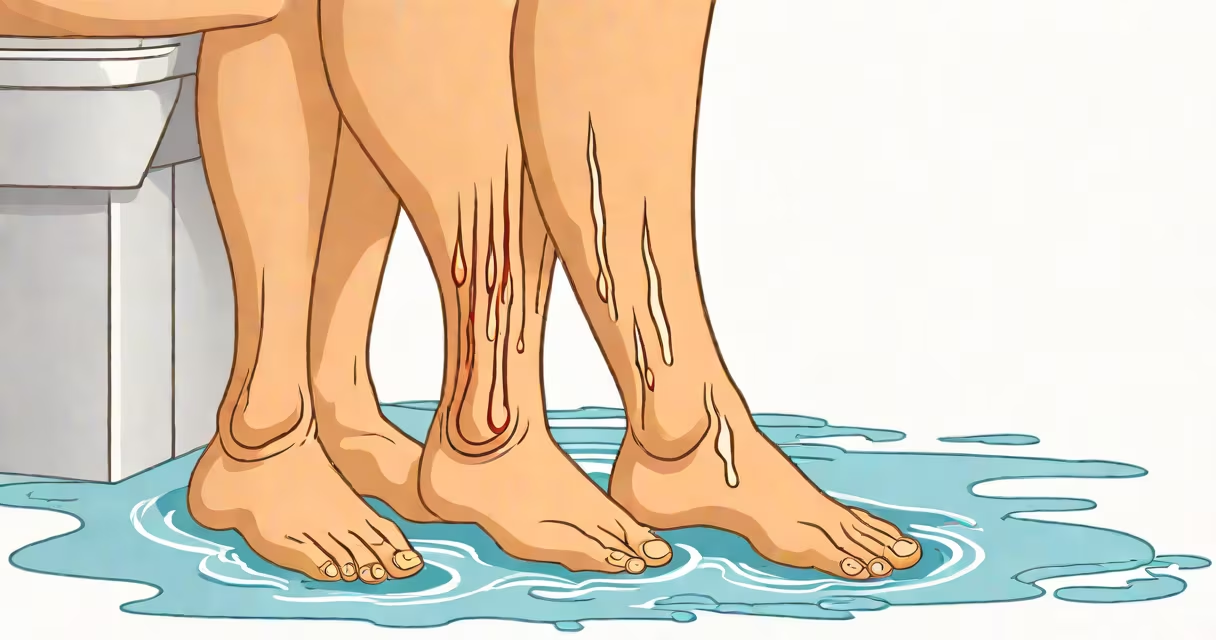
Weeping edema causes refer to underlying conditions that result in excess fluid leaking through the skin from swollen tissues, often seen in advanced or poorly managed edema. This occurs when interstitial fluid accumulates due to impaired circulation or lymphatic drainage and breaches the skin barrier, leading to visible exudate.
Fluid buildup begins when capillary pressure exceeds the ability of the vascular and lymphatic systems to return fluid to the bloodstream. When this imbalance persists, tissue pressure rises, forcing fluid into the extracellular space. If the skin becomes thin, fragile, or compromised, the fluid escapes through the epidermis, creating weeping edema.
Common root causes include venous insufficiency, lymphedema, heart failure, kidney disease, and severe trauma. The condition is not a diagnosis itself but a clinical sign indicating progression toward tissue breakdown and increased risk of infection.
Weeping edema results from sustained tissue swelling that overwhelms the skin's structural integrity. The skin acts as a semi-permeable barrier. When fluid pressure exceeds its tensile strength, micro-tears form, allowing plasma-rich fluid to escape.
This process is accelerated by factors such as prolonged standing, obesity, immobility, and poor nutrition. These increase hydrostatic pressure in capillaries and reduce lymphatic clearance. For example, a person with chronic venous insufficiency may develop varicose veins and elevated leg pressure, leading to fluid accumulation in the lower extremities.
Once the skin is breached, the exudate contains proteins, electrolytes, and inflammatory mediators. This environment supports bacterial growth and delays wound healing. A study published in Journal of Vascular Nursing found that patients with weeping edema had a 4.3-fold higher risk of developing cellulitis compared to those with non-exudative edema.
Several systemic and localized disorders drive weeping edema. The most common are venous insufficiency, lymphedema, and pressure-related injury. Each involves distinct pathophysiology but converges on fluid retention and skin compromise.
| Condition | Key Mechanism | Prevalence in Weeping Edema Cases |
|---|---|---|
| Venous insufficiency | Valve failure in leg veins increases hydrostatic pressure, forcing fluid into tissues | ~60% |
| Lymphedema | Impaired lymphatic drainage prevents fluid removal; often post-surgical or congenital | ~25% |
| Pressure injury (decubitus) | Constant pressure reduces blood flow, causing ischemia and tissue necrosis | ~15% |
Venous insufficiency accounts for the majority of cases. According to the American College of Phlebology, approximately 20 million adults in the U.S. have some degree of venous insufficiency, and about 1 in 7 progress to skin changes like stasis dermatitis and weeping edema.
Lymphedema, particularly secondary forms following cancer treatment, also contributes. After breast cancer surgery involving axillary node dissection, up to 30% of patients develop lymphedema in the arm, which can lead to weeping if untreated.
Weeping edema is frequently mistaken for other skin manifestations such as infected wounds, diabetic foot ulcers, or fungal infections. However, it differs in origin and appearance.
Infected wounds produce purulent discharge-thick, yellow or green pus-due to neutrophil activity. Weeping edema, by contrast, produces clear or slightly cloudy serous fluid. This difference is critical for treatment selection. Misdiagnosing weeping edema as infection leads to unnecessary antibiotics.
A key diagnostic clue is the presence of pitting edema-indentation that remains after pressing the skin. In weeping edema, pitting is usually present but may be less obvious if the skin is thickened from chronic inflammation. The fluid leak typically occurs at the site of maximum swelling, often around the ankles or heels.
One non-obvious fact: weeping edema can occur even in the absence of visible swelling. In elderly patients with reduced skin elasticity, fluid may leak through thin skin without significant bulging. This makes early detection difficult and underscores the need for regular skin inspection in high-risk individuals.
A 68-year-old woman with a 15-year history of varicose veins presented with fluid oozing from her left ankle. She reported intermittent swelling and aching for years. On exam, she had hyperpigmentation, thickened skin, and a 2 cm × 2 cm area of serous exudate. Pitting edema was present bilaterally.
Diagnostic imaging confirmed reflux in the saphenous vein. Blood tests ruled out cardiac or renal causes. The patient was diagnosed with stage 3 venous insufficiency with weeping edema. Treatment included compression therapy, elevation, and wound care. Within six weeks, fluid leakage ceased, and the wound healed.
This case illustrates that weeping edema is not a standalone issue-it reflects long-term circulatory failure. Early intervention prevents progression to ulceration and infection.
Any persistent fluid leakage from swollen limbs warrants evaluation. Delayed treatment increases the risk of cellulitis, osteomyelitis, and amputation in high-risk populations such as diabetics or those with peripheral neuropathy.
Patients should consult a healthcare provider if they notice:
Early management focuses on reducing fluid volume and protecting the skin. Compression garments, manual lymphatic drainage, and wound dressings are standard interventions.
For those managing edema at home, monitoring for signs of weeping is essential. A single episode of fluid leakage may indicate worsening control and requires prompt attention.
Understanding weeping edema requires awareness of related issues. Foot edema causes often overlap with leg swelling and share similar etiologies. Identifying the root cause-whether cardiac, renal, or vascular-is important for effective treatment.
Patients with recurrent weeping edema should undergo complete assessment, including Doppler ultrasound, lymphoscintigraphy, or referral to a vascular specialist. Preventive strategies include daily movement, avoiding prolonged sitting or standing, and maintaining healthy weight.
Weeping edema causes are not isolated events-they signal systemic dysfunction. Addressing them early prevents complications and improves quality of life.