The USDA Natural Resources Conservation Service (NRCS) is a federal agency within the U.S. Department of Agriculture that provides technical and financial assistance to farmers, ranchers, and private landowners to improve soil, water, air, and related natural resources on working lands.
NRCS operates through a network of local offices across all 50 states and territories. Its mission centers on helping land managers adopt practices that maintain long-term productivity while protecting ecosystems. The agency supports projects ranging from planting cover crops to restoring wetlands and managing grazing systems.
It is not a regulatory body. NRCS does not enforce environmental laws. Instead, it offers expertise and funding through voluntary programs. Landowners choose which conservation strategies to implement based on their goals and site-specific conditions.
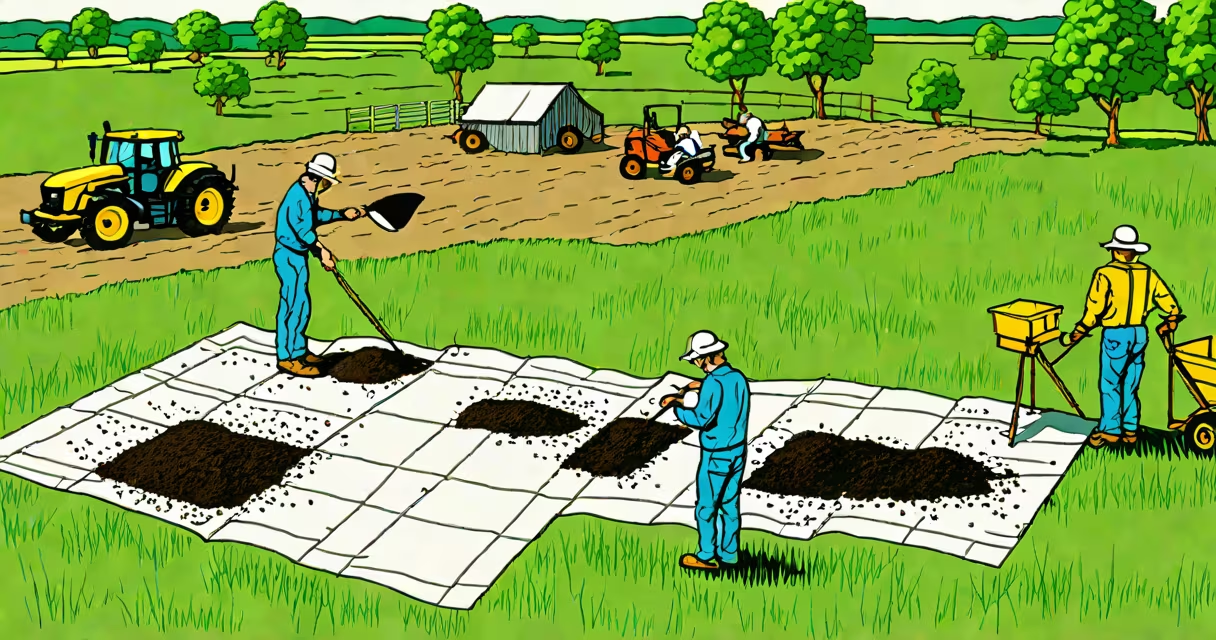
NRCS begins with a site-specific assessment. A conservationist visits a property to evaluate soil quality, water flow, vegetation, and land use patterns. This evaluation leads to a customized conservation plan tailored to the landowner's objectives and ecological context.
For example, a farmer in Iowa concerned about nutrient runoff might receive a plan recommending buffer strips along streams, reduced tillage, and precise fertilizer application. These practices reduce nitrogen and phosphorus entering nearby rivers, improving water quality downstream.
Once the plan is approved, the landowner can apply for cost-share funding. NRCS typically covers 50% to 75% of eligible practice costs, depending on the project and program. Funding comes from annual appropriations and is distributed through competitive applications.
NRCS administers several major programs, each targeting specific environmental challenges. The most widely used is the Environmental Quality Incentives Program (EQIP), which funds structural and management practices that improve water quality, air quality, and soil health.
Another core program is the Conservation Stewardship Program (CSP), which rewards farmers who maintain high levels of conservation activity and adopt additional improvements. Participants earn payments based on the number of conservation activities they perform and the scale of implementation.
| Program | Funding Focus | Eligibility | Typical Practices |
|---|---|---|---|
| EQIP | Water quality, soil health, wildlife habitat | Farmers, ranchers, private forest owners | Contour farming, irrigation efficiency, rotational grazing |
| CSP | Conservation performance and innovation | Landowners with existing conservation efforts | Integrated pest management, cover cropping, nutrient management |
| ACEP | Wetland and grassland restoration | Private landowners, tribes | Wetland restoration, permanent pasture establishment |
These programs are funded through the Farm Bill, a multi-year legislative package renewed approximately every five years. The 2018 Farm Bill allocated $14 billion over ten years to EQIP and CSP combined, reflecting national priorities for climate resilience and agricultural sustainability.
NRCS services are used on nearly 60 million acres of farmland annually. In 2022, the agency delivered over $2.3 billion in financial assistance to more than 100,000 producers nationwide.
One notable success story occurred in Montana, where NRCS partnered with the Crow Tribe to restore 1,200 acres of degraded rangeland. By installing fencing, establishing native grasses, and implementing rotational grazing, the project increased forage availability by 40% and reduced soil erosion by 60% over five years.
Urban areas also benefit. In Los Angeles County, NRCS helped design green infrastructure projects that capture stormwater runoff using bioswales and permeable pavement. These features reduce flooding risk and recharge groundwater supplies in a region facing chronic drought.
NRCS is often confused with the Environmental Protection Agency (EPA). While both agencies address environmental protection, they differ in scope and function. EPA regulates pollution under federal law, such as setting limits on industrial discharges. NRCS focuses on proactive land management to prevent degradation before it occurs.
A common misunderstanding is that NRCS mandates changes to farming operations. This is false. All NRCS programs are voluntary. Participation requires written consent from landowners. The agency cannot compel any action or inspect private property without permission.
Another misconception is that NRCS only serves large-scale farms. In reality, it supports small and mid-sized operations equally. Over 60% of EQIP participants operate farms under 500 acres. The agency prioritizes equity in access, especially for historically underserved producers, including Black, Indigenous, Latino, and women-led farms.
During a site visit in 2021, I observed an NRCS conservationist work with a family-run organic dairy in Wisconsin. They developed a manure management plan that reduced ammonia emissions by 35% and improved crop yields on adjacent fields. The family received cost-share funding to install a covered storage tank and upgrade their spreading equipment. The process took six weeks from initial contact to final approval.
NRCS does not manage public lands. That responsibility falls to the U.S. Forest Service, Bureau of Land Management, and National Park Service. NRCS works exclusively with private and tribal landowners.
It also does not conduct environmental monitoring or issue permits. For example, if a developer wants to build near a stream, they must apply for a permit through the Army Corps of Engineers. NRCS may provide technical input during the review process, but it does not have enforcement authority.
Finally, NRCS is not a research institution. While it uses peer-reviewed science to inform its recommendations, it does not conduct original experiments. Research on soil carbon sequestration, for instance, is led by USDA's Agricultural Research Service (ARS), which collaborates with NRCS on field trials.
NRCS plays a critical role in climate-smart agriculture. According to the USDA, conservation practices supported by NRCS reduced greenhouse gas emissions equivalent to removing 14 million cars from the road annually. Soil carbon sequestration alone accounts for 15% of the nation's voluntary carbon reduction goals.
By investing in land stewardship, NRCS helps maintain food security, protect biodiversity, and strengthen rural economies. Its work aligns with the United Nations Sustainable Development Goals, particularly Goal 15: Life on Land.
Understanding the usda natural resources conservation service clarifies how federal support enables sustainable land use. It empowers individuals to act responsibly on their own properties while contributing to national environmental outcomes.