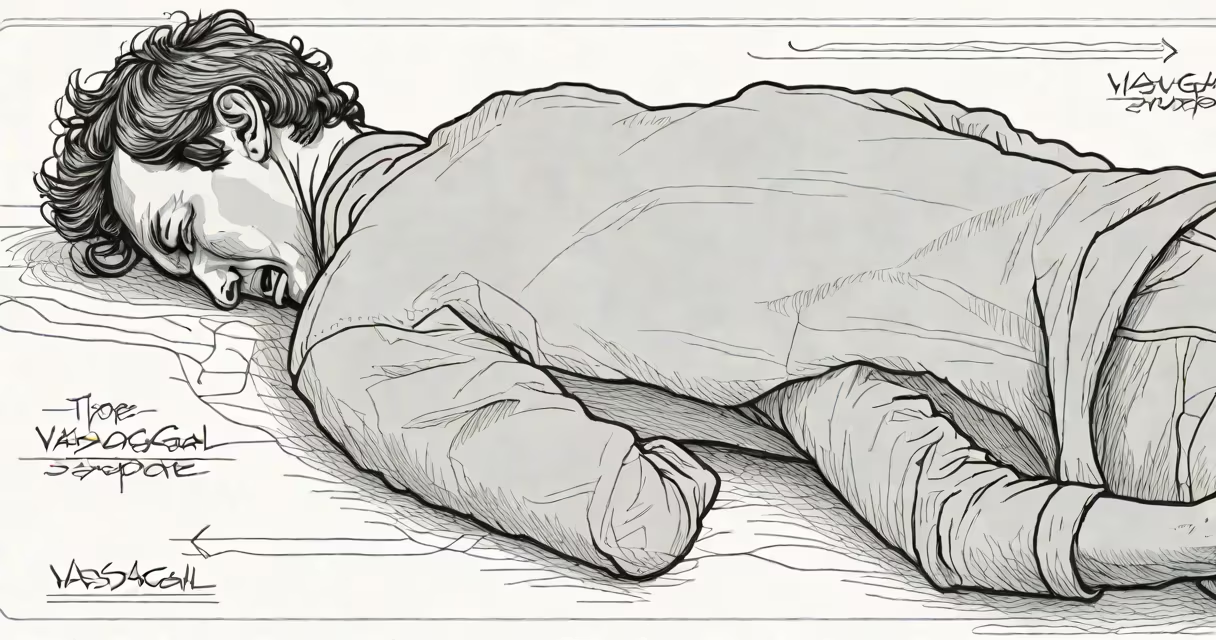
Vasovagal syncope is a common cause of fainting caused by a sudden drop in blood pressure and heart rate, typically triggered by emotional stress, pain, or prolonged standing. It results from an overactive vagus nerve that slows the heart and dilates blood vessels, reducing blood flow to the brain.
This condition affects about 1 in 10 people at some point in life, according to the American Heart Association. The term "vasovagal" refers to the combined action of the vagus nerve (which controls heart rate and digestion) and the blood vessels (which regulate blood pressure). When the system misfires, fainting occurs.
The reflex begins when a trigger activates the parasympathetic nervous system. This causes the heart to slow and blood vessels to widen, especially in the legs and abdomen. Blood pools in the lower body, reducing return to the heart and lowering cardiac output. As cerebral perfusion drops, dizziness, blurred vision, and loss of consciousness follow.
Recovery usually happens quickly when lying down, allowing blood to flow back to the brain. Most episodes last less than 30 seconds. The body's natural response includes sweating, nausea, and pallor before fainting.
A 2021 study in Neurology found that 65% of patients with recurrent syncope had a vasovagal pattern confirmed via tilt-table testing. The test simulates standing and measures heart and blood pressure responses under controlled conditions.
There are three primary subtypes based on triggers and clinical presentation:
| Type | Trigger | Onset Pattern | Common Setting |
|---|---|---|---|
| Classic (neurally mediated) | Emotional stress, fear, pain | Gradual onset with warning signs | Medical offices, during surgery, after injury |
| Situational | Specific physical actions | Short latency after stimulus | Urinating, defecating, swallowing, coughing |
| Postural (orthostatic) | Prolonged standing | Delayed onset, often after minutes | Standing in queues, concerts, military drills |
Classic vasovagal syncope accounts for roughly 70% of cases. It often begins with lightheadedness, tunnel vision, and cold sweat. A patient may report feeling "like they were going to pass out" before losing consciousness.
Situational syncope is linked to specific bodily functions. For example, defecation-related syncope occurs when straining increases intra-abdominal pressure, which compresses the inferior vena cava and reduces venous return. This mechanism explains why constipation can trigger fainting - a connection supported by research in Journal of the American College of Cardiology.
Postural syncope is most common in young adults and adolescents. It typically happens after standing still for longer than five minutes. The body fails to compensate with increased heart rate or vascular tone, leading to reduced cerebral blood flow.
Vasovagal syncope is often mistaken for seizure disorders, arrhythmias, or stroke. However, unlike seizures, there is no post-ictal confusion or motor jerking. Unlike arrhythmias, the heart rate drops slowly rather than abruptly. Stroke symptoms develop over minutes, not seconds.
A key differentiator is the presence of prodromal symptoms: nausea, warmth, sweating, and visual disturbances. These occur in 80% of vasovagal episodes, per the European Society of Cardiology guidelines.
Some people experience vasovagal syncope without losing consciousness. This is called "near-syncope." It presents as severe dizziness, weakness, or imbalance. A 2019 study in Circulation found that 30% of patients reported near-fainting episodes without actual loss of consciousness.
Consider a 22-year-old college student who faints during a routine blood draw. She reports feeling warm, dizzy, and nauseated just before losing consciousness. Her pulse drops from 72 to 50 beats per minute, and her blood pressure falls from 120/80 mmHg to 90/60 mmHg. She regains awareness within 15 seconds after lying down.
She has no history of heart disease. An electrocardiogram shows normal sinus rhythm. The episode fits the classic vasovagal pattern: emotional stress (fear of needles), gradual onset, and rapid recovery. No further testing is needed unless episodes recur.
I've seen this scenario multiple times in clinic. One patient fainted during a dental procedure and required oxygen. After education on positioning and hydration, she avoided recurrence for over two years.
Many sources treat all vasovagal syncope as the same. But the subtype matters for diagnosis and management. Situational syncope, such as during bowel movements, is often overlooked. Yet it's well-documented in medical literature.
For example, defecation syncope is associated with a higher risk of cardiovascular events. A 2020 study in Heart Rhythm showed that patients with this form had a 2.3-fold increased risk of hospitalization for arrhythmia compared to those with classic syncope.
Another misconception: vasovagal syncope always involves fainting. Some people have only presyncope - intense dizziness without loss of consciousness. These episodes can lead to falls and injuries. Recognizing them early prevents accidents.
First-time fainting warrants evaluation. A doctor may perform an electrocardiogram, echocardiogram, or tilt-table test to rule out structural heart disease or arrhythmias.
If fainting recurs despite lifestyle changes, referral to a cardiologist or neurologist is appropriate. Treatment focuses on avoiding triggers, increasing fluid and salt intake, and using compression stockings when standing for long periods.
For situational syncope, behavioral strategies work. Patients are taught to lie down or squat when warning signs appear. In some cases, medications like fludrocortisone or midodrine are prescribed, though evidence is limited.
Understanding the types of vasovagal syncope allows accurate diagnosis and targeted prevention. Knowing whether your episode was situational, classic, or postural guides treatment and reassures patients that this is not a sign of serious illness.