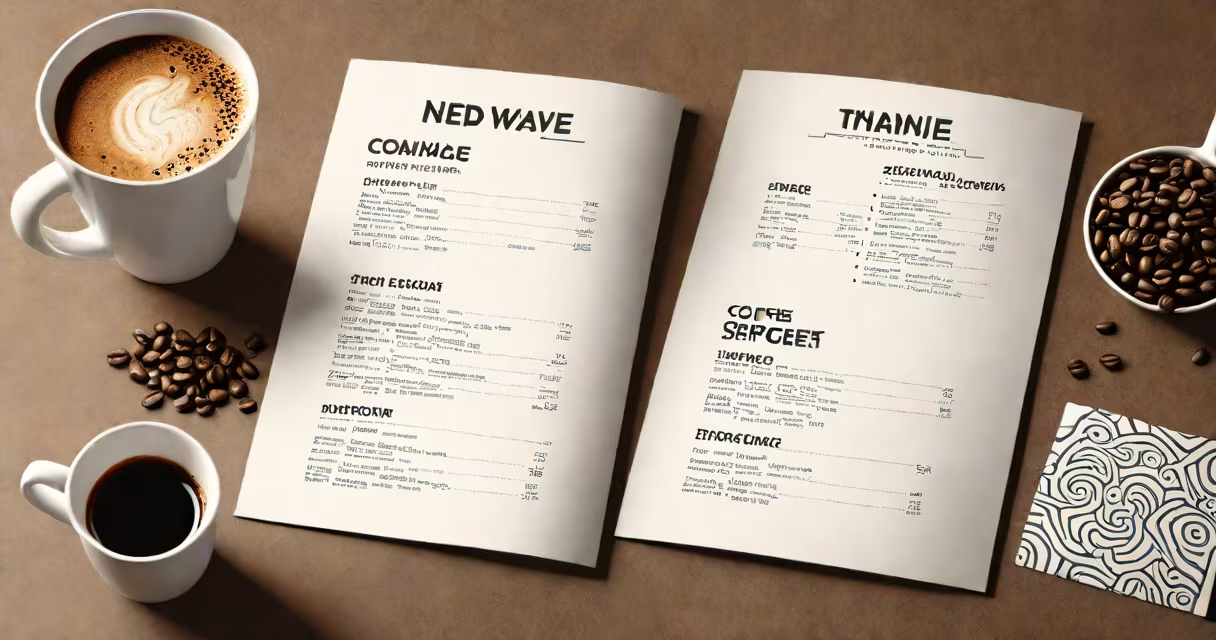
A third wave coffee menu features curated single-origin beans, precise brewing methods, and detailed flavor profiles to show quality, origin, and craftsmanship. It's not just a list of drinks-it's a statement about sourcing, preparation, and sensory experience.
Third wave coffee emerged in the early 2000s as a reaction to mass-produced, standardized coffee. It treats coffee as a fine agricultural product, much like wine or chocolate. A third wave coffee menu reflects this philosophy: it emphasizes traceability, roast profiles, and the nuances of flavor developed through careful processing and brewing.
Unlike traditional café menus that offer generic espresso shots or blended lattes, a third wave menu names the farm, region, and processing method of each bean. It includes descriptors like "cherry, bergamot, and dark chocolate" rather than vague terms like "fruity" or "nutty." This specificity allows customers to make informed choices based on taste preferences and ethical values.
Coffee shops using a third wave model source beans directly from small farms or cooperatives. These farms often use washed, natural, or honey processing methods that influence flavor. For example, a washed Ethiopian Yirgacheffe may have bright citrus notes, while a natural-processed Brazilian may show jammy berry flavors.
Brewing methods are selected to show these characteristics. Pour-over, French press, and Aeropress are common. Each method extracts different compounds-acidity, sweetness, body-based on water temperature, grind size, and brew time. A barista might adjust a 20-second bloom phase to improve floral notes in a light roast.
Menus often include a rotating selection of 6-12 beans per week. This rotation ensures freshness and allows shops to showcase seasonal harvests. A customer ordering a Kenya Gedeo might receive a cup with pronounced black tea and red apple notes, served with a note explaining the farm's elevation (1,800 meters) and harvest date (October 2023).
Every third wave coffee menu contains four core components:
These elements aren't decorative-they're functional. They allow customers to compare offerings and build a mental map of flavor. A person who likes bright acidity might choose a washed Ethiopian, while someone seeking body and sweetness might opt for a naturally processed Colombian.
Some menus go further. They include QR codes linking to videos of farmers, maps showing growing regions, or data on carbon footprint and fair trade certification. This transparency builds trust and educates consumers about the supply chain.
Not all third wave menus are the same. They vary by region, shop ethos, and customer base. Here's a breakdown of common formats:
| Type | Focus | Example |
|---|---|---|
| Single-Origin Focus | Highlighting one bean per week, often with a story behind it. | "Ethiopia Sidama - washed, 2023 harvest - notes: bergamot, lychee, white grape." |
| Rotating Seasonal Lineup | Changing selections monthly based on harvest cycles. | "Summer 2024: Brazil Minas Gerais - honey-processed - notes: peach, caramel, hazelnut." |
| Blind Tasting Series | Offering samples without revealing origin, testing palate recognition. | "Taste the mystery bean-guess the country and process." |
One shop in Portland, Oregon, runs a "Farm-to-Cup" series where they feature beans from a single cooperative in Nicaragua. Each month, they host a live roasting session and serve the coffee with a tasting card detailing the farmer's name, altitude, and water usage per pound of beans. The card also includes a quote from the farmer: "We grow coffee like we raise our children-slow, with care."
Third wave coffee menus are most common in urban cafes, independent roasteries, and specialty coffee events. They appear in cities like Seattle, Brooklyn, Melbourne, and Tokyo. These venues prioritize education and experience over speed and volume.
They're used to differentiate in a crowded market. A standard café might sell 100 cups of a house blend daily. A third wave shop sells 30 cups of a single-origin bean, each priced at $6.50. The higher price reflects cost of quality, labor, and sustainability efforts.
For customers, the menu becomes a tool for exploration. Someone new to coffee might start with a light-roasted Guatemalan and learn how acidity changes with roast level. An experienced drinker might seek out a rare anaerobic-fermented Ethiopian to compare fermentation notes.
Many people mistake third wave coffee for simply "expensive" or "hipster" coffee. That's incorrect. Third wave is defined by intent-not price. A $2 drip coffee from a third wave shop can be superior to a $6 latte from a chain, depending on bean quality and preparation.
Another misconception: that all third wave coffee is light roast. Not true. Some roasters use medium or even dark roasts to bring out specific flavors. A well-executed dark roast Ethiopian can emphasize molasses and dried fig notes, not just bitterness.
Here's a non-obvious fact: the term "third wave" doesn't refer to a chronological timeline of coffee consumption. It's a marketing label coined around 2005 by David Schomer, a Seattle-based barista and author. He used it to describe a shift toward artisanal production, similar to how "first wave" was mass production (e.g., Maxwell House) and "second wave" was branded coffee (e.g., Starbucks).
Also, not all high-quality coffee is third wave. A family-run roastery in rural Colombia might produce strong beans without using the term. The label matters less than the practice-sourcing ethically, roasting carefully, serving fresh.
Consider a typical third wave menu from a shop in Austin, Texas:
Each entry includes the farm, processing method, roast level, and flavor descriptors. The prices reflect the cost of direct trade relationships and precision brewing. The customer isn't just buying a drink-they're engaging with a story of land, labor, and flavor.
I once visited a shop in Portland where the barista asked me to close my eyes and taste a sample of a newly roasted Ethiopian. After sipping, I described the citrus and floral notes. She smiled and said, "That's the first time someone's mentioned the bergamot. Most people say 'fruity.'" That moment showed how the menu isn't just information-it's a shared language between producer and consumer.
A third wave coffee menu is not the same as a "craft coffee" menu. While both emphasize quality, "craft" is a broader term. A third wave menu is specifically rooted in transparency, traceability, and sensory precision.
It's also not interchangeable with "artisanal" or "premium." Those terms lack consistent standards. A third wave menu uses measurable criteria: origin, processing, roast profile, and flavor notes. It avoids vague claims like "best coffee in town" or "handcrafted with love."
Finally, it's not limited to cafes. Some third wave principles appear in home brewing kits, subscription boxes, and even grocery store coffee lines. But only those that include detailed sourcing and flavor profiles qualify as true third wave.
Understanding a third wave coffee menu means understanding that coffee is not just a beverage-it's a product of geography, culture, and skill. The menu is the bridge between farm and cup, offering clarity, choice, and connection.
When you see a third wave coffee menu, look beyond the price. Read the origin. Taste the notes. Ask about the roast. You're not just drinking coffee-you're experiencing a moment of craft, care, and flavor.