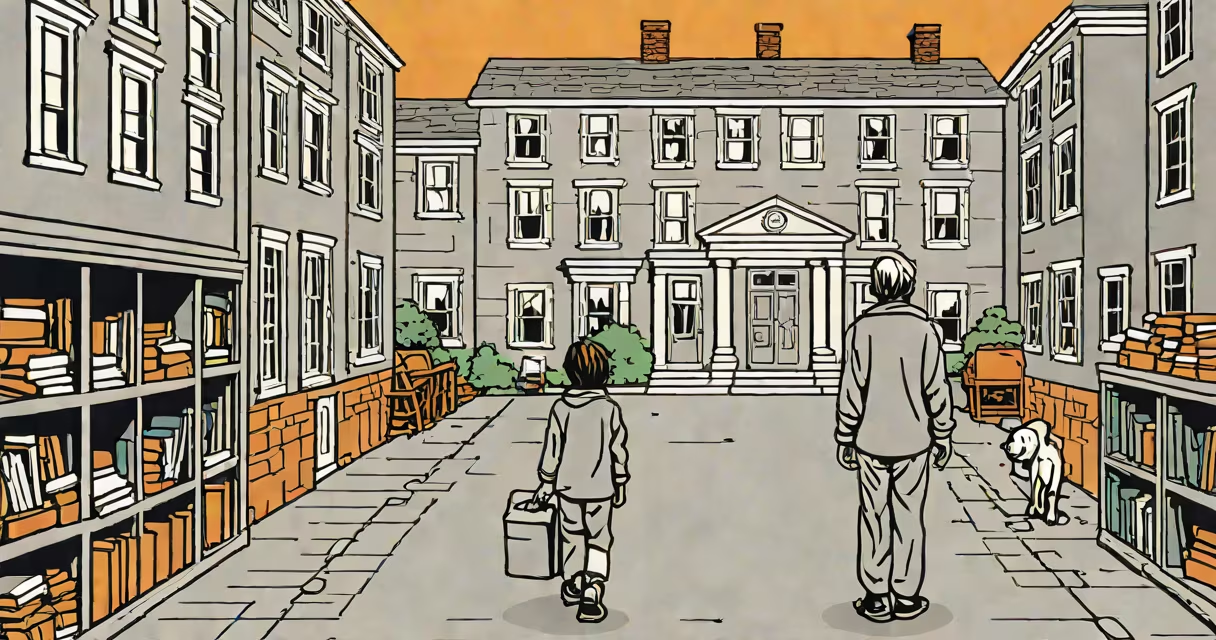
The Giver book summary describes a controlled society where emotions, memories, and individuality are suppressed to maintain peace and sameness. Set in a futuristic community governed by strict rules, the story follows twelve-year-old Jonas, who is selected to become the Receiver of Memories-the sole keeper of humanity's past experiences.
Jonas lives in a society where everything is regulated: children are assigned parents, jobs are chosen based on aptitude, and even colors are eliminated. The community operates under the principle of Sameness, which prevents conflict, pain, and difference. Birthmothers, nurturers, and laborers fulfill roles without personal choice. Emotions are managed through daily medication, and family units consist of assigned parents and children.
At the Ceremony of Twelve, Jonas is chosen as the new Receiver of Memories. He begins training with the current Receiver, known only as The Giver. Through nightly sessions, Jonas receives vivid memories of joy, love, war, hunger, and color-experiences previously erased from the community. As he absorbs these memories, his perception of reality shifts. He sees the world in color for the first time, feels deep sorrow, and begins to question the ethics of his society.
Jonas discovers that the community's practice of "releasing" individuals-such as the elderly and newborns-is actually euthanasia. When his father releases a newborn twin, Jonas realizes the truth. He learns that the term "release" masks murder. This revelation triggers his decision to escape with Gabriel, the infant he has grown attached to, to save him from being released.
Jonas flees the community during winter, carrying Gabriel and going through a harsh field. He relies on memories of warmth, food, and music to survive. The process ends at a place resembling a village with lights and music-possibly the real world beyond the community's borders. The ending is ambiguous: Jonas and Gabriel disappear into the unknown, possibly reaching safety, possibly dying.
The Giver book summary highlights themes of individuality versus conformity, the burden of memory, and the cost of emotional suppression. The novel critiques utopian ideals that sacrifice freedom and truth for stability. It shows how removing pain also removes joy, and how control over history leads to moral blindness.
Lois Lowry wrote The Giver in 1993. It won the Newbery Medal in 1994 and remains a staple in middle school curricula. According to the American Library Association, it was the most challenged book in the U.S. between 2000 and 2009 due to concerns about its portrayal of euthanasia and government control.
Jonas's role as Receiver of Memories makes him both privileged and isolated. He gains wisdom but loses connection to others. His ability to feel pain and love sets him apart. The Giver, though older and weary, believes that preserving memory is essential-even if it brings suffering. He tells Jonas: "I have to carry it. But you-you can choose." That moment marks the beginning of Jonas's moral awakening.
One non-obvious fact: The community's "Sameness" eliminates in language. All citizens speak in precise, emotionless tones. This linguistic control reinforces social uniformity. When Jonas hears his father say "I love you" for the first time, it's a shock-not because of the words, but because of the tone. The phrase is spoken with feeling, breaking the norm.
A fully worked example: Jonas receives the memory of a sled ride down a snowy hill. He feels the wind, the cold, the thrill of speed. He laughs for the first time. The memory is not just visual-it includes physical sensation and emotional response. This moment illustrates how memory restores human experience beyond logic or regulation.
Common misconceptions: Some readers assume The Giver is a fantasy novel. It is not. The setting is a plausible near-future society. Others think Jonas escapes to a happy world. The ending offers no confirmation. The author leaves it open-whether they reach safety or die in the snow is unknown. This ambiguity forces readers to confront the moral weight of choice.
Another confusion: The Giver is not a standalone book. It is the first in a quartet: The Giver, Gathering Blue, Messenger, and Son. Each expands on the theme of memory, identity, and resistance. The final book, Son, reveals that Jonas's father was once a recipient of memories too-adding complexity to the idea of inherited responsibility.
When I read The Giver in high school, I misunderstood the ending. I thought Jonas and Gabriel reached a safe haven. Re-reading it years later, I realized the power lies in uncertainty. The lack of closure mirrors the novel's central question: What do we lose when we trade freedom for safety?
| Type | Description | Example from Text |
|---|---|---|
| Emotional Memory | Memories tied to feelings like joy or grief | Jonas experiences the pain of a broken leg and the happiness of a birthday party |
| Sensory Memory | Memories involving sight, sound, touch | Jonas sees red for the first time when viewing a bicycle |
| Historical Memory | Memories of past events, wars, famines | Jonas witnesses a battle scene and feels the terror of gunfire |
The Giver book summary captures a narrative where knowledge is power, silence is complicity, and choice is liberation. It remains relevant because it asks uncomfortable questions: How much control is acceptable? Who decides what is safe? And what happens when someone remembers?