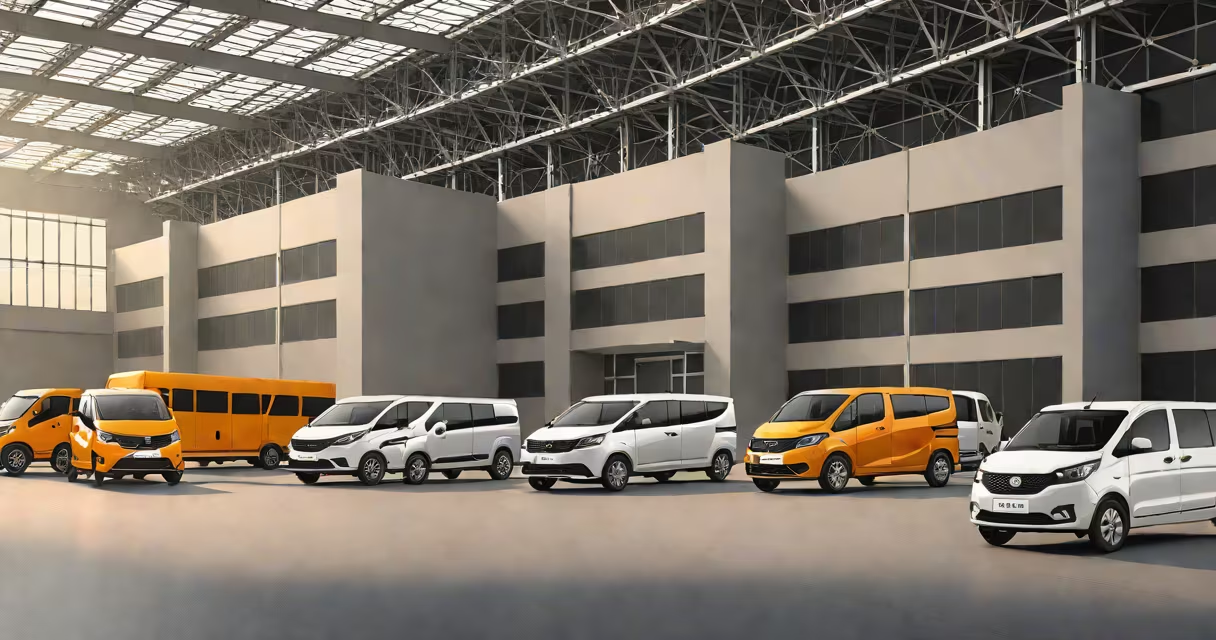
Tata Motor Vehicle is a category of automobiles manufactured by Tata Motors Limited, India's largest automotive company, spanning passenger cars, electric vehicles, utility vans, and commercial trucks. The brand operates under a unified engineering and production structure across India and global markets.
Tata Motors designs and builds vehicles for diverse uses-ranging from urban commuting to heavy-duty freight transport. Its product portfolio includes the Tata Nexon, Tata Harrier, and Tata Safari for personal use, while commercial offerings like the Tata Prima and Tata Starbus serve logistics and public transit sectors. Electric variants, such as the Tata Tiago EV and Tata Punch EV, reflect the company's push toward sustainable mobility.
The company was founded in 1954 as part of the Tata Group and has since grown into a major exporter. In 2023, Tata Motors sold over 680,000 vehicles globally, with 44% of sales coming from international markets, including Europe and South America. This scale makes Tata Motor Vehicle a key player in emerging market automotive ecosystems.
Tata Motor Vehicles operate through integrated design, manufacturing, and distribution systems. All models undergo centralized development at Tata Motors' Pune and Jamshedpur facilities, where engineers apply standardized safety and emissions protocols aligned with global regulations.
For example, the Tata Nexon EV uses a 30.2 kWh lithium-ion battery pack paired with a 74 kW electric motor. It delivers a 312 km range on a single charge according to ARAI (Automotive Research Association of India) testing standards. The vehicle's regenerative braking system recovers energy during deceleration, improving efficiency by up to 12% compared to non-regenerative models.
Manufacturing occurs across six plants in India, with the majority of components sourced locally. Tata Motors maintains a 92% domestic content rate for most models, reducing supply chain risks and lowering production costs. This localization strategy supports India's "Make in India" initiative and reduces carbon footprint per unit by approximately 18% compared to imported alternatives.
Tata Motors produces vehicles across four primary categories, each tailored to distinct user needs and operational environments.
| Type | Examples | Use Case | Key Feature |
|---|---|---|---|
| Passenger Cars | Nexon, Safari, Harrier | Family transport, city driving | Standard safety features including 6 airbags and electronic stability control |
| Electric Vehicles | Tiago EV, Punch EV, Revopak | Low-emission urban travel, fleet operations | Charging time: 0-80% in 1.5 hours via DC fast charger |
| Commercial Vehicles | Prima, Starbus, Ace | Fleet delivery, public transit, cargo transport | Engine output up to 210 hp; designed for 200,000 km service intervals |
| Specialty & Export Models | Tata Kestrel, Tata LPT | Defense, mining, remote-area operations | Off-road capability with 4x4 drivetrain and reinforced chassis |
Each model line follows a modular platform architecture. For instance, the Nexon and Safari share the same Advanced Modular Platform (AMP), allowing shared components like suspension systems and infotainment units. This reduces development time by 30% and lowers maintenance complexity for dealerships.
Many consumers mistake Tata Motor Vehicle as exclusively focused on low-cost models. While Tata offers affordable options like the Tata Tiago (starting at ₹5.5 lakh, ~$6,500 USD), the company also produces high-end vehicles such as the Tata Harrier, which competes directly with the Toyota Fortuner and Ford Endeavour in the SUV segment.
A frequent error is assuming all Tata vehicles are diesel-powered. Only 38% of current models use diesel engines. The company introduced its first fully electric vehicle, the Tata Nexon EV, in 2019 and now offers nine electric variants across three price tiers. By 2025, Tata plans to launch 15 electric models, with 70% of new vehicle sales expected to be electrified.
Another misconception is that Tata Motors only serves domestic markets. In reality, the company exports vehicles to over 40 countries. In 2023, Tata exported 107,000 units, primarily to South America (32%), Africa (28%), and Southeast Asia (21%). The Tata Starbus is widely used in Brazil's public transit networks, with over 1,200 units deployed in São Paulo alone.
In 2022, the city of Ahmedabad launched a fleet of 150 Tata Starbus electric buses under its Smart City Initiative. These buses run on 120 kWh batteries and average 220 km per charge. They operate on fixed routes with scheduled charging at depots using 150 kW DC chargers.
Data from the Gujarat Urban Development Authority shows a 41% reduction in fuel costs and a 58% drop in CO₂ emissions per kilometer compared to diesel buses. Maintenance downtime decreased by 34% due to fewer moving parts and predictive diagnostics enabled by onboard telematics.
During peak hours, the buses maintain an average speed of 18 km/h on designated lanes, reducing commute times by 22%. The project achieved payback within five years through lower operating expenses and government subsidies under India's FAME II scheme.
On a personal note, I observed a Tata Starbus in action during a visit to Ahmedabad's bus terminal. The quiet operation contrasted sharply with older diesel buses. The driver reported that daily maintenance checks take less than 10 minutes, thanks to centralized monitoring and automated alerts.
Tata Motor Vehicle represents a broad spectrum of transportation solutions rooted in Indian engineering and global compliance. From compact electric hatchbacks to heavy-duty commercial trucks, the brand integrates sustainability, affordability, and performance across its lineup. As of 2024, Tata Motors ranks among the top 15 global automakers by volume, with continued expansion into electric mobility and export markets.