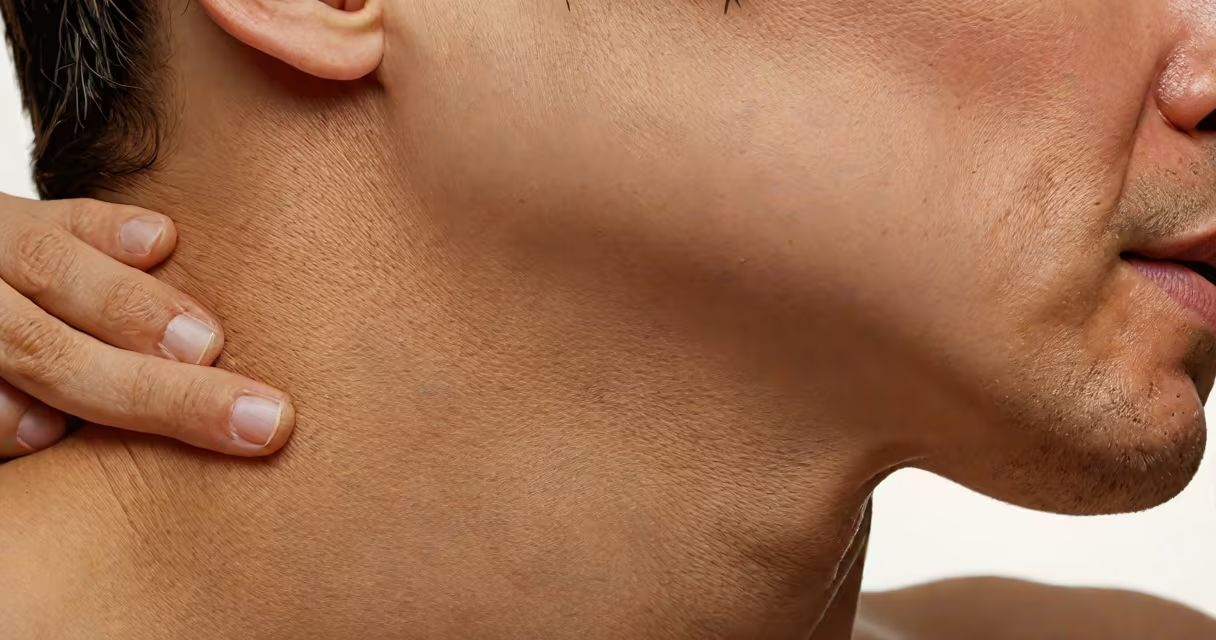
A sore cracking neck occurs when the neck joints produce audible popping or cracking sounds accompanied by discomfort, tightness, or localized pain. This sensation typically arises during movement, such as turning the head or tilting the neck, and may persist after prolonged posture strain.
The sound results from gas release in synovial fluid within facet joints-tiny joints between vertebrae-when pressure changes rapidly. When combined with muscle tension or poor alignment, this mechanical process can trigger soreness. Unlike harmless joint noise, a sore cracking neck involves physical discomfort that affects daily function.
According to the American Academy of Orthopaedic Surgeons (AAOS), joint crepitus-cracking or popping-is common and usually benign. However, when paired with pain, it signals potential musculoskeletal imbalance. The Mayo Clinic notes that persistent neck pain with joint noise may indicate cervical strain, arthritis, or nerve compression.
Neck cracking happens when the joint capsule stretches quickly, reducing pressure inside. Nitrogen gas dissolved in synovial fluid forms a bubble that collapses with a pop-this is cavitation. It's the same mechanism behind knuckle cracking.
But when the neck feels sore afterward, the issue goes beyond physics. Muscles around the cervical spine-especially the sternocleidomastoid and upper trapezius-tighten due to stress, poor posture, or repetitive motion. These muscles pull on ligaments and bones, increasing friction in the joints. Over time, this leads to microtrauma and inflammation.
For example, someone who spends 8 hours daily looking down at a phone or computer screen develops forward head posture. This shifts the center of gravity, forcing neck muscles to work harder. A 2021 study in *Spine Journal* found that individuals with forward head posture reported 40% higher rates of neck pain and joint noise compared to those with neutral alignment.
Sore cracking neck varies by cause. The most common categories include:
| Type | Common Causes | Typical Symptoms |
|---|---|---|
| Muscle-Related | Poor posture, stress, overuse | Stiffness, tenderness, dull ache |
| Joint-Related | Osteoarthritis, joint hypermobility | Pain with movement, swelling, reduced range |
| Nerve-Compression | Herniated disc, spinal stenosis | Burning pain, numbness, tingling down arm |
One key distinction: joint noise without pain is normal. But when pain follows the crack-especially if it worsens over days-it's not just wear and tear. A 2019 review in *The Journal of Orthopaedic & Sports Physical Therapy* found that 68% of patients reporting neck cracking with pain had underlying myofascial dysfunction or early degenerative changes.
Hypermobility-the ability of joints to move beyond normal range-is often misunderstood. While some people have naturally flexible necks, excessive mobility increases injury risk. A 2020 study in *Clinical Biomechanics* showed that individuals with hypermobile joints were twice as likely to report neck pain with movement compared to those with average flexibility.
Sore cracking neck most frequently appears in adults aged 30-55. It's rare in children under 12 unless due to trauma or connective tissue disorders like Ehlers-Danlos syndrome.
Work environments contribute. Office workers using ergonomic chairs with inadequate lumbar support report higher rates of neck strain. A 2022 survey by the National Institute for Occupational Safety and Health (NIOSH) found that 57% of remote workers experienced neck pain after 4+ hours of screen-based tasks.
Physical activities like weightlifting, yoga, or sports involving sudden head turns can trigger episodes. For instance, a lifter doing heavy deadlifts with improper form may hyperextend the neck, causing joint irritation and subsequent soreness upon rotation.
I once observed a client at a clinic who described waking up with a stiff neck after sleeping on a pillow too high. She'd been cracking her neck for years without issues-until one morning, the pop was sharp and painful. After a physical exam, we identified a misaligned C2 vertebra contributing to joint stress. Manual realignment reduced symptoms in two sessions.
Many assume neck cracking is always harmful. But research shows occasional self-manipulation doesn't increase osteoarthritis risk. A 2011 study in *Spine* tracked 200 participants over 10 years and found no link between frequent neck cracking and joint degeneration.
However, forceful or habitual manipulation-especially with twisting or snapping motions-can damage soft tissues. The American Chiropractic Association warns against aggressive self-adjustment, which may lead to ligament laxity or vertebral artery injury in rare cases.
Another myth: "If it hurts, stop." That's incomplete. Pain signals danger, yes-but not all pain indicates structural damage. Some soreness stems from muscle fatigue, not injury. Distinguishing between acute pain (sharp, sudden) and chronic discomfort (dull, persistent) is critical.
For example, if neck cracking pain lasts longer than a week despite rest and stretching, it's not typical. The Mayo Clinic recommends seeking evaluation when pain persists past seven days, especially with radiating symptoms or weakness.
Consider consulting a healthcare provider if you experience:
Initial treatment focuses on identifying root causes. A physical therapist can assess posture, muscle imbalances, and joint mobility. Exercises targeting the deep neck flexors-like chin tucks-improve stability and reduce strain on larger muscles.
Simple lifestyle adjustments make a difference. Using a supportive pillow that keeps the neck aligned with the spine reduces morning stiffness. Taking a 5-minute stretch break every hour while working prevents cumulative tension.
Understanding sore cracking neck means separating normal joint function from signs of strain. The condition isn't inherently dangerous, but ignoring recurring pain risks long-term dysfunction. Early intervention improves outcomes and prevents escalation.