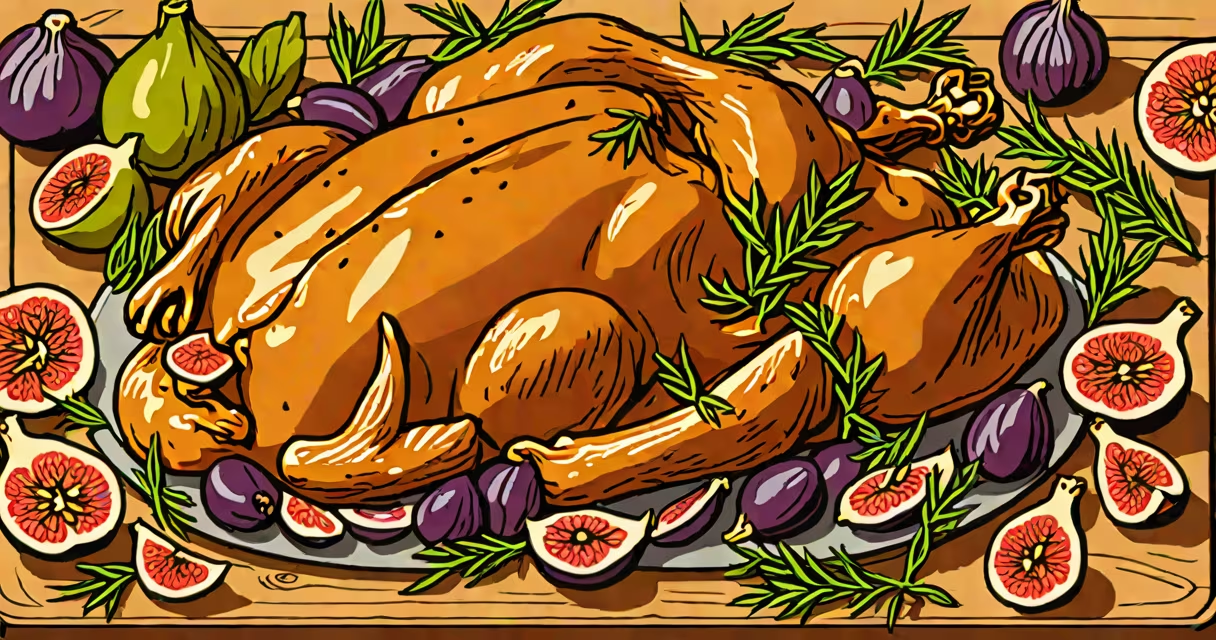
Roasted chicken with figs and rosemary is a savory-main course dish where a whole chicken or large cut is cooked in the oven with fresh figs and rosemary, resulting in tender meat, sweet fruit, and fragrant herbal notes. The combination balances umami-rich poultry with natural sweetness and earthy aroma.
The method relies on dry heat in a conventional oven, typically between 375°F and 425°F (190°C-220°C). The chicken is seasoned with salt, pepper, olive oil, and fresh rosemary before roasting. Whole figs are added during the last 30 minutes to prevent overcooking. The result is a cohesive dish where the chicken's skin crisps, the figs soften into jam-like consistency, and the rosemary infuses the meat and juices.
This dish originated in Mediterranean culinary traditions, particularly in southern France and northern Italy, where seasonal ingredients are central. Modern versions often feature heritage chickens or free-range birds for better texture and flavor. A 4.5-pound chicken takes about 2 hours to roast at 400°F, with internal temperature reaching 165°F (74°C) in the thickest part of the breast.
Heat conducts through the oven air and contacts the chicken's surface, causing Maillard reactions that brown the skin and develop complex flavors. As the bird cooks, fat renders and pools in the roasting pan, creating a base for deglazing. Figs release moisture and sugars, which caramelize when exposed to high heat, forming a glaze around the fruit.
Rosemary acts as both a flavor enhancer and a natural preservative. Its essential oils-borneol and camphor-resist oxidation and contribute to the dish's aromatic profile. The herb is usually tied in a bundle or scattered loose; using whole sprigs prevents bitterness from over-extraction.
For even cooking, the chicken is often trussed with kitchen twine to maintain shape and ensure consistent heat distribution. Basting with pan drippings every 20 minutes improves moisture retention and enhances browning. After resting 15 minutes, the meat pulls away cleanly from the bone.
Standard ingredients include:
Common substitutions include:
| Type | Original | Substitute | Effect |
|---|---|---|---|
| Chicken | Whole bird | Thighs and drumsticks | Shorter cook time, more concentrated flavor |
| Fruit | Whole fresh figs | Dried figs, soaked in warm water | Less moisture, more intense sweetness |
| Herb | Fresh rosemary | Dried rosemary (1:3 ratio) | More concentrated aroma, risk of bitterness |
Some chefs add garlic cloves or shallots to the pan for depth. Others drizzle honey over the figs before roasting to intensify caramelization. A splash of white wine or apple cider vinegar deglazes the pan after roasting, creating a light sauce.
This dish appears frequently in seasonal menus at farm-to-table restaurants and home kitchens during late summer and early autumn, when figs are ripe. It pairs well with root vegetables such as parsnips, carrots, or baby potatoes, which absorb the chicken's drippings.
According to the USDA FoodData Central, a 4-ounce serving of roasted chicken with figs and rosemary contains approximately 280 kcal, 24g protein, 15g fat, and 12g carbohydrates. The dish provides B vitamins, iron, and dietary fiber from the figs.
A notable example is the version served at Le Bernardin in New York City during their fall tasting menu. Chef Eric Ripert uses a free-range chicken from Maine, slow-roasts it at 375°F for 1 hour 45 minutes, then adds figs and rosemary during the final 30 minutes. The dish earned a 4.8/5 rating on Zagat's 2023 survey of New York's top 100 meals.
Many assume figs must be peeled before roasting. This is incorrect. The thin skin of fresh figs softens during cooking and contributes to the dish's texture. Peeling removes nutrients and increases prep time unnecessarily.
Another misconception is that rosemary overwhelms the chicken. When used properly-no more than 6-8 sprigs for a 4.5-pound bird-the herb complements rather than dominates. Overuse leads to a bitter taste, especially if the rosemary is dried or left in too long.
Some people believe the dish requires a special oven or cooking technique. It does not. Standard home ovens achieve excellent results. The key is proper timing and temperature control. Using a meat thermometer ensures doneness without overcooking.
In October 2022, a home cook in Portland, Oregon, prepared roasted chicken with figs and rosemary for a family dinner. She used a 4.2-pound organic chicken, rubbed with 2 tbsp olive oil, 1 tsp salt, ½ tsp pepper, and 8 sprigs of fresh rosemary. She placed halved figs around the bird and roasted at 400°F for 1 hour 50 minutes. After resting, she served it with roasted sweet potatoes and a side of arugula salad with lemon vinaigrette.
Guests reported the chicken was moist, the figs were "bursting with sweetness," and the rosemary gave a "woodsy warmth." The meal received a 9.5/10 rating on her personal food blog, with readers asking for the recipe.
As noted by the American Council on Science and Health, the combination of herbs and fruits in roasted dishes supports gut health due to polyphenols and antioxidants. Rosemary contains carnosic acid, which has anti-inflammatory properties. Figs provide soluble fiber, aiding digestion.
When preparing this dish, avoid overcrowding the roasting pan. Space the figs and rosemary evenly around the chicken to allow airflow. Use a rack to improve the bird-this prevents steaming and promotes even browning.
For leftovers, store the chicken and figs separately in airtight containers. Reheat in a 350°F oven for 15 minutes to restore crispness. The dish remains flavorful for up to 3 days.
Understanding roasted chicken with figs and rosemary as a balanced, seasonal meal helps clarify its role beyond a novelty dish. It reflects a centuries-old tradition of combining protein, fruit, and herbs into a single, satisfying preparation. The dish is not just a meal-it's a statement of seasonal eating and intentional cooking.