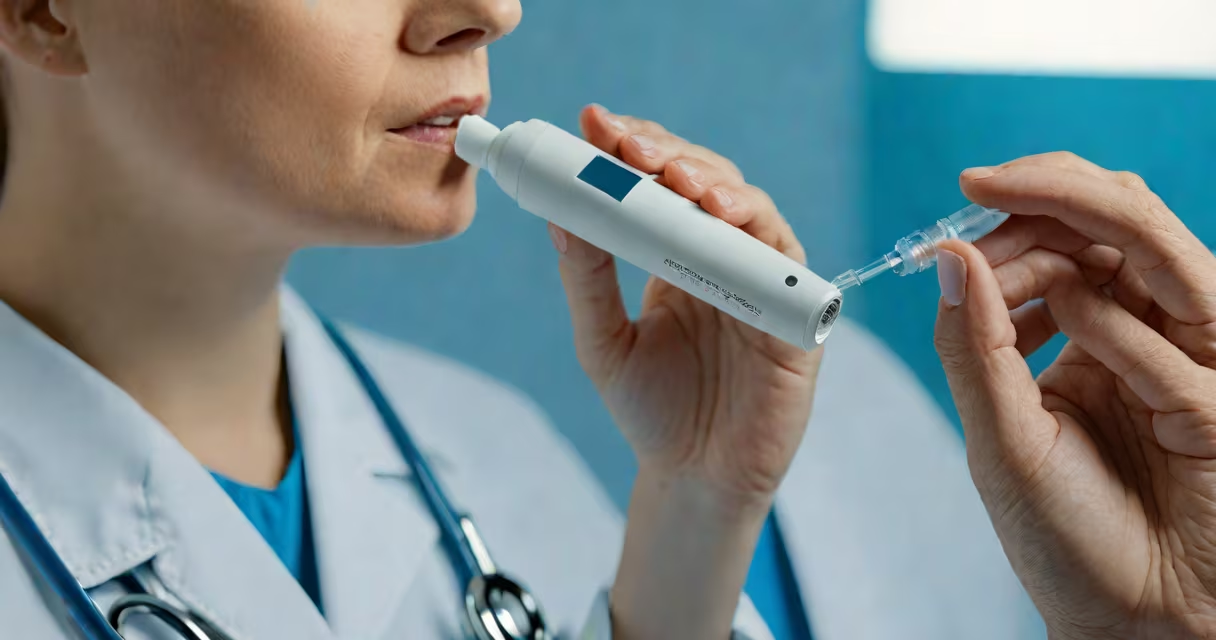
PFTs stands for pulmonary function tests, a group of breathing tests that measure how well the lungs take in and release air and how efficiently they transfer oxygen into the blood. These tests assess lung volume, capacity, rates of flow, and gas exchange.
Pulmonary function tests are essential for diagnosing and monitoring chronic respiratory diseases such as asthma, chronic obstructive pulmonary disease (COPD), pulmonary fibrosis, and cystic fibrosis. They provide objective data on lung function, helping clinicians determine treatment plans and track disease progression over time.
According to the American Thoracic Society (ATS), PFTs are recommended for patients with persistent cough, shortness of breath, or abnormal chest imaging. The ATS guidelines emphasize standardized procedures to ensure accurate results across labs and clinics.
PFTs involve a series of breathing maneuvers performed into a spirometer, a device that measures airflow and lung volumes. The most common test is spirometry, which records forced important capacity (FVC) and forced expiratory volume in one second (FEV1).
During spirometry, the patient takes a deep breath and forcefully exhales into a tube connected to the machine. The device captures the volume of air exhaled and the speed at which it's expelled. A normal FEV1/FVC ratio is typically above 0.70 in adults. A reduced ratio suggests obstructive disease, while a low FVC with a normal ratio indicates restrictive disease.
Additional components of PFTs include lung volume measurements (using body plethysmography or nitrogen washout), diffusion capacity (DLCO), and arterial blood gas analysis. These help differentiate between obstructive and restrictive disorders and assess gas exchange efficiency.
There are three primary categories of pulmonary function tests, each serving a distinct diagnostic purpose:
| Test Type | Measures | Clinical Use |
|---|---|---|
| Spirometry | FEV1, FVC, FEV1/FVC ratio | Diagnose asthma, COPD, bronchitis |
| Lung Volume Testing | TLC, RV, FRC | Detect restrictive lung disease (e.g., pulmonary fibrosis) |
| Diffusion Capacity (DLCO) | Oxygen transfer from alveoli to blood | Assess emphysema, interstitial lung disease |
For example, a patient with progressive shortness of breath and a normal chest X-ray may have normal spirometry but reduced DLCO. This pattern points toward early interstitial lung disease, which may not show on imaging until advanced stages.
A 62-year-old smoker with a 30-pack-year history presents with worsening dyspnea on exertion. Spirometry shows FEV1 of 1.8 L (predicted 3.2 L), FVC of 3.0 L (predicted 4.1 L), giving an FEV1/FVC ratio of 0.60 - below the threshold of 0.70. This indicates obstructive lung disease consistent with COPD. Further testing confirms reduced DLCO, suggesting emphysematous changes.
Many assume PFTs are only for smokers or people with obvious breathing problems. In reality, PFTs are used in preoperative evaluations, occupational health screenings, and monitoring response to therapy. The U.S. Preventive Services Task Force recommends screening for COPD in high-risk individuals, including those with a history of smoking and symptoms of chronic bronchitis.
A frequent error is misinterpreting a normal spirometry result as evidence of healthy lungs. Some patients with early restrictive disease or isolated diffusion defects may have normal FEV1 and FVC but still have significant impairment. This is why combining spirometry with lung volume and DLCO testing improves diagnostic accuracy.
Another misconception is that PFTs are painful or dangerous. The tests are non-invasive and safe for most patients. Rare complications include dizziness or bronchospasm during challenge testing, but these are managed under supervision.
PFTs are often confused with other respiratory assessments. For example, a chest X-ray visualizes structural abnormalities, while PFTs measure functional performance. A patient with normal X-rays but abnormal PFTs may have early-stage lung disease not visible on imaging.
PFTs differ from ABG (arterial blood gas) testing. While both assess oxygenation, ABGs measure actual blood levels of oxygen and carbon dioxide, whereas PFTs evaluate how well the lungs move air and exchange gases.
One non-obvious fact: PFT results depend heavily on patient effort. Poor technique can lead to falsely low values. The ATS requires reproducible efforts within 5% of the best value. This is why training and practice are critical before formal testing.
I once observed a patient with suspected asthma who had inconsistent results on initial PFTs. After coaching on proper inhalation and exhalation techniques, the follow-up test showed a 25% improvement in FEV1 after bronchodilator administration - confirming reversible airway obstruction. This highlights the importance of technician skill and patient cooperation.
Common indications include:
For patients with suspected asthma, a methacholine challenge test may be added to confirm airway hyperresponsiveness. In cases of suspected pulmonary hypertension, PFTs help rule out underlying lung disease before initiating vasodilator therapy.
Standardized protocols from the ATS and European Respiratory Society (ERS) ensure consistency in testing. These guidelines cover equipment calibration, environmental conditions, and acceptable variability in results.
Understanding PFTs becomes easier when placed alongside other common abbreviations in respiratory medicine:
These abbreviations appear in reports and charts, so familiarity helps avoid confusion. For example, a report stating "FEV1 65% predicted, DLCO 55% predicted" indicates moderate obstruction and impaired gas transfer - findings that guide treatment decisions.
PFTs medical abbreviation refers to a set of standardized, clinically validated tests that quantify lung function. They are not a single measurement but a set of assessments used together to classify respiratory disease and guide care. When interpreted correctly, they offer precise insights into lung health and disease progression.