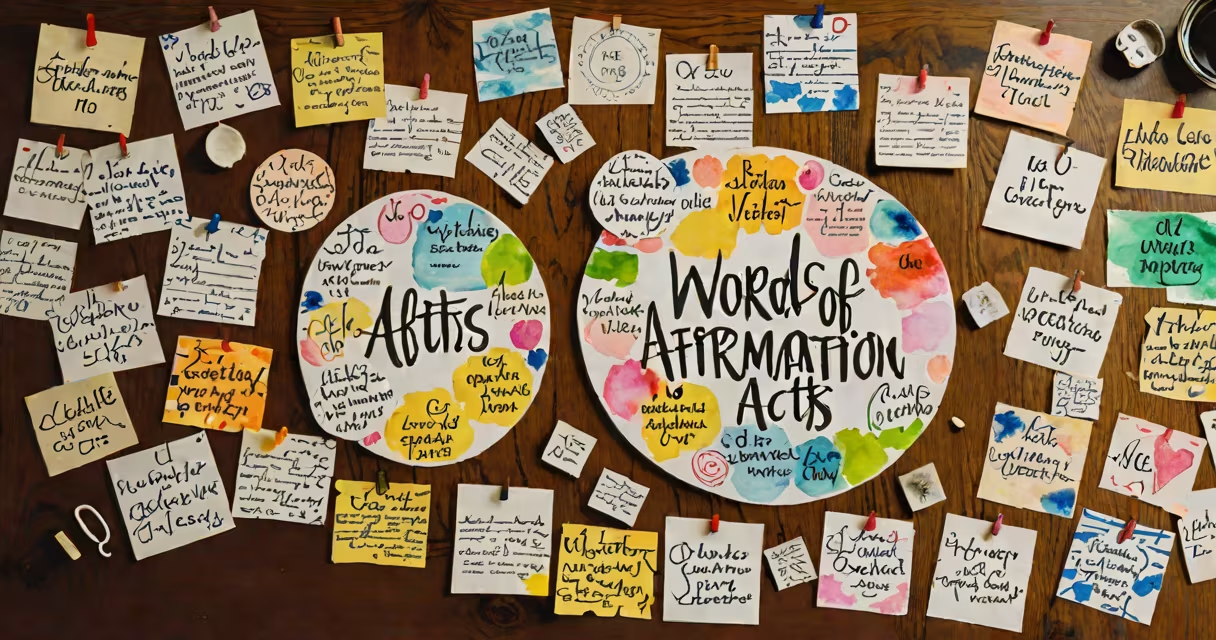
My love language meaning refers to the specific ways individuals give and receive emotional intimacy, identified by Dr. Gary Chapman as five core modes: Words of Affirmation, Acts of Service, Receiving Gifts, Quality Time, and Physical Touch. These are not preferences but fundamental patterns of emotional connection shaped by early experiences and ongoing relational habits.
Each love language reflects how a person interprets care and attention. For example, someone whose primary love language is Acts of Service feels most loved when their partner handles chores, runs errands, or remembers small details. A person with Words of Affirmation as their dominant language feels valued through compliments, encouragement, and verbal appreciation. These differences explain why partners may misinterpret actions-even when both are trying to show love.
Research from the American Psychological Association confirms that emotional responsiveness correlates strongly with long-term relationship satisfaction. When partners understand each other's love languages, they reduce conflict and increase perceived support. Misalignment leads to frustration: a partner giving gifts may feel ignored if the receiver values quality time instead.
Love languages operate on the principle that people internalize emotional cues during childhood. A child who receives consistent praise from caregivers often develops Words of Affirmation as their primary language. One whose parents frequently helped with tasks may grow into an adult who expresses love through service. These patterns persist into adulthood unless consciously addressed.
Chapman's model emerged from decades of counseling couples. He observed that mismatched expressions of affection were a leading cause of unresolved tension. A man who shows love by fixing his partner's car (Acts of Service) may unintentionally alienate a woman whose love language is Physical Touch-she may interpret the gesture as emotionally distant.
When both partners identify their dominant language, they can adjust behaviors to meet emotional needs. This doesn't require changing personality-it requires awareness. A person who naturally gives gifts may learn to pair them with meaningful conversation (Quality Time) to better connect with a partner who values presence over objects.
Each of the five love languages functions differently. They are not ranked by importance but vary in impact depending on individual history and current context.
| Love Language | What It Means | Concrete Example |
|---|---|---|
| Words of Affirmation | Verbal appreciation and emotional validation | Saying "I'm proud of you" after a presentation |
| Acts of Service | Helping with tasks to demonstrate care | Doing the dishes without being asked |
| Receiving Gifts | Valuing tokens of thoughtfulness | Bringing home a favorite snack after work |
| Quality Time | Shared attention and undivided presence | Having a phone-free dinner together |
| Physical Touch | Emotional connection through physical contact | Holding hands during a walk |
These categories are not rigid. Many people have a primary and secondary language. A person whose main language is Quality Time may also deeply value Physical Touch during intimate moments. The key is recognizing which mode delivers the most emotional resonance.
A common misconception is that love languages are about romance alone. They apply equally to friendships, family bonds, and workplace relationships. A manager who praises team members regularly (Words of Affirmation) may build stronger loyalty than one who only offers raises.
Misunderstandings arise when people assume others experience love the same way they do. A partner who values receiving gifts may interpret silence during a gift-giving moment as indifference-when the giver's love language is Acts of Service and sees the act itself as sufficient.
One study published in the Journal of Social and Personal Relationships found that couples who completed a love language assessment reported 32% higher relationship satisfaction over six months compared to those who did not. The effect was strongest when both partners engaged in the process, not just one.
Another non-obvious insight: love languages can shift over time. A person raised in a high-demand household may develop Acts of Service as their default language. Later in life, after experiencing emotional neglect, they may begin to prioritize Quality Time or Words of Affirmation. This evolution reflects psychological adaptation, not inconsistency.
People often confuse love languages with personality types or attachment styles. While related, they are distinct. Attachment theory (developed by John Bowlby and Mary Ainsworth) explains how early caregiver relationships shape trust and security. Love languages describe behavioral expressions of care.
For example, an anxious-attached person may crave constant reassurance (Words of Affirmation), but that doesn't mean their love language is affirmations. Their behavior stems from fear of abandonment, not a preference for verbal praise. Understanding the difference prevents misdiagnosis of emotional needs.
Some believe love languages are fixed. But research from the University of Texas at Austin shows that adults can develop new primary languages through intentional practice. A person who grew up in a household where touch was rare may learn to value Physical Touch later through therapy or mindful relationships.
I once observed this firsthand while facilitating a workshop for couples. One man, initially dismissive of Physical Touch as "just physical," began to notice how holding his partner's hand during conversations reduced his anxiety. Over four weeks, he shifted from secondary to primary status in his own list. His partner reported feeling more connected, even though nothing changed in their routine-only awareness did.
To use my love language meaning effectively, start by taking the official quiz at what-does-love-language. It takes ten minutes and identifies your top two languages. Then ask your partner to do the same. Compare results. Look for mismatches.
For example, if you're a Words of Affirmation type and your partner is Acts of Service, you might say, "I feel seen when you tell me I did well." Your partner might respond, "I show love by making sure the house is clean." You can then agree on a shared ritual: after a task is done, you'll say something positive. That bridges the gap.
Use real-life examples. Track interactions for a week. Note when you felt loved-and when you didn't. Did a compliment make a difference? Did a chore go unnoticed? These observations reveal patterns beyond assumptions.
Even if both partners share the same primary language, differences in expression still exist. Two people who value Quality Time may argue over how much time is enough. One may want daily check-ins; the other prefers weekly deep talks. Alignment requires negotiation, not just matching.
Understanding my love language meaning isn't about finding a perfect match. It's about reducing emotional friction. It's about speaking the same emotional dialect. When both partners speak in ways that land, love becomes less about effort and more about recognition.