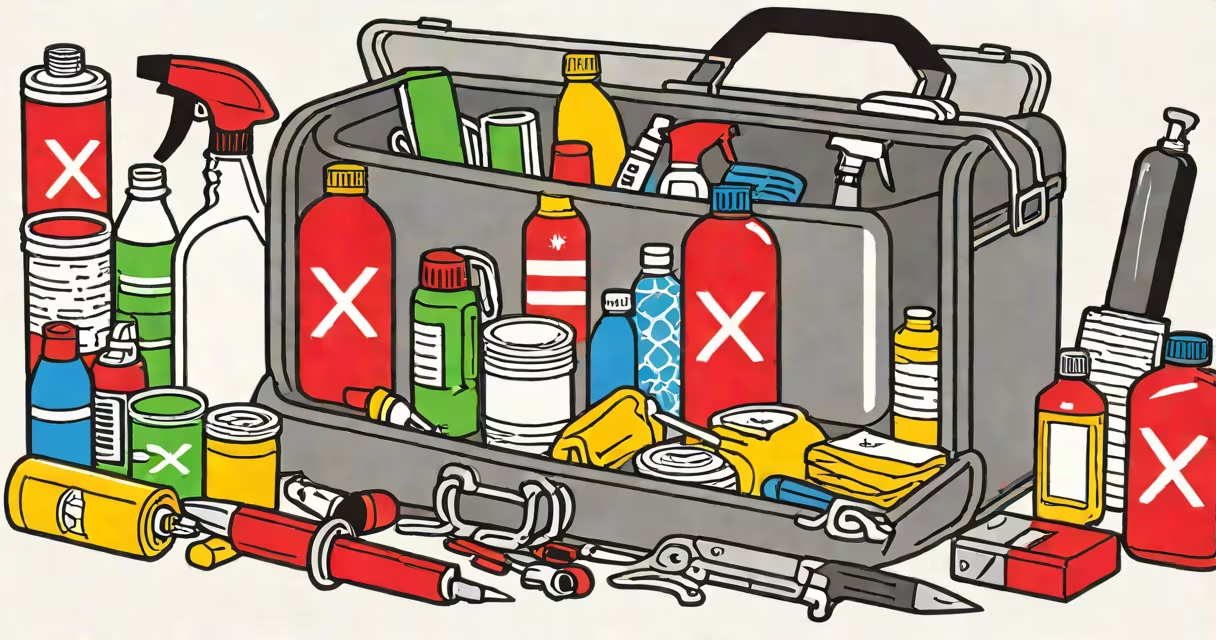
Items not allowed in carry on bags include firearms, explosives, sharp objects, large amounts of liquids, and certain electronic devices. These restrictions exist to prevent threats and ensure passenger safety during air travel. The Transportation Security Administration (TSA) enforces these rules at U.S. airports.
Carry on baggage must pass through a screening process that includes X-ray imaging and physical inspection. Items deemed hazardous or disruptive are removed before boarding. The list of prohibited items is standardized across U.S. airlines and international carriers operating under U.S. jurisdiction.
Prohibited items fall into categories such as weapons, flammable materials, and bulk liquids. Even if an item appears harmless, it may be restricted based on form, quantity, or function. For example, a pocketknife with a blade longer than 2.36 inches is not permitted in carry on luggage. The TSA maintains a detailed list of banned items, updated annually.
TSA agents scan carry on bags using advanced imaging technology. If a suspicious item appears on the screen, the bag is pulled for manual inspection. This process can delay boarding if the item is unclear or violates regulations.
Security officers are trained to identify potential threats. A metal spoon may be allowed, but a multi-tool with a blade is not. Similarly, a small battery-powered device like a drone may be restricted depending on its size and power capacity. The presence of lithium-ion batteries in excess of 100 watt-hours triggers additional scrutiny.
Passengers who bring prohibited items face confiscation and possible penalties. In extreme cases, individuals have been denied boarding or reported to law enforcement. The TSA reports that over 15,000 prohibited items were seized at U.S. checkpoints in 2023 alone.
The following table outlines major categories of items not allowed in carry on bags, along with specific examples and exceptions.
| Type | Examples | Exceptions |
|---|---|---|
| Weapons | Firearms, ammunition, switchblades, nunchucks | Non-functional replicas (not real), unloaded firearms transported in checked baggage |
| Liquids & Gels | Shampoo, lotion, toothpaste, alcohol over 140 proof | Medications, baby formula, breast milk (must be declared) |
| Sharp Objects | Kitchen knives, box cutters, razors with blades over 2.36 inches | Pencil sharpeners, nail clippers, scissors with blades under 4 inches |
| Electronics | Drones over 5 lbs, large lithium batteries (over 100 Wh) | Phones, tablets, laptops (can be carried on) |
| Flammable Materials | Lighter fluid, aerosol sprays, fireworks | Small lighters (one per person) |
Some items are allowed in checked bags but not in carry on. Examples include fuel canisters, camping stoves, and large propane tanks. These are classified as hazardous materials and require special handling.
A common mistake is assuming that small quantities of a banned substance are acceptable. For instance, a 4-ounce bottle of perfume exceeds the 3.4-ounce limit for liquids. Even if the container is empty, residual liquid may trigger a secondary screening.
Carry on restrictions apply at all U.S. airports and most international hubs with TSA agreements. The rules are consistent across Delta, American, United, and other major carriers. The goal is to maintain uniform safety standards.
Security protocols are designed to detect threats early. A metal detector cannot identify a hidden explosive, but it can flag anomalies in density or composition. X-ray machines show unusual shapes or high-density materials. This layered approach reduces risk during flight.
One non-obvious rule: some medications in liquid form are exempt if they are medically necessary and properly documented. The TSA allows up to 3.4 ounces of liquid medication in carry on, even if it exceeds standard limits. Passengers must declare such items at the checkpoint.
Many travelers assume that all batteries are banned. In reality, lithium-ion batteries under 100 watt-hours are permitted in carry on bags. Devices like smartphones, tablets, and cameras fall within this limit. Batteries over 100 Wh require approval and must be carried in the cabin.
Another frequent error is placing electronics in checked luggage. Laptops, tablets, and external hard drives must remain in carry on bags. Checked bags are subject to higher impact risks, and electronics can be damaged or fail during transit.
I once saw a traveler attempt to bring a 12-inch chef's knife in their carry on. The agent asked if it was for cooking. When the passenger said yes, the agent explained that any blade longer than 2.36 inches is prohibited. The knife was confiscated, and the passenger had to repack it in checked luggage.
Even everyday items like hair gel or hand sanitizer are limited to 3.4 ounces. Larger containers must be transferred to a clear quart-sized bag. Failure to comply results in removal from the screening line.
Use a transparent, quart-sized bag to organize liquids and gels. Label each item. Keep your ID and boarding pass ready. Arrive at the airport early to allow time for screening and adjustments.
Always pack electronics in your carry on bag. Avoid placing them in checked luggage unless required. If you're traveling with a drone, verify its weight and battery capacity before departure.
Items not allowed in carry on bags are strictly enforced to protect passengers and crew. Understanding the rules prevents delays, fines, and the loss of essential items. Review the list before packing to ensure compliance.