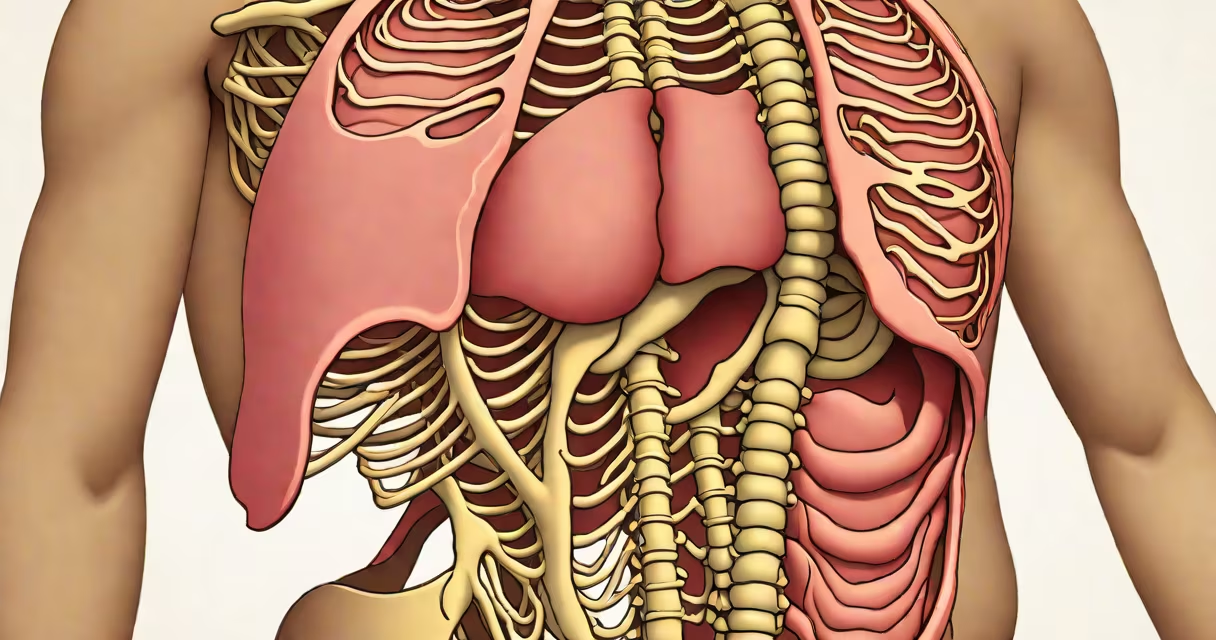
The spleen is located on the left side of the abdomen, tucked beneath the lower left ribs, just behind the stomach and adjacent to the pancreas. It lies in the upper left quadrant of the abdominal cavity, protected by the rib cage.
As a important organ in the lymphatic system, the spleen performs several key functions: filtering old or damaged red blood cells, storing platelets and white blood cells, and supporting immune responses against pathogens. It is not essential for survival-people can live without it-but it plays a significant role in maintaining blood health and fighting infections.
Medical imaging confirms that the spleen sits in the left upper quadrant, typically measuring about 11-13 cm in length and 6-7 cm in width in adults. Its position remains consistent across most individuals, though slight anatomical variation exists. The organ is highly sensitive to trauma, and injury can lead to internal bleeding, requiring urgent medical attention.
The spleen acts as a filter for the bloodstream. As blood passes through its tissue, specialized macrophages remove aged red blood cells and recycle iron. This process prevents the buildup of cellular debris and maintains efficient oxygen transport.
It also serves as a reservoir for platelets and white blood cells. During infection or hemorrhage, the spleen contracts slightly, releasing stored platelets to aid clotting. This response is part of the body's rapid defense mechanism during acute stress.
Research from the National Institutes of Health (NIH) notes that the spleen contributes to antibody production and antigen presentation, particularly in response to encapsulated bacteria such as *Streptococcus pneumoniae*. Patients who have had their spleen removed (splenectomy) face a higher risk of severe infections from these organisms, especially in early childhood.
The spleen lies between the 9th and 11th ribs, nestled in the left hypochondriac region. It is anchored by ligaments-the gastrosplenic, phrenicosplenic, and splenorenal ligaments-which stabilize its position. These ligaments also allow limited mobility, meaning the spleen can shift slightly during breathing or movement.
Its size varies with age and health. In children, the spleen is proportionally larger relative to body size. In adults, it typically weighs between 150 and 200 grams. Enlargement (splenomegaly) can occur due to infection, liver disease, or hematologic disorders, causing the organ to extend beyond its normal boundaries and potentially press on nearby structures.
A common misconception is that the spleen is involved in digestion. It is not. It does not produce enzymes or process food. Its role is entirely related to blood filtration and immunity. Confusing it with the pancreas or left kidney-both also located in the left upper quadrant-is frequent among patients experiencing abdominal pain.
Many people assume the spleen is on the right side because the liver dominates the right upper quadrant. However, the spleen is consistently on the left. A single CT scan or ultrasound confirms its location. Imaging is important in diagnosing conditions like splenic rupture, which often results from blunt trauma-such as in car accidents or contact sports.
One non-obvious fact: the spleen can be palpated during physical exams only when enlarged. In healthy individuals, it is too small and well-protected by the rib cage to feel. When palpable, it may indicate underlying disease, such as mononucleosis, malaria, or leukemia.
For example, a 22-year-old college athlete presented with left upper quadrant pain after a football tackle. An ultrasound revealed a ruptured spleen with free fluid in the abdomen. Emergency surgery was required. This case illustrates how trauma can affect the spleen despite its protective location.
Several organs share the left upper quadrant, making accurate diagnosis challenging. The spleen is often confused with the left kidney, pancreas, or even the stomach. Key differences include:
| Organ | Location Relative to Spleen | Primary Function | Key Identifier |
|---|---|---|---|
| Spleen | Centered in left upper quadrant | Blood filtration, immune support | Soft, spongy texture; not visible on standard X-ray |
| Left Kidney | Posterior and slightly inferior | Waste filtration, electrolyte balance | Located deeper, behind the peritoneum |
| Pancreas | Deep, posterior to stomach | Enzyme and hormone production | Extends horizontally across the back |
| Stomach | Anterior and slightly lower | Food breakdown and storage | Visible on barium swallow or endoscopy |
When pain arises in the left upper abdomen, clinicians assess for splenic involvement using clinical signs such as tenderness on percussion just below the left rib cage-a finding known as "Kehr's sign," associated with splenic injury.
I once observed a patient with persistent left-sided abdominal discomfort. Initial tests suggested gastritis, but persistent symptoms led to a CT scan. The scan revealed a large splenic cyst, likely congenital. After surgical drainage, the pain resolved. This case highlights how subtle symptoms can mask splenic pathology.
Pain in the left upper abdomen, especially after trauma, warrants evaluation. Symptoms such as sudden sharp pain, shoulder pain (referred from diaphragmatic irritation), dizziness, or low blood pressure may indicate splenic rupture. Immediate imaging is necessary.
Chronic conditions like hypersplenism-where the spleen becomes overactive and destroys blood cells-can cause anemia, thrombocytopenia, or leukopenia. Blood tests and imaging help differentiate these from other causes of low counts.
The spleen is a small but essential organ located on the left side of the body. Its position, function, and clinical significance are well-documented in medical literature. Knowing that your spleen is on your left side helps clarify both normal anatomy and potential health concerns.