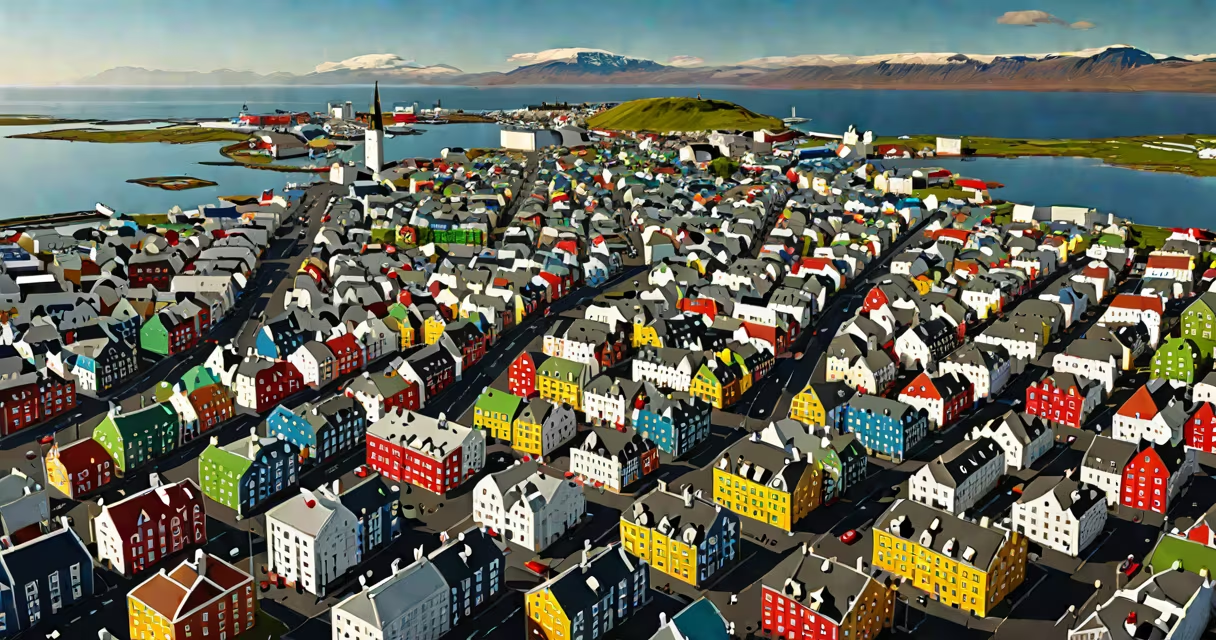
Reykjavik, the capital of Iceland, is the world's northernmost capital city and the largest urban center in the North Atlantic region. It sits at 64°N latitude, just below the Arctic Circle, yet enjoys milder temperatures due to the Gulf Stream and widespread geothermal heating.
Despite its remote location, Reykjavik is a hub of innovation, culture, and sustainability. The city runs almost entirely on renewable energy, primarily from geothermal and hydroelectric sources. Its urban core features brightly painted houses, a vibrant arts scene, and a population of just over 120,000 people.
Reykjavik's unique blend of natural beauty, technological advancement, and cultural quirks makes it a standout destination. From underground hot springs to a citywide ban on alcohol sales in supermarkets, the capital defies common assumptions about life in the far north.
Reykjavik's infrastructure relies heavily on geothermal energy. Over 90% of homes in the city are heated using steam drawn from underground volcanic reservoirs. This system reduces reliance on fossil fuels and keeps indoor temperatures stable year-round, even during winter months.
The city's climate is moderated by the North Atlantic Current. While winters average around -1°C (30°F), snow rarely accumulates for long. Summer days can reach 15°C (59°F), and the midnight sun shines continuously from late May through early July.
Urban planning in Reykjavik prioritizes walkability and green space. The city center is compact, with most services within a 15-minute walk. Public transit is free for residents and visitors under 18, and cycling routes connect neighborhoods across the city.
Reykjavik's architecture blends modern design with traditional Icelandic elements. Buildings often feature wooden facades, curved roofs, and minimalist interiors. The city's skyline includes the distinctive Hallgrímskirkja church, whose tower resembles basalt columns formed by lava flows.
Culture thrives in Reykjavik's many galleries, theaters, and music venues. The city hosts the annual Reykjavik International Film Festival and the Secret Garden Festival, drawing artists and tourists from around the globe. Local bands like Sigur Rós and Of Monsters and Men originated here.
Reykjavik is home to Europe's oldest parliament, the Althingi, established in 930 CE. Though the current parliament building dates to 1900, the site remains a symbol of democratic continuity in the Nordic world.
Many assume Reykjavik is perpetually dark and cold. In reality, the city experiences nearly 24 hours of daylight in summer and only about four hours of darkness in winter. The sun sets around 4:30 PM in December, but streetlights are rarely needed due to efficient lighting and low crime rates.
Another myth is that Icelanders live in isolation. The opposite is true: Reykjavik has one of the highest internet penetration rates in the world-over 98% of households have broadband access. The city also ranks among the top global locations for digital nomads.
Some visitors expect Reykjavik to resemble a frozen wasteland. Instead, the city is surrounded by lush moss-covered lava fields, waterfalls, and geysers. The nearby Gullfoss waterfall and Geysir geothermal area are easily accessible day trips.
Not all facts about Reykjavik are equal. They fall into categories based on origin and significance:
| Type | Description | Example |
|---|---|---|
| Natural Phenomena | Geological or climatic events unique to the region. | Reykjavik lies on a tectonic plate boundary; the Mid-Atlantic Ridge runs beneath the city. |
| Energy Systems | Infrastructure powered by renewable resources. | Over 99% of electricity comes from hydropower and geothermal plants. |
| Cultural Quirks | Local customs or social behaviors distinct from other capitals. | Alcohol cannot be sold in grocery stores; only licensed bars and shops carry it. |
| Historical Oddities | Events or artifacts tied to Iceland's past. | The first permanent settlement in Iceland was established near Reykjavik in 874 AD. |
One lesser-known fact: Reykjavik has more bookstores per capita than any other city in the world. With over 30 independent bookshops, including the renowned Bókaflóð, the city fosters a deep reading culture. The Icelandic government subsidizes books, making them affordable and widely available.
Consider the Blue Lagoon, a geothermal spa located just 20 minutes from downtown Reykjavik. It draws over 1 million visitors annually and generates significant revenue for the local economy. The lagoon uses recycled geothermal water from a nearby power plant, which maintains a constant temperature of 37-39°C (99-102°F).
Each visit costs approximately $75 USD, with proceeds funding environmental research and community projects. The facility also recycles minerals from the water, such as silica and sulfur, which are used in skincare products sold onsite.
This model demonstrates how Reykjavik turns natural resources into sustainable tourism. Unlike many resort destinations, the Blue Lagoon operates with minimal ecological impact and contributes directly to regional development.
I spent a week in Reykjavik during the winter solstice. Despite the short daylight, the city felt alive. Street lamps glowed softly, and people gathered in cafes and bars. At midnight, the sky remained faintly lit-a phenomenon called civil twilight.
I visited the Harpa Concert Hall, where the glass façade reflected the pale blue sky. Inside, a jazz ensemble performed. Outside, a group of teenagers played ice hockey on a frozen pond near the harbor. The air was crisp but not biting-around -2°C (28°F)-and the wind was minimal.
What struck me most wasn't the cold, but the sense of calm. There were no loud crowds, no traffic jams. People moved slowly, purposefully. The city felt both intimate and expansive at once.
Reykjavik challenges stereotypes about northern cities. It is not frozen, isolated, or barren. Instead, it is changing, connected, and deeply rooted in nature and innovation. The city's success stems from long-term investments in renewable energy, education, and inclusive governance.
For travelers seeking authenticity, Reykjavik offers more than scenic views-it delivers insight into how communities thrive in extreme environments. Whether exploring hidden caves, attending a poetry reading, or soaking in a geothermal pool, visitors engage with a place that values balance between progress and preservation.