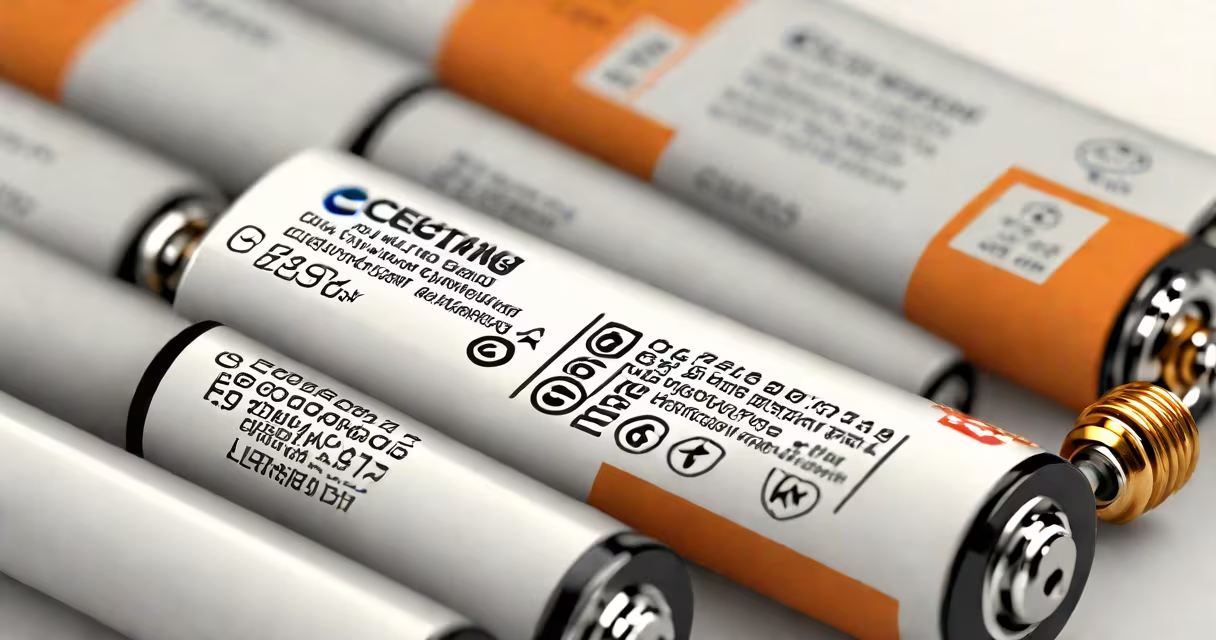
IEC 62133-2 is an international standard that specifies safety requirements for secondary lithium cells and batteries used in portable applications such as laptops, smartphones, and power tools. It outlines test procedures for electrical, mechanical, and environmental stress to prevent fire, explosion, or leakage during normal use and misuse.
The standard applies to both single cells and battery packs rated at 12 volts or less. It covers cylindrical, prismatic, and pouch-type cells. Manufacturers must demonstrate compliance through a series of controlled tests before selling products in markets that recognize IEC standards, including the EU, Japan, and South Korea.
Testing under IEC 62133-2 includes overcharge, external short circuit, forced discharge, vibration, impact, and temperature cycling. Devices must not ignite, explode, or leak electrolyte during or after these tests. The standard replaced earlier versions like IEC 61951-2 and aligns with global regulatory expectations for consumer electronics safety.
IEC 62133-2 uses a tiered approach to evaluate risk. Devices are first tested under normal operating conditions, then subjected to fault scenarios that mimic real-world damage or misuse. For example, a battery pack may be charged beyond its rated voltage to simulate charger failure.
Each test has defined parameters. Overcharge testing requires applying 1.5 times the nominal voltage for 2 hours. The battery must not rupture, catch fire, or emit toxic fumes. Mechanical tests involve dropping the cell from a height of 1 meter onto a steel plate or subjecting it to 100G shock pulses.
Results are assessed based on pass/fail criteria. A device fails if it shows visible deformation, leaks, or reaches temperatures above 150°C during testing. Failure triggers redesign, material changes, or additional safety features like current-limiting circuits or thermal cutoffs.
IEC 62133-2 divides testing into three categories: electrical, mechanical, and environmental. Electrical tests verify performance under abnormal voltage and current conditions. Mechanical tests assess structural integrity. Environmental tests examine behavior under extreme heat, cold, or humidity.
| Test Type | Parameter | Pass Criteria |
|---|---|---|
| Overcharge | 1.5× nominal voltage for 2 hours | No ignition, no rupture, no electrolyte leakage |
| External Short Circuit | 0.1Ω resistor across terminals for 1 hour | Temperature ≤ 150°C, no fire or explosion |
| Drop Test | 1 meter drop onto steel plate | No internal short, no venting |
| High Temp Exposure | 70°C for 24 hours | No swelling, no leakage, stable voltage |
Some tests require multiple cycles. For example, the vibration test subjects the battery to 100 cycles of 10-200 Hz sinusoidal motion. After each cycle, the battery is inspected for physical damage or electrical anomalies.
A key requirement is the use of certified test facilities. Only laboratories accredited by bodies like ILAC or ISO/IEC 17025 can issue valid reports. This ensures consistency across regions and prevents fraudulent compliance claims.
IEC 62133-2 is often confused with IEC 61951-2, which it supersedes. While both cover lithium-ion safety, IEC 62133-2 introduces stricter mechanical and thermal testing protocols. It also expands coverage to include battery packs with integrated protection circuits.
Another misunderstanding is that passing IEC 62133-2 guarantees absolute safety. The standard addresses known failure modes but cannot predict rare events like manufacturing defects or long-term degradation. It focuses on preventing catastrophic failures during typical use, not eliminating all risks.
Manufacturers sometimes assume that meeting IEC 62133-2 allows unrestricted global distribution. This is incorrect. Countries like the United States do not mandate IEC 62133-2, but many importers require it. Regulatory bodies such as the CPSC and FCC may still impose additional safety rules.
In 2022, a major laptop manufacturer recalled 15,000 units due to battery swelling. Post-mortem analysis revealed that the affected models had passed IEC 62133-2 under initial batch testing but failed later due to moisture ingress in the cell seal. This highlighted that compliance is not static-it must be maintained throughout production and supply chain operations.
During my work with a battery pack supplier, we observed that cells failing the drop test often showed micro-cracks in the separator layer. These cracks were invisible to the naked eye but caused internal shorts under load. We corrected the issue by adjusting the adhesive bonding process and retested using IEC 62133-2's defined impact energy levels.
For a specific example, consider a 3.7V, 2,500mAh lithium-polymer battery used in a medical device. To comply with IEC 62133-2, the manufacturer must perform:
All results must be documented and submitted to a third-party lab for verification. Only after successful completion can the product carry the IEC 62133-2 mark.
Without IEC 62133-2, manufacturers would lack a consistent structure for assessing battery safety. The standard reduces the risk of fires in consumer electronics, especially in high-density devices like wearables and drones.
Regulatory agencies in Europe require IEC 62133-2 certification for CE marking on battery-powered equipment. The European Commission cites the standard in its Machinery Directive and Radio Equipment Directive as a reference for safety compliance.
When selecting components, engineers should verify that batteries come with test reports from accredited labs. Even if a component claims "IEC 62133-2 compliant," always request the full report. Some suppliers provide generic documentation without actual testing.