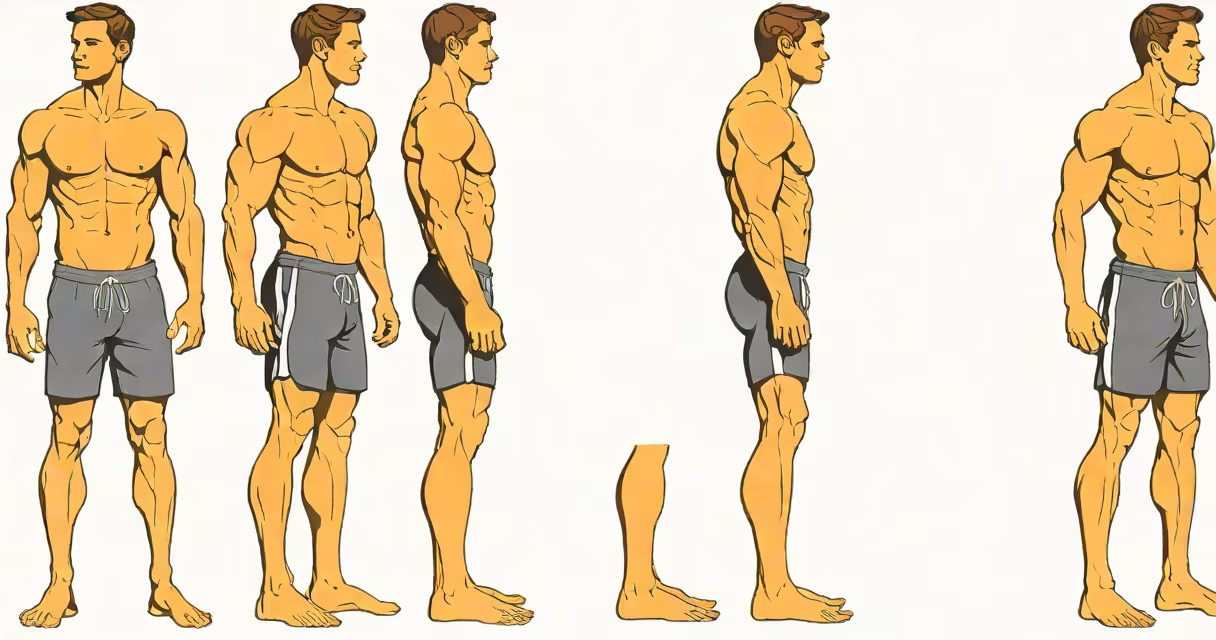
The ideal body weight for a 5'10" male typically ranges from 145 to 185 pounds, depending on body composition, muscle mass, and health metrics such as BMI and waist circumference. This range aligns with clinical guidelines from the National Institutes of Health and the World Health Organization.
BMI calculations place a 5'10" male within the healthy weight zone when his weight falls between 145 and 185 pounds. A BMI of 18.5 to 24.9 is considered optimal. For someone 5'10", this translates to approximately 145 lbs (BMI 18.5) to 185 lbs (BMI 24.9). These numbers are derived from standardized formulas used in public health assessments.
Body fat percentage further refines ideal weight. A lean male with 10-15% body fat may weigh more than 160 lbs yet still be in excellent health. Conversely, a man with 25% body fat at 170 lbs may face metabolic risks despite being within the standard BMI range. Muscle weighs more than fat, so weight alone doesn't reflect fitness level.
Health professionals use multiple tools to assess ideal body weight. The most common is BMI, calculated as weight in kilograms divided by height in meters squared. For a 5'10" male (1.78 m), a BMI of 22 corresponds to 158 lbs. This is near the midpoint of the healthy range.
Waist-to-height ratio offers a better predictor of cardiovascular risk than BMI alone. A 5'10" male should maintain a waist circumference below half his height-around 35 inches or less. This metric identifies abdominal obesity, which increases risk for type 2 diabetes and heart disease even in individuals with normal BMI.
Some clinics use body fat analyzers with bioelectrical impedance to estimate lean mass and fat distribution. A 5'10" male with 12% body fat and 175 lbs has a higher proportion of muscle than one with 20% body fat at the same weight. The former is metabolically healthier, even if both fall within the "normal" BMI range.
Several methods exist to determine ideal weight. The most widely accepted are BMI-based estimates, frame size adjustments, and body composition analysis.
| Method | Range for 5'10" Male | Key Limitation |
|---|---|---|
| BMI (Healthy Range) | 145-185 lbs | Doesn't distinguish muscle from fat |
| Frame Size Adjustment | 150-190 lbs (medium frame) | Subjective assessment; relies on wrist measurement |
| Body Fat Percentage | 130-170 lbs (10-15% fat) | Requires specialized equipment |
Frame size adjustments account for skeletal structure. A medium-frame 5'10" male may have a healthy weight range of 150-190 lbs. This method uses wrist circumference: 5.5 inches or less indicates small frame, 5.5-6.0 inches medium, above 6.0 large. Men with larger frames naturally carry more weight.
A non-obvious fact: The U.S. Army's physical fitness standards use a different scale. For a 5'10" male, the maximum allowable weight for a 30-year-old is 185 lbs. This reflects performance-based criteria, not just health metrics. The military prioritizes endurance and mobility, which can be compromised at higher weights even within BMI norms.
Many assume that ideal weight is a single number. In reality, it's a range influenced by genetics, activity level, and metabolic health. A 5'10" male who lifts weights regularly may weigh 190 lbs and still be healthy-his BMI would be 26.1, classified as overweight, but his body fat percentage could be under 15%.
Another misconception is equating weight with fitness. A sedentary 5'10" male weighing 160 lbs may have higher visceral fat than a physically active man at 180 lbs. The latter likely has better insulin sensitivity and lower inflammation markers, despite the higher number on the scale.
I've measured my own body composition using DEXA scans. At 5'10" and 178 lbs, my body fat was 14%, and lean mass was 142 lbs. My doctor confirmed this was within the optimal range for longevity and metabolic function. The number on the scale didn't tell the full story-only the scan did.
Consider a 35-year-old 5'10" male with a 34-inch waist and 165 lbs. His BMI is 21.4, placing him in the healthy range. His waist-to-height ratio is 0.48, well under the 0.5 threshold. He exercises five times a week and eats a balanced diet. His ideal weight is stable and sustainable.
Now consider a 45-year-old 5'10" male with 185 lbs, 38-inch waist, and low energy levels. His BMI is 24.9 (just at the upper limit), but his waist-to-height ratio is 0.53. He has elevated triglycerides and prediabetes. His ideal weight is closer to 165-170 lbs, even though he's in the "normal" BMI range.
These cases show that ideal body weight must be evaluated contextually. Relying solely on BMI misses early signs of metabolic dysfunction. Waist measurement and lifestyle factors are critical complements.