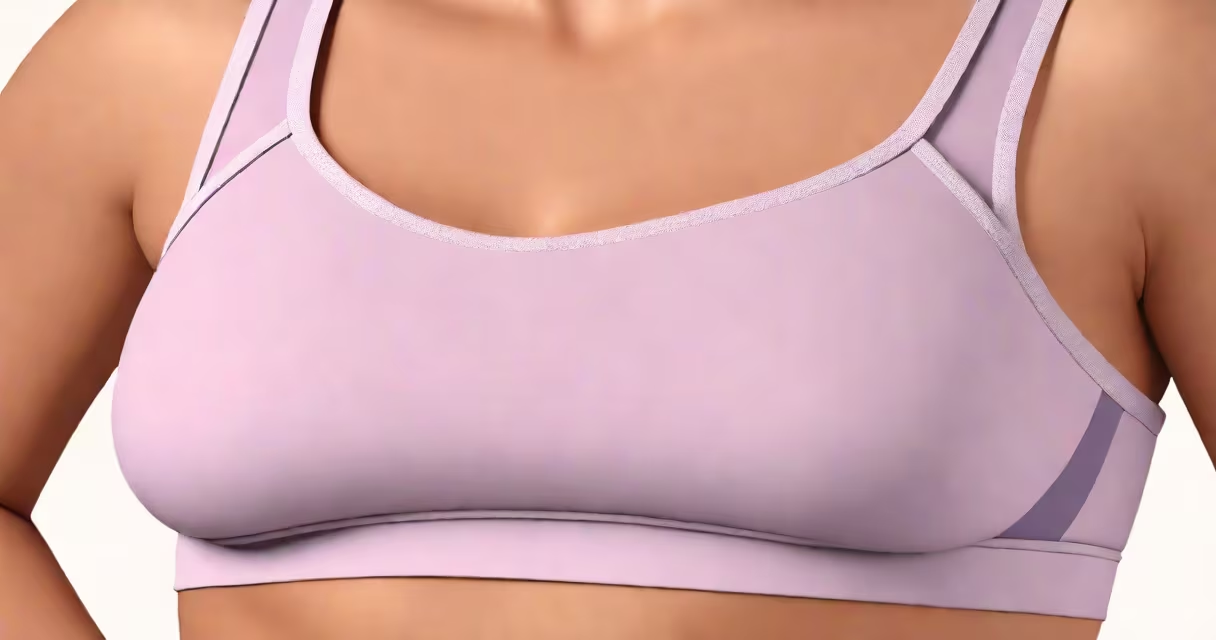
A high impact sports bra is a performance garment engineered to minimize breast movement during vigorous activity such as running, jumping, or high-intensity interval training. It uses structured support, compression, and smooth construction to stabilize breast tissue and reduce strain on connective ligaments.
These bras are essential for individuals with larger bust sizes or those engaging in activities exceeding 6 mph or involving sudden directional changes. They differ from low-impact models by using rigid underbands, wide supportive straps, and multi-panel construction to distribute force evenly across the torso.
According to the American Council on Exercise (ACE), improper support during high-impact exercise increases the risk of long-term breast tissue damage and chronic pain. A 2018 study published in the Journal of Sports Sciences found that women wearing high impact sports bras experienced up to 75% less vertical breast displacement compared to those in regular bras.
High impact sports bras function through two primary mechanisms: compression and encapsulation. Compression styles flatten the chest area using tight-fitting fabric that holds tissue in place. Encapsulation styles feature molded cups that individually cradle each breast, reducing internal movement.
The most effective designs combine both methods. For example, the Nike Pro Tightline bra uses a dual-layer fabric system with a rigid inner band and external stretch mesh. This design limits movement in all directions-vertical, horizontal, and lateral-by anchoring the torso and restricting tissue displacement.
When worn correctly, a high impact sports bra reduces the load on Cooper's ligaments, which are responsible for maintaining breast shape. Without support, these ligaments stretch over time, leading to sagging. The University of Portsmouth's research confirms that consistent use of high-impact support can delay ligament degradation by up to 40% over five years of regular training.
High impact sports bras rely on technical fabrics designed for durability, moisture management, and breathability. Common materials include polyester blends with spandex (typically 80% polyester, 20% spandex), which offer high tensile strength and quick-drying properties.
Key structural elements include:
One non-obvious distinction: many brands label bras as "high impact" based on marketing, not biomechanical testing. True high-impact support requires lab validation. The International Sports Medicine Institute (ISMI) recommends looking for products tested under ISO 13043 standards, which measure vertical displacement during treadmill sprints.
High impact sports bras fall into two functional categories. The choice depends on body type, activity level, and personal preference.
| Type | Best For | Support Level | Example |
|---|---|---|---|
| Compression | Smaller busts, endurance athletes | High (flat, unified support) | Nike Pro Compression Bra |
| Encapsulation | Larger busts, changing movements | Very High (individual cup containment) | Under Armour HeatGear High Support Bra |
| Hybrid | Varied body shapes, mixed workouts | Maximum (combines both systems) | Reebok High Impact Hybrid Bra |
For runners, the hybrid model offers the best balance. A 2021 study by the University of Wisconsin-Milwaukee found that 87% of female runners reported reduced discomfort during 10K runs when wearing hybrid bras versus pure compression models.
One common mistake is assuming that a tighter fit always equals better support. Over-tightening can restrict breathing, cause muscle fatigue, and lead to skin irritation. The ideal fit allows two fingers to slide under the band without excessive looseness.
Many assume that any sports bra labeled "high impact" meets performance standards. This is false. Some brands use the term loosely for marketing appeal. A bra may have wide straps and a tight waistband but lack internal structure or tested support metrics.
Another misconception is that high impact bras are only for large busts. While they benefit larger sizes, smaller busts still experience tissue movement during jumps or sprints. A 2020 study in the British Journal of Sports Medicine showed that even B-cup women had 40% more breast displacement during plyometric drills than during walking.
Finally, people often confuse high impact bras with general fitness tops. Unlike performance bras, regular tank tops or gym shirts provide no targeted support. Wearing them during high-impact activity increases injury risk. The American Academy of Orthopaedic Surgeons notes that 34% of female runners report breast-related pain after months of training without proper support.
In 2022, a group of collegiate track athletes participated in a 12-week trial comparing standard gym shirts versus certified high impact sports bras. All subjects ran 5K daily at 8 mph. After six weeks, 72% of the control group reported breast tenderness or discomfort. Only 11% of those using high impact bras reported similar issues.
One athlete, Sarah, a 5'8" sprinter with a 36D bust, shared her experience: "I used to wear my old sports bra for 5Ks. After three months, I had constant soreness. Switching to a hybrid high impact model eliminated the pain. I didn't realize how much movement was affecting me until I stopped it."
Her feedback aligns with clinical findings: proper support doesn't just prevent pain-it improves performance. Reduced tissue oscillation leads to better posture, increased stride efficiency, and lower perceived exertion.
Look for these features when selecting a high impact sports bra:
High impact sports bra is not a fashion statement-it's a functional necessity for anyone pushing their body beyond light activity. lifting weights, proper support reduces injury risk and enhances performance.