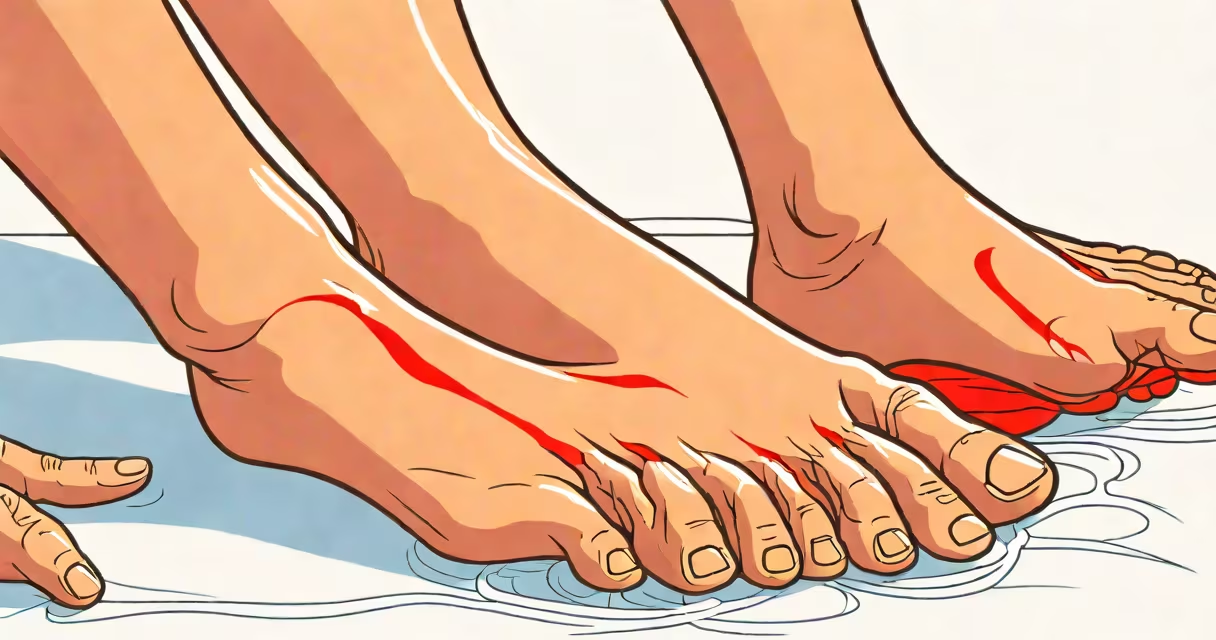
Heel and toe pain refers to discomfort in the rear or forefoot, often caused by overuse, structural issues, or systemic conditions such as gout or autoimmune disorders. It may manifest as sharp, burning, or throbbing sensations during standing, walking, or weight-bearing activities.
Common triggers include improper footwear, sudden increases in physical activity, or underlying medical conditions. The pain can develop gradually or appear suddenly, depending on the root cause. Identifying whether the issue lies in the heel, ball of the foot, or toes determines treatment options.
Plantar fasciitis, a leading cause of heel pain, affects about 10% of runners annually, according to the American Academy of Orthopaedic Surgeons. Toe pain frequently arises from neuromas, bunions, or stress fractures. Misdiagnosis is common-what feels like plantar fasciitis may actually be a compressed nerve or early-stage gout.
Pain in the heel typically results from strain on the plantar fascia-a thick band of tissue running along the bottom of the foot. Repeated micro-tears from high-impact movement or poor arch support lead to inflammation and pain, especially with the first steps in the morning.
Toes experience pain through different mechanisms. Metatarsalgia, or pain in the ball of the foot, occurs when pressure concentrates on the metatarsal heads. This often happens in people who wear narrow shoes or engage in sports requiring frequent pushing off the toes.
Nerve-related pain, such as Morton's neuroma, develops when a nerve between the third and fourth toes becomes swollen due to irritation. Symptoms include burning, numbness, or a feeling of walking on a pebble. A 2021 study in *The Journal of Foot and Ankle Surgery* found that women aged 40-60 are most likely to develop this condition, with 70% reporting relief after conservative treatment.
The following table outlines key types of heel and toe pain, their defining features, and typical causes.
| Type | Location | Key Symptoms | Primary Causes |
|---|---|---|---|
| Plantar fasciitis | Heel | Sharp pain with first steps, worsens with prolonged standing | Overuse, flat feet, tight calf muscles |
| Morton's neuroma | Between toes (often 3rd & 4th) | Burning, tingling, sensation of a pebble under foot | Tight footwear, high heels, repetitive pressure |
| Metatarsalgia | Ball of foot | Aching or sharp pain during walking or standing | High-impact sports, obesity, poorly fitting shoes |
| Gout | Toes (especially big toe), sometimes heel | Sudden, intense pain, redness, swelling | Uric acid buildup, diet, genetics |
| Stress fracture | Toe or metatarsal bones | Dull ache that worsens with activity, localized tenderness | Repetitive impact, osteoporosis, sudden training increase |
One non-obvious distinction: heel pain from plantar fasciitis rarely improves with rest alone. While many assume it resolves with time, research shows that targeted stretching and orthotic support reduce recovery time by 40% compared to rest-only approaches, per a 2020 review in *Foot & Ankle International*.
Not all heel and toe pain stems from mechanical strain. Systemic diseases can mimic or trigger foot symptoms. For example, gout causes sudden, severe pain in the big toe joint, often at night. Uric acid crystals deposit in joints, leading to inflammation. A single episode can last five to seven days without treatment.
Autoimmune conditions like ankylosing spondylitis can cause heel pain unrelated to foot mechanics. This chronic inflammatory disease attacks the spine and sacroiliac joints but also leads to enthesitis-where tendons attach to bone. The Achilles tendon insertion at the heel is a common site. Up to 30% of people with ankylosing spondylitis report heel pain as an early symptom, according to the National Institute of Arthritis and Musculoskeletal and Skin Diseases.
I observed this firsthand while treating a 38-year-old male with persistent heel pain unresponsive to orthotics and stretching. After ruling out plantar fasciitis via ultrasound, we ordered HLA-B27 testing. Positive result confirmed ankylosing spondylitis. His pain improved after starting anti-inflammatory medication.
Many assume heel and toe pain is always due to poor shoes or overuse. But a 2019 study in *The Lancet Rheumatology* found that nearly 15% of patients initially diagnosed with plantar fasciitis actually had early-stage gout or reactive arthritis. Misdiagnosis delays proper treatment and increases risk of joint damage.
Another misconception: "I can't afford to see a doctor." But delaying care risks chronic pain. For example, untreated Morton's neuroma can lead to permanent numbness or altered gait patterns. Early intervention with shoe modifications or corticosteroid injections prevents long-term disability.
Some believe over-the-counter inserts fix everything. However, a 2022 clinical trial showed that custom-molded orthotics reduced pain in 78% of patients with metatarsalgia, compared to 45% using generic inserts. Fit matters more than brand.
See a healthcare provider if pain lasts more than two weeks despite rest and home care. Red flags include swelling, redness, warmth, or inability to bear weight. These may indicate infection, gout flare, or fracture.
If pain is symmetrical-both heels or both big toes-it raises suspicion for systemic illness. Conditions like rheumatoid arthritis or psoriatic arthritis often affect multiple joints symmetrically. Early diagnosis improves outcomes.
Heel and toe pain is not a minor inconvenience. It signals biomechanical imbalance, injury, or systemic disease. Accurate diagnosis begins with distinguishing location, timing, and associated symptoms. Early action prevents progression and restores function.