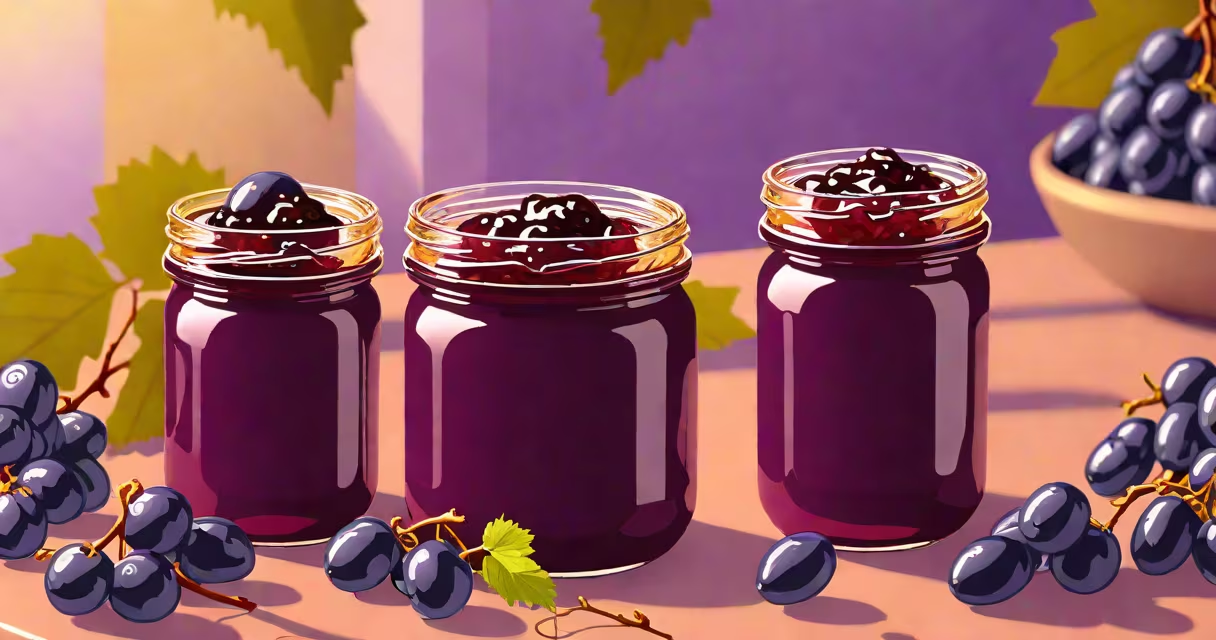
A grape jam recipe turns ripe Concord grapes into a thick, sweet spread using only fruit, sugar, and lemon juice-no pectin needed. The process relies on natural pectin in the fruit and long simmering to achieve set consistency.
Homemade grape jam begins with 4 cups of fresh Concord grapes, which contain enough natural pectin to thicken without additives. The fruit is crushed, then cooked slowly with 1 cup of granulated sugar and 1 tablespoon of fresh lemon juice. Simmering for 30-40 minutes reduces the mixture until it reaches a gel-like texture. A spoon test confirms readiness: when a small amount on a cold plate wrinkles when pushed with a finger, the jam has set.
Once done, the jam is poured into sterilized jars and sealed. It keeps for up to 6 months in a cool pantry or 12 months in the refrigerator. This method produces a rich, deep-red preserve with a balanced tart-sweet flavor, ideal for toast, yogurt, or pastry fillings.
Natural pectin in grape skins and seeds breaks down during cooking, releasing soluble fibers that bind water and form a gel. The addition of lemon juice lowers pH, which activates pectin's gelling ability. Sugar draws out moisture and stabilizes the structure. Together, these elements create a stable, spreadable product without commercial additives.
Without added pectin, the jam takes longer to set-typically 30-40 minutes of gentle boiling. Overcooking risks burning or making the jam too thick. A low simmer, not a boil, maintains even heat and prevents scorching. Stirring occasionally ensures even heating and prevents sticking.
Testing for doneness is critical. The cold plate test works because it mimics the cooling phase in storage. If the surface wrinkles when touched, the jam has reached gel point. If it remains runny, continue cooking in 5-minute increments until set.
The core ingredients are simple: 4 cups fresh Concord grapes, 1 cup sugar, 1 tbsp lemon juice. Using organic grapes avoids pesticide residue. Reducing sugar to ¾ cup yields a less sweet version, though texture may be softer. Adding ½ tsp cinnamon or a splash of vanilla extract enhances complexity.
Some recipes substitute honey for sugar, but honey alters the gelling properties and increases acidity. It's not recommended for beginners. For a lower-sugar option, use a low-glycemic sweetener like monk fruit, but expect a thinner consistency.
Using frozen grapes is acceptable if thawed and drained. They release more liquid, requiring longer cooking time. Avoid overripe or bruised grapes-they lack firmness and yield a mushy texture.
Overheating causes scorching. Keep the heat at medium-low and stir frequently. Undercooking results in runny jam. Always test with the cold plate method. Jam that doesn't set after cooling may need another 5-minute cook, but avoid reheating multiple times-it degrades quality.
Using a non-stick pot prevents sticking. Aluminum or stainless steel pans work well. Avoid cast iron, which can react with acid. Glass or ceramic bowls are safe for cooling.
One common error is adding too much lemon juice. More than 1 tbsp can make the jam overly tart. Stick to 1 tbsp unless adjusting for personal taste.
| Method | Pectin Added? | Cook Time | Sugar Needed | Texture | Best For |
|---|---|---|---|---|---|
| No-pectin, slow simmer | No | 35-45 min | 1 cup | Thick, gel-like | Toast, pastries |
| With powdered pectin | Yes | 10-15 min | ¾ cup | Very firm | Spreads, gift jars |
| Low-sugar pectin | Yes | 12-18 min | ½ cup | Firm but soft | Diet-friendly, health-focused |
Many assume all jams require pectin. That's false. Fruits high in natural pectin-like apples, citrus, and grapes-can set on their own with sufficient cooking time. The USDA notes that Concord grapes contain about 0.8% pectin by weight, enough to form a gel when heated with sugar and acid.
I made this recipe last fall using 3 pounds of homegrown grapes. After 38 minutes of simmering, the jam passed the cold plate test. It set perfectly in the jar and lasted through winter. The flavor was deeper than store-bought versions-less artificial sweetness, more fruit character.
grape jam recipe is popular in American households, especially in the Northeast, where Concord grapes grow widely. It appears on breakfast tables, in school lunch boxes, and as gifts. Its deep color and bold flavor distinguish it from strawberry or raspberry jam.
It's used in baking-filling thumbprint cookies, layering in French toast, or mixing into oatmeal. The high acidity balances rich dishes. It pairs well with sharp cheeses like aged cheddar or blue cheese.
Unlike commercial brands, homemade versions avoid high-fructose corn syrup and artificial colors. A 2021 study by the Academy of Nutrition and Dietetics found that homemade fruit spreads average 30% less sugar than mass-produced alternatives.
People often mistake grape jam for grape jelly. Jelly uses strained juice and is clear and smooth. Jam includes pulp and bits of fruit. Grape jam is opaque and textured. The difference lies in processing, not ingredients.
Another confusion: grape jam vs. grape butter. Grape butter is a thicker, spreadable paste made with whole fruit and minimal sugar. It lacks the glossy finish of jam and is often served warm. It's not interchangeable in recipes.
Finally, some think grape jam requires a candy thermometer. That's unnecessary. The cold plate test is accurate and accessible. Thermometers add cost and complexity without improving results.
This grape jam recipe delivers authentic flavor and texture without additives. It's simple, reliable, and rooted in traditional preservation methods. For those seeking a natural alternative to store-bought, it's a proven choice.