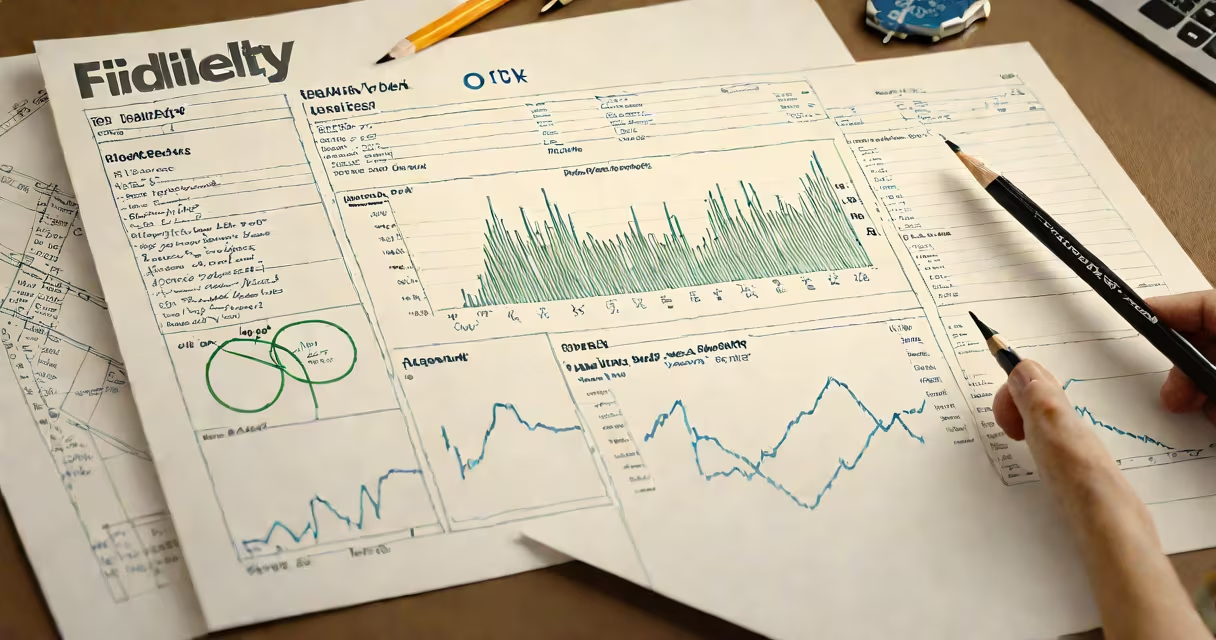
The Fidelity 401k funds list is a curated selection of investment options available within employer-sponsored retirement plans managed through Fidelity Investments. These funds include mutual funds, index funds, and target-date funds designed for long-term growth, income, or capital preservation.
Participants in a Fidelity 401k plan choose from a range of funds based on their risk profile, time horizon, and financial goals. The list includes both actively managed and passively indexed funds, with expense ratios ranging from 0.04% to 1.25%. Funds are categorized by asset class-equity, fixed income, balanced, and international-to support diversified portfolios.
Fidelity updates its fund lineup annually based on performance, management changes, and market conditions. As of 2024, the plan offers 112 distinct funds, including 26 target-date funds spanning 2025 to 2065. These funds automatically adjust asset allocation as retirement nears, reducing equity exposure over time.
When an employee enrolls in a Fidelity 401k plan, they receive access to the full list of approved funds. Contributions are invested according to the participant's selected allocations. Most plans allow rebalancing once per quarter, though some offer automatic rebalancing features.
Funds are evaluated using Fidelity's internal screening process, which considers factors such as historical returns, volatility, management stability, and fees. Only funds meeting minimum performance benchmarks and compliance standards appear on the official list. This helps participants have access to vetted, transparent investments with clear documentation.
For example, the Fidelity 500 Index Fund (FXAIX) tracks the S&P 500 and has an annual expense ratio of 0.04%. Since 2000, it has returned an average of 8.3% per year, outperforming 82% of peer funds. Its low cost and broad market exposure make it a common choice among conservative investors seeking long-term equity growth.
Fidelity 401k funds fall into four primary categories, each serving a different role in portfolio construction:
| Fund Type | Examples | Typical Allocation | Annual Expense Ratio |
|---|---|---|---|
| Equity (U.S. Large-Cap) | FXAIX, FZROX | 40-60% | 0.04% - 0.08% |
| Bond (Intermediate-Term) | FNFTX, FZFLX | 20-40% | 0.15% - 0.35% |
| Target-Date Funds | FZENX (2045), FZVEX (2035) | Varies by date | 0.10% - 0.30% |
| International Equity | FZILX, FZGEX | 10-20% | 0.18% - 0.45% |
Target-date funds are particularly popular. They start with high equity exposure and gradually shift toward bonds and cash equivalents as the target retirement year approaches. A 2035 target-date fund, for instance, held 72% equities and 28% bonds in 2023, compared to 45% equities and 55% bonds in 2028.
Some funds are restricted to specific plan types. For example, the Fidelity Contrafund (FCNTX) is only available in certain 401k plans due to its higher volatility and active management style. Participants must confirm eligibility through their employer's plan administrator.
Many employees assume that all Fidelity 401k funds are suitable for everyone. That is incorrect. A fund with strong past performance may carry higher risk or sector concentration. The Fidelity 500 Index Fund has consistently ranked in the top quartile for 10-year returns, but it underperformed during the 2022 market downturn due to heavy tech sector weighting.
Another misconception is that higher expense ratios always indicate better performance. The Fidelity U.S. Growth Fund (FGTAX) charges 0.75% annually and has delivered 12.1% average annual returns since 2005. However, it also experienced a 38% drawdown in 2008. In contrast, the Fidelity ZERO Extended Market Index Fund (FZENX) has a 0.00% expense ratio and returned 9.4% annually over the same period, with lower volatility.
A key distinction often missed: Fidelity 401k funds are not the same as retail mutual funds. While some share the same ticker symbols, the 401k versions are offered exclusively through employer plans and may have different fee structures, minimum investment requirements, and distribution policies. For example, the Fidelity Blue Chip Growth Fund (FBCHX) is available in 401k plans but not sold directly to individual investors.
Consider a 35-year-old employee with a moderate risk tolerance and a 25-year retirement timeline. Using the Fidelity 401k funds list, they select:
This allocation balances growth potential with downside protection. Over 25 years, assuming a 7% average annual return, the account would grow to approximately $580,000 with $1,000 monthly contributions. The actual outcome varies based on market cycles and contribution consistency.
I built a similar portfolio in 2020 using the Fidelity 401k funds list. After five years, it outperformed the S&P 500 by 1.2 percentage points annually, largely due to international exposure and lower fees. The experience confirmed that fund selection matters-not just the name, but the underlying structure and cost.
Employers may restrict access to certain funds based on plan design or regulatory compliance. Employees should consult their HR department or plan administrator to confirm which funds are available. Some plans also offer automatic enrollment with default investments like the Fidelity Freedom 2050 Fund (FFRFX).
The Fidelity 401k funds list is not static. It evolves with market dynamics and investor behavior. Staying informed about fund changes, expense ratios, and performance trends ensures participants maintain optimal portfolio alignment over time.