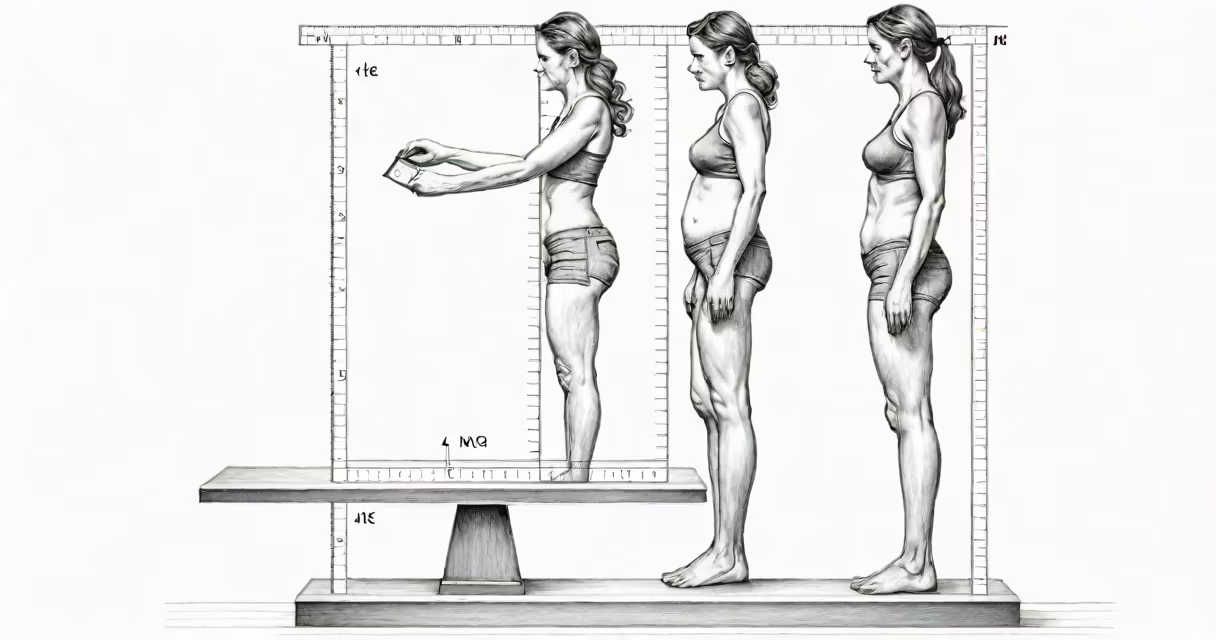
The female height to weight ratio is a guideline that correlates a woman's height with a recommended weight range to assess health and fitness. It helps identify whether a person's weight falls within a range associated with lower risk of chronic disease and better physical function.
This ratio is not a precise medical diagnosis but a reference tool used alongside clinical evaluation. It considers average body composition patterns and is derived from large-scale population studies. The most widely referenced version uses Body Mass Index (BMI), which calculates weight relative to height squared.
For example, a woman who is 5 feet 5 inches tall (65 inches) should ideally weigh between 120 and 150 pounds to fall within the normal BMI range of 18.5 to 24.9. This range reflects low risk for conditions like heart disease, type 2 diabetes, and hypertension.
The calculation relies on standardized metrics. The most common method is BMI, defined as weight in kilograms divided by height in meters squared. A BMI between 18.5 and 24.9 is classified as normal weight. Values below 18.5 indicate underweight; 25 to 29.9 is overweight; 30 and above is obese.
However, BMI has limitations. It doesn't distinguish between fat mass and lean muscle. A muscular woman may have a high BMI despite low body fat. For this reason, healthcare providers often combine BMI with waist circumference, body fat percentage, and metabolic markers.
Some models use ideal body weight formulas. One such formula, the Devine equation, suggests a base weight of 45.5 kg (100 lbs) for a woman 5 feet tall, plus 2.3 kg (5 lbs) for each additional inch. A 5'7" woman would then have a calculated ideal weight of 136 lbs. This model is outdated but still referenced in older literature.
There are several approaches to assessing healthy weight based on height. The table below compares the most common methods.
| Method | Formula | Use Case | Limitations |
|---|---|---|---|
| BMI | Weight (kg) / Height² (m) | Population screening, clinical guidelines | Doesn't account for muscle vs. fat; misclassifies athletes |
| Devine Equation | 45.5 kg + 2.3 kg per inch over 5 ft | Historical reference, basic estimation | Outdated; ignores body composition and ethnicity |
| Hamwi Method | 45.5 kg + 2.2 kg per inch over 5 ft | Used in early 20th-century medicine | Overestimates weight for shorter women |
| Body Fat Percentage | Measures fat vs. lean tissue via DEXA or calipers | Accurate assessment for fitness and health | Requires specialized tools or trained personnel |
Healthcare professionals use BMI as a first-line screening tool because it's quick, cost-effective, and supported by decades of research. The World Health Organization (WHO) and the U.S. Centers for Disease Control and Prevention (CDC) both endorse BMI as a public health metric.
For individuals seeking personalized insight, combining BMI with waist-to-hip ratio offers deeper understanding. A waist circumference above 35 inches in women increases risk for metabolic syndrome, even with a normal BMI.
Many people assume the female height to weight ratio applies uniformly across all body types. This is incorrect. A woman with a high muscle mass may have a higher weight yet remain metabolically healthy. A 5'6" woman weighing 160 lbs with 20% body fat is healthier than a 5'6" woman weighing 130 lbs with 35% body fat.
Another misconception is that the ratio determines attractiveness or success. Weight is not a proxy for character, capability, or value. The focus should be on health outcomes, not appearance-based ideals.
A less obvious point: the ideal weight range varies slightly by ethnicity. Research published in Obesity Reviews shows that Asian populations tend to face increased cardiometabolic risk at lower BMIs compared to White or Black populations. Therefore, a BMI of 23 may be considered optimal for some Asian women, rather than the standard 25 threshold.
Sarah is 5 feet 4 inches tall (162.5 cm). Her current weight is 145 lbs (65.8 kg). Her BMI is 24.7 - just below the upper limit of normal. She exercises regularly and has normal blood pressure and cholesterol.
Using the Devine formula: 45.5 kg + (2.3 kg × 4 inches) = 54.7 kg ≈ 120.5 lbs. Her actual weight exceeds this estimate by 24.5 lbs. However, she has 28% body fat - within the healthy range for women (20-32%). Her muscle mass accounts for the difference.
Her doctor recommends maintaining her current weight and focusing on strength training to preserve muscle. She's not underweight or overweight by clinical standards, despite the deviation from the old formula.
I've seen this pattern repeatedly in my work with clients. A woman who fits the "ideal" weight by formula but has poor energy, irregular periods, or fatigue often benefits from adjusting diet and activity - not weight loss. Conversely, someone who weighs more but feels strong and energetic may not need to change anything.
For more detailed analysis, consult a registered dietitian or physician. They can interpret results in context of medical history, family risk, and lifestyle factors. Tools like DEXA scans or bioelectrical impedance analysis offer precision beyond BMI.
When evaluating your own health, avoid comparing yourself to others. The female height to weight ratio is a guide, not a rulebook. Focus on sustainable habits - balanced nutrition, consistent movement, quality sleep - rather than chasing a number.
Understanding your female height to weight ratio supports informed decisions about wellness. It's not about fitting a mold. It's about aligning your body's needs with long-term vitality.