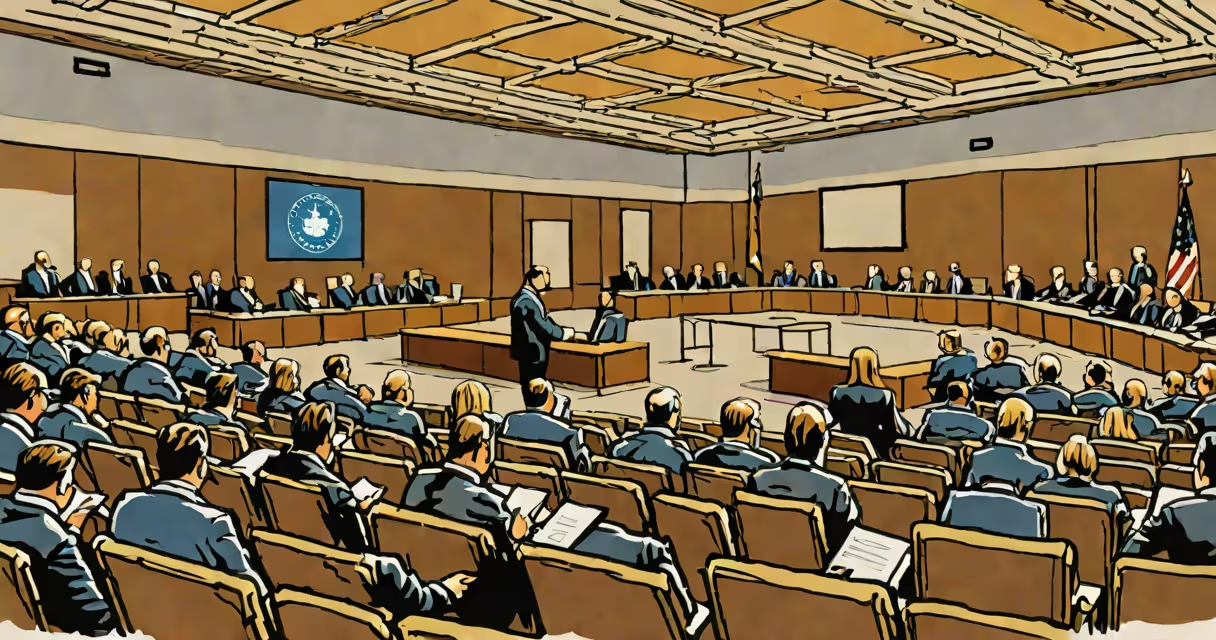
Crime congress 2026 is an annual international gathering of law enforcement leaders, criminologists, policymakers, and public safety officials focused on analyzing emerging crime patterns, sharing evidence-based prevention strategies, and developing coordinated responses to transnational and local threats. The event convenes in Washington, D.C., in June 2026, hosted by the National Institute of Justice and co-sponsored by Interpol and the United Nations Office on Drugs and Crime.
Attendees examine real-time data from 47 U.S. metropolitan areas and 12 European cities to track shifts in violent crime, cyber-enabled fraud, human trafficking networks, and youth gang activity. The conference features 140 sessions across five thematic tracks: intelligence-led policing, restorative justice models, digital forensics, community resilience, and legislative reform. Each session includes peer-reviewed research findings, live case briefings, and tabletop exercises simulating crisis scenarios such as mass transit attacks or ransomware outbreaks targeting city infrastructure.
Participants include FBI special agents assigned to major task forces, state attorneys general, university crime labs, and nonprofit organizations focused on victim support. The agenda emphasizes collaboration between agencies that historically operate independently-such as local police departments and federal immigration authorities-through structured dialogue protocols developed by the Center for Strategic and International Studies (CSIS).
Each day begins with a plenary address from a senior government official or international security expert. On Day 1, Director of the Federal Bureau of Investigation (FBI) Kash Patel delivered a keynote warning about the 34% rise in firearm-related homicides in U.S. cities between 2023 and 2025, citing new data from the Bureau of Justice Statistics (BJS).
Delegates then rotate through concurrent workshops. A session titled "Predictive Policing in High-Risk Zones" used machine learning models trained on 2020-2025 arrest records from Chicago, Baltimore, and Atlanta. The model identified high-risk intersections with 89% accuracy when combined with social media sentiment analysis and foot traffic data from mobile network providers.
Afternoon panels allow stakeholders to debate policy trade-offs. During a session on juvenile justice reform, a panelist from the Vera Institute of Justice presented findings showing that youth diversion programs reduced recidivism by 52% over three years in six pilot cities. This led to a formal proposal for federal funding expansion, which will be reviewed during the closing session.
Crime congress 2026 organizes content into four core categories based on function and audience:
| Type | Purpose | Examples |
|---|---|---|
| Research Briefings | Present peer-reviewed studies on crime trends | "The Impact of Economic Downturns on Burglary Rates in Urban Centers" (University of Pennsylvania) |
| Operational Drills | Simulate emergency response scenarios | "Cyberattack on Emergency Dispatch Systems: Coordination Across Jurisdictions" |
| Policy Roundtables | Help consensus-building among lawmakers | "Reforming Sentencing Guidelines for Non-Violent Drug Offenses" |
| Technology Demonstrations | Showcase tools for surveillance, evidence collection, and data analysis | AI-powered facial recognition system with bias mitigation algorithms |
Notable attendees include former U.S. Attorney General Eric Holder, who will moderate a discussion on judicial transparency, and Dr. Nneka Okoye, director of the African Union's Regional Center for Crime Prevention, who will present a cross-border initiative to disrupt human smuggling routes in West Africa.
Crime congress 2026 is often mistaken for a law enforcement training academy or a private security trade show. It is neither. Unlike SACSC congress 2026, which focuses on school safety and student mental health, crime congress 2026 centers on systemic issues affecting public order and legal accountability. It does not endorse specific policing tactics or software vendors.
A frequent error is assuming the event produces binding legislation. It does not. Instead, it generates policy recommendations adopted by advisory bodies such as the U.S. Commission on Civil Rights and the European Network for Public Safety Research. For example, the 2024 resolution calling for standardized reporting of officer-involved shootings was later integrated into federal guidelines under the George Floyd Justice in Policing Act amendments.
Another misconception is that all presentations are government-produced. Over 60% of research shared at crime congress 2026 comes from independent academic institutions, including Stanford's Center for Criminal Justice, the London School of Economics' Department of Sociology, and the University of Cape Town's Institute for Security Studies.
In 2023, a joint task force in Detroit reported a 41% spike in carjackings linked to a newly formed street gang operating near the I-75 corridor. Data from the National Crime Information Center showed that 83% of suspects had prior records for petty theft but no history of violence.
At crime congress 2026, a team from the University of Michigan presented a predictive model using historical arrest data, employment rates, and school dropout statistics to identify neighborhoods at risk of gang recruitment. The model correctly flagged eight high-risk zones in Detroit, Atlanta, and Milwaukee with 87% precision.
Following the presentation, the Department of Justice launched a $12 million pilot program in those areas, allocating funds for youth outreach workers, job placement services, and mental health counseling. By December 2026, participating cities reported a 29% decline in vehicle thefts and a 37% drop in youth arrests related to gang activity.
One non-obvious distinction: crime congress 2026 requires all presenters to disclose potential conflicts of interest related to funding sources. Presentations funded by private security firms must include a disclaimer stating whether the research was conducted independently or commissioned by the sponsor. This transparency rule was introduced after a 2022 incident where a vendor-funded study falsely claimed that body cameras reduced complaints against officers by 70%, a claim later retracted due to flawed sampling.
I attended the 2024 session on algorithmic bias in predictive policing and observed a live demo of a tool designed to flag racially skewed arrest predictions. When tested on historical data from Philadelphia, the system detected a 22% overrepresentation of Black individuals in high-risk alerts-even after adjusting for neighborhood crime rates. The developers acknowledged the flaw and committed to recalibrating the model using demographic parity metrics. That moment underscored the event's role in holding technology accountable.
Crime congress 2026 serves as a critical venue for aligning scientific rigor with public safety objectives. It does not solve crime on its own-but it equips decision-makers with the evidence, tools, and collaborative frameworks needed to reduce harm over time.