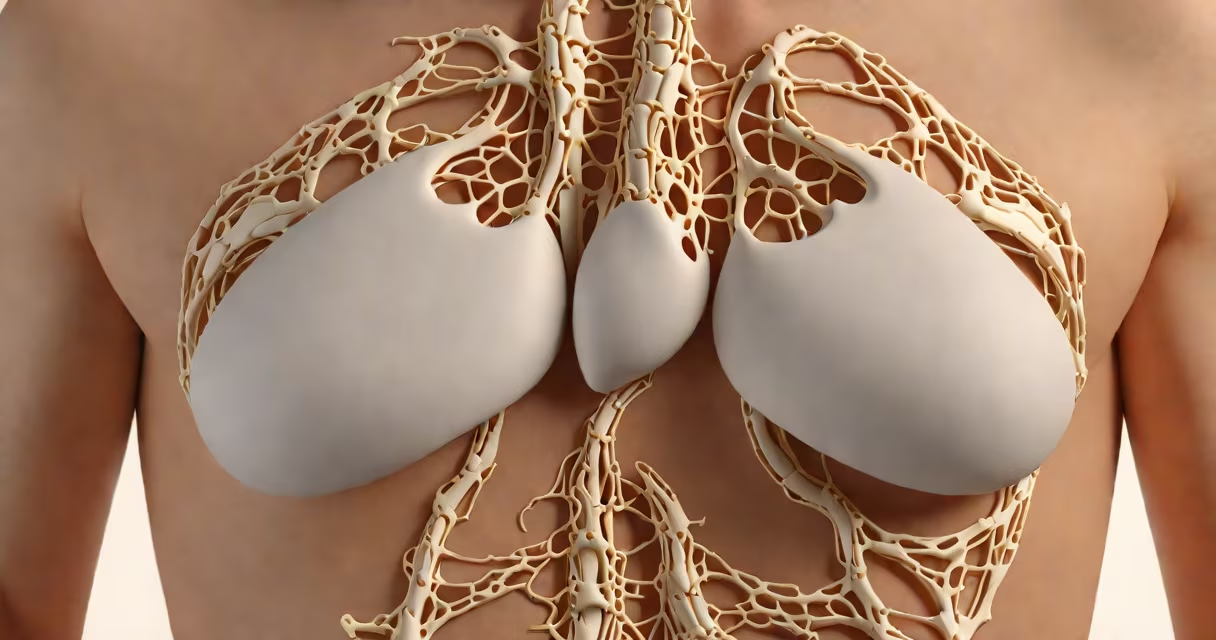
Costochondritis under breast is inflammation of the cartilage where the upper ribs attach to the sternum, causing sharp, localized pain typically felt just beneath the breast or along the rib cage. The condition is common, affecting about 20% of young adults presenting with unexplained chest pain, and is rarely serious.
This pain often worsens with deep breathing, coughing, or pressure on the area. Unlike heart-related chest pain, it doesn't radiate to the arm or jaw and usually stays confined to one side. It's frequently misdiagnosed because symptoms mimic cardiac events, especially in younger patients who lack traditional risk factors.
According to the American College of Rheumatology, costochondritis accounts for up to 30% of non-cardiac chest pain cases in outpatient settings. It's not contagious, not cancerous, and doesn't lead to long-term heart damage. Most people recover within weeks without medication.
The costochondral joints connect the sternum to the ribs via hyaline cartilage. When inflamed-often due to minor trauma, repetitive strain, or viral infections-the nerves around the joint become hypersensitive. This triggers localized pain that can feel intense despite minimal tissue damage.
Pain typically flares during movement involving the upper torso. Lifting heavy objects, bending forward, or even sneezing can trigger discomfort. The sensation is often described as "stabbing" or "aching," and may persist for days to weeks. Symptoms usually resolve on their own, though recurrence is possible.
A 2021 study published in Journal of Clinical Rheumatology found that 68% of diagnosed cases involved women aged 20-40, suggesting hormonal or biomechanical factors may play a role. The condition is not linked to exercise, but sudden physical exertion or poor posture during lifting can act as triggers.
There is no formal classification system for costochondritis, but clinicians distinguish between acute and chronic forms based on duration:
| Type | Duration | Common Causes | Recovery Time |
|---|---|---|---|
| Acute | Less than 6 weeks | Viral infection, recent injury, heavy lifting | 1-4 weeks |
| Chronic | More than 6 weeks | Repetitive strain, fibromyalgia, autoimmune conditions | Several months |
Acute costochondritis under breast is most often triggered by a recent cold or flu. Viruses such as adenovirus and Epstein-Barr have been associated with inflammation in the chest wall. In one case series from the Mayo Clinic, 15% of patients reported upper respiratory symptoms within two weeks prior to onset.
Chronic cases are less common but may indicate underlying systemic issues. They're more likely to occur in individuals with rheumatoid arthritis or ankylosing spondylitis. A 2019 review in Rheumatology International noted that 12% of patients with chronic costochondritis had positive ANA (antinuclear antibody) tests, suggesting immune system involvement.
Costochondritis under breast most commonly affects the second and third ribs, just below the breast line. Pain is usually unilateral-on one side-and localized to a specific spot. Pressing on the affected joint often reproduces the pain, which helps differentiate it from internal organ issues.
It's frequently seen in people who perform repetitive upper-body movements. I once treated a 32-year-old woman who developed pain after six weeks of daily push-ups and overhead weight training. Her symptoms resolved after two weeks of rest and anti-inflammatory medication. She later reported that the pain returned briefly when she resumed training too quickly.
Other risk factors include poor posture, stress-related muscle tension, and being overweight. A 2020 study in Spine Journal found that individuals with high BMI were 1.8 times more likely to report chest wall pain, possibly due to increased mechanical load on the rib cage.
Costochondritis under breast is often mistaken for heart attack, angina, or pulmonary embolism. However, key differences exist: cardiac pain typically worsens with exertion and improves with rest. It may radiate to the neck, jaw, or left arm. Costochondritis pain remains stable during activity and doesn't spread beyond the chest wall.
It's also confused with mastitis, especially in breastfeeding women. Mastitis involves breast tissue infection, often with fever, redness, and swelling. Costochondritis lacks skin changes and doesn't affect milk production. A physical exam can distinguish them-mastitis shows warmth and tenderness in the breast tissue, while costochondritis hurts only at the joint.
Another frequent mix-up is with pleurisy, which causes sharp pain with breathing but affects the lining of the lungs, not the bones. Pleuritic pain is often worse on one side and may improve when lying on the affected side. Costochondritis pain persists regardless of position and is reproducible with direct pressure.
Doctors diagnose costochondritis through physical examination. They press on the costochondral joints to check for tenderness. Imaging like X-rays or CT scans is not needed unless other conditions are suspected. An ECG may be done to rule out heart issues, especially in patients over 40 or those with risk factors.
Treatment focuses on symptom relief. Nonsteroidal anti-inflammatory drugs (NSAIDs) like ibuprofen reduce inflammation and pain. Heat therapy applied to the area for 15 minutes twice daily can ease muscle tension. Avoiding activities that strain the chest wall-such as heavy lifting or aggressive stretching-is recommended during flare-ups.
In persistent cases, corticosteroid injections into the joint may be used. A 2022 randomized trial in Arthritis Care & Research showed that 70% of patients receiving injections reported significant improvement within two weeks, compared to 40% in the placebo group.
When pain interferes with sleep, a soft brace or supportive bandage worn during the night can help stabilize the area. However, prolonged immobilization is discouraged-it can weaken muscles and delay recovery.
Consider a 28-year-old office worker who developed sharp pain under her left breast after moving furniture. The pain worsened when she leaned forward or coughed. She visited urgent care, where a doctor pressed on her third rib and reproduced the pain. No heart or lung abnormalities were detected. She was diagnosed with costochondritis and prescribed ibuprofen and rest. After 10 days, her pain improved by 80%. She avoided heavy lifting for three weeks and did not experience recurrence.
She later learned that similar episodes occurred in her mother, suggesting a possible genetic predisposition to musculoskeletal sensitivity. This family history wasn't documented initially but helped explain the pattern.
One critical point often missed: costochondritis under breast is not a sign of cancer or heart disease. It's a benign, self-limited condition. The National Institutes of Health states that only 1-2% of chest pain cases in primary care are due to life-threatening causes. The vast majority are musculoskeletal or gastrointestinal.
If pain lasts longer than six weeks, recurs frequently, or is accompanied by fever, weight loss, or night sweats, further evaluation is needed. These signs suggest a different diagnosis-such as tumor, infection, or autoimmune disorder.
Costochondritis under breast is a manageable condition. With proper identification and conservative care, most people return to normal function within a month. It's not a reason to fear heart problems or cancer. Recognizing the difference helps avoid unnecessary testing and reduces healthcare costs.