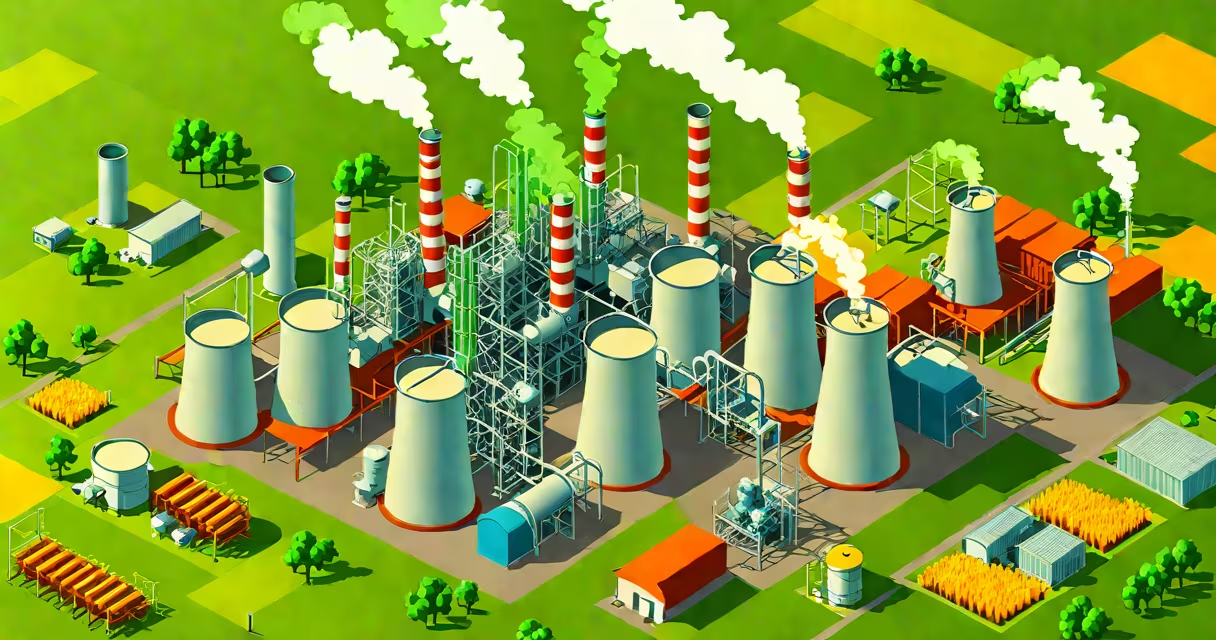
Biomass energy is generated by converting organic materials-such as wood, crop residues, animal waste, and dedicated energy crops-into usable heat or electricity through combustion, chemical processing, or biological breakdown. This form of renewable energy relies on carbon-neutral cycles because plants absorb CO₂ during growth, offsetting emissions released when burned.
Biomass energy systems operate by burning organic matter in a boiler to produce steam, which drives turbines connected to generators. The process captures thermal energy and converts it into electrical output. Modern facilities use advanced emission controls to reduce particulates and nitrogen oxides. For example, the Drax Power Station in the UK burns compressed wood pellets derived from sustainably managed forests to supply over 6% of the country's electricity demand.
Not all biomass is equal. Some sources, like municipal solid waste and agricultural residues, offer low-cost feedstocks with minimal land-use impact. Others, such as switchgrass and miscanthus grown specifically for energy, require dedicated farmland. The U.S. Department of Energy notes that using waste-based biomass avoids competition with food crops and reduces landfill methane emissions-a key advantage over fossil fuels.
The core mechanism involves transforming stored chemical energy in organic matter into thermal energy. When biomass is combusted, the bonds between carbon and hydrogen atoms break, releasing heat. This heat boils water to create high-pressure steam, which spins a turbine connected to a generator. The mechanical rotation induces electric current via electromagnetic induction.
Alternative pathways exist. Anaerobic digestion uses bacteria to break down wet biomass-like manure or food scraps-into biogas rich in methane. That gas powers internal combustion engines or is upgraded to renewable natural gas. Pyrolysis heats biomass in oxygen-free conditions to produce bio-oil, which can be refined into transportation fuels.
A 2022 study by the National Renewable Energy Laboratory (NREL) found that integrated biomass-to-liquid systems can achieve up to 35% net energy efficiency when optimized for co-location with existing industrial facilities. One such facility in Minnesota processes corn stover and livestock waste to produce 1.2 megawatts of baseload power while supplying heat to a nearby dairy farm.
Different organic materials serve distinct roles based on moisture content, energy density, and availability. Feedstock selection affects system design, cost, and environmental impact.
| Type | Source Example | Energy Density (MJ/kg) | Common Use |
|---|---|---|---|
| Wood-based | Forest residues, sawdust | 18-20 | Direct combustion, pellet production |
| Crop residues | Corn stover, rice husks | 15-17 | Gasification, anaerobic digestion |
| Energy crops | Switchgrass, willow | 16-19 | Co-firing with coal, biogas generation |
| Waste streams | Food waste, sewage sludge | 10-14 | Biogas, composting, landfill gas capture |
Feedstock quality varies. Dry wood chips have higher energy output per ton than wet manure. Moisture levels above 50% reduce combustion efficiency and increase emissions. Facilities often dry or pelletize biomass to standardize input. Pellets, for instance, compress material to 1.2 g/cm³ density, improving transport and storage.
Biomass energy supports both decentralized and centralized applications. Rural communities use small-scale digesters to convert livestock waste into cooking fuel and lighting. Industrial zones deploy large biomass boilers to meet heating demands in paper mills, textile factories, and district heating networks.
In Sweden, biomass provides over 20% of national energy consumption, primarily through district heating systems fueled by forest residues. The city of Malmö runs a combined heat and power plant powered by wood chips and biogas, reducing local carbon emissions by 40% compared to oil-based heating.
One common misconception is that biomass is always carbon-neutral. While regrowth offsets emissions over time, short-term carbon debt occurs when forests are clear-cut. A 2021 analysis by the European Environment Agency found that biomass from whole-tree harvesting can result in net carbon increases for up to 40 years before sequestration catches up. Sustainable sourcing requires certification standards like FSC or PEFC to ensure long-term forest health.
Biomass energy is frequently confused with other renewables. Unlike solar or wind, it produces continuous output and can provide baseload power. But it differs from hydroelectric or geothermal in that it depends on feedstock availability and supply chains. It is not synonymous with "green" energy-some biomass projects cause deforestation, habitat loss, or air pollution if poorly managed.
Another misunderstanding is that biomass energy is inherently low-tech. Modern systems integrate AI-driven feed control, real-time emissions monitoring, and automated ash removal. At a facility in Oregon, sensors adjust air flow and fuel feed rates every 10 seconds to maintain optimal burn temperatures and minimize NOx formation.
I once visited a community-run digester in Vermont that processes dairy waste from 12 farms. The system generates enough biogas to run a fleet of delivery trucks and heat the local school. The operator emphasized that success came not from technology alone, but from local collaboration and transparent reporting on methane reductions.