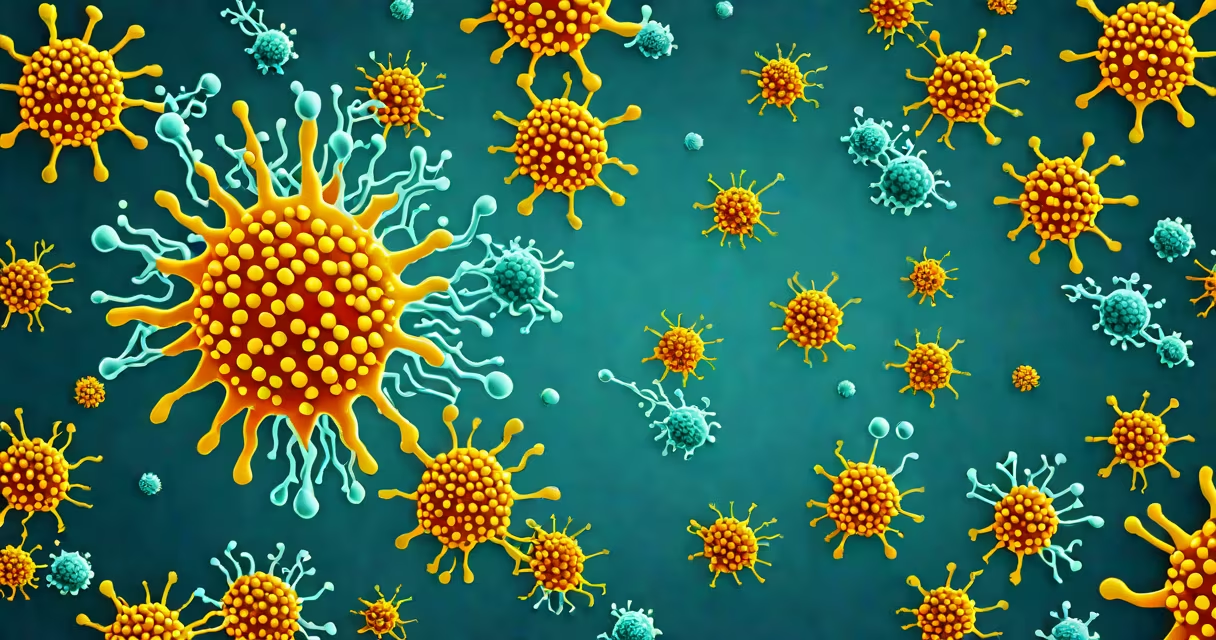
Antigen and antibody meaning refers to the specific molecular interaction between a foreign substance (antigen) and a protective protein (antibody) produced by the immune system to neutralize it. Antigens are typically proteins or carbohydrates on pathogens like viruses or bacteria. Antibodies are Y-shaped proteins made by B cells that bind specifically to those antigens, marking them for destruction.
This interaction forms the foundation of adaptive immunity. When a pathogen enters the body, its surface molecules act as antigens. The immune system detects these as non-self, triggering B cells to produce matching antibodies. These antibodies circulate, latch onto the antigen, and either block its function or flag it for elimination by other immune cells.
For example, during a flu infection, the influenza virus's hemagglutinin protein acts as an antigen. The body produces anti-hemagglutinin antibodies that prevent the virus from entering host cells. This specific binding is why flu vaccines aim to expose the immune system to harmless versions of these antigens to build long-term protection.
The process begins when antigen-presenting cells capture and display fragments of foreign material on their surface. These fragments are shown to helper T cells, which activate B cells. Once activated, B cells differentiate into plasma cells that secrete large quantities of antibodies tailored to the specific antigen.
Each antibody has a unique binding site shaped to fit a particular antigen-like a lock and key. This specificity helps antibodies do not attack the body's own tissues under normal conditions. However, in autoimmune diseases, this mechanism fails, and antibodies mistakenly target self-antigens.
A single antigen can have multiple epitopes-distinct regions that antibodies can bind to. This allows the immune system to generate diverse antibody responses. For instance, the SARS-CoV-2 spike protein contains several epitopes, leading to multiple antibody types being produced during infection or vaccination.
Antigens fall into categories based on origin and structure:
| Type | Description | Example |
|---|---|---|
| Exogenous | External pathogens like bacteria or viruses | Flu virus surface proteins |
| Endogenous | Produced inside infected cells | Viral peptides displayed by MHC-I |
| Autoantigens | Self-proteins targeted in autoimmunity | Insulin in Type 1 diabetes |
There are five main classes of antibodies, each with distinct roles:
IgM antibodies are often the first sign of recent infection in serological testing. A positive IgM result for rubella indicates acute exposure, while IgG presence suggests past infection or vaccination.
Diagnostic tests rely heavily on antigen-antibody interactions. ELISA (enzyme-linked immunosorbent assay) uses immobilized antigens to detect patient antibodies. A positive reaction confirms prior exposure to a pathogen.
For example, HIV testing uses a two-step process: initial screening with an antigen-based test to detect antibodies against HIV proteins (like p24), followed by confirmatory Western blot to verify specificity. The CDC reports that such assays achieve over 99% accuracy when properly administered.
Therapeutic antibodies are engineered drugs designed to target disease-specific antigens. Rituximab binds CD20 on B cells and treats certain lymphomas. Adalimumab targets TNF-alpha, a pro-inflammatory cytokine, and is used in rheumatoid arthritis and Crohn's disease.
Contrary to popular belief, antibodies are not always protective. Some can improve disease through antibody-dependent enhancement (ADE), where antibodies help viral entry into cells. This phenomenon was observed in dengue virus infections and remains a concern in vaccine development for other flaviviruses.
Many assume that all antigens are dangerous. In reality, antigens can be harmless substances like pollen or food proteins. The immune system responds to them based on context-not inherent threat. Allergies occur when the immune system overreacts to non-pathogenic antigens.
Another misconception is that antibodies alone stop infections. While important, antibodies work alongside cellular immunity. T cells destroy infected cells, while antibodies neutralize free-floating pathogens. Both systems are needed for complete defense.
During my time working in a clinical lab, I observed a case where a patient tested positive for IgG antibodies to Epstein-Barr virus but had no symptoms. The result indicated past exposure, not active illness. This highlights that antibody presence doesn't equate to current disease-it reflects history, not status.
Understanding antigen and antibody meaning is essential for interpreting medical results. A positive test for hepatitis B surface antigen indicates active infection. A positive anti-HIV antibody test shows exposure, not necessarily active disease. The timing and combination of markers determine clinical significance.