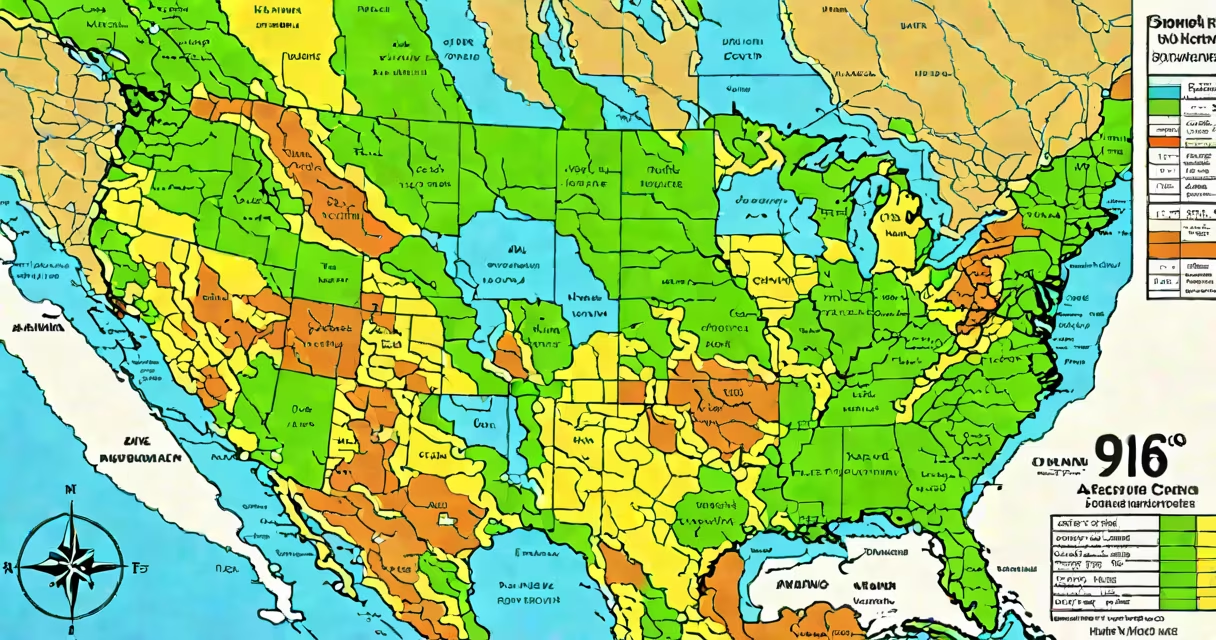
The 916 area code time zone is Pacific Time (PT), which observes UTC−8 during standard time and UTC−7 during daylight saving time. It covers Sacramento and adjacent counties in central California.
Area codes are geographic identifiers assigned by the North American Numbering Plan. The 916 area code was established in 1957 and originally covered most of northern California. As demand grew, it was split in 1999 to create the 530 area code, leaving 916 to serve the greater Sacramento metropolitan area.
Pacific Time is shared with other western U.S. states including Washington, Oregon, Nevada, and parts of Idaho and Montana. Within California, the 916 area code lies entirely within the Pacific Time zone, meaning local time matches the time shown on clocks in cities like San Francisco and Los Angeles-though those cities use different area codes.
Time zones divide Earth into 24 longitudinal segments, each roughly 15 degrees wide. The Pacific Time zone spans from approximately 120°W to 110°W longitude. The 916 area code falls within this range, specifically centered on Sacramento County.
When daylight saving time begins in March, clocks move forward one hour. This shifts the time from Pacific Standard Time (PST, UTC−8) to Pacific Daylight Time (PDT, UTC−7). The change occurs on the second Sunday of March. When daylight saving ends in November, clocks fall back one hour, returning to PST.
For example, on March 10, 2024, clocks in Sacramento moved forward at 2:00 AM to 3:00 AM. A call made at 1:30 AM on that day would be recorded as occurring before the switch, while a call at 3:30 AM would be after. This affects scheduling, especially for businesses coordinating across multiple zones.
The 916 area code serves a single time zone-Pacific Time-but includes diverse communities with varying schedules due to urban density and economic activity. Major cities under 916 include:
These areas follow the same time zone rules. However, because they span multiple counties-including Sacramento, Placer, El Dorado, and Yolo-their local events may have slightly different start times based on municipal decisions, such as school hours or public transit schedules.
| Location | County | Time Zone | Daylight Saving Start | Daylight Saving End |
|---|---|---|---|---|
| Sacramento | Sacramento | Pacific Time | March 10, 2024 | November 3, 2024 |
| Folsom | Placer | Pacific Time | March 10, 2024 | November 3, 2024 |
| Elk Grove | Sacramento | Pacific Time | March 10, 2024 | November 3, 2024 |
Despite their proximity, some towns within the 916 zone may experience minor discrepancies in sunrise and sunset times due to elevation and terrain. For instance, Folsom sits at about 100 feet above sea level, while parts of Elk Grove are near 50 feet. These differences affect natural light patterns but do not alter official timekeeping.
Many assume that area codes define time zones. This is incorrect. Area codes are administrative tools for telephone routing. They do not determine time zone boundaries. For example, the 303 area code in Colorado uses Mountain Time, while the 510 area code in Oakland uses Pacific Time-even though both are in California.
A frequent error is confusing the 916 area code with the 530 area code. While both serve northern California, 530 covers rural and mountainous regions like Redding and Chico. These areas also use Pacific Time, but the 530 zone is sometimes mistakenly believed to be in a different time zone due to its distance from major population centers.
Another misconception is that time zone changes occur simultaneously across all U.S. states. They don't. The federal government sets the dates, but enforcement varies. For example, Arizona does not observe daylight saving time in most of the state, so Phoenix remains on MST year-round. This creates a one-hour difference between Tucson (which does observe DST) and Flagstaff (which doesn't).
One non-obvious fact: the 916 area code region observes Pacific Time consistently, but it does not follow the same daylight saving schedule as some neighboring states. Nevada's Clark County (Las Vegas) does not observe daylight saving time, so Las Vegas stays on PST year-round. This creates a one-hour offset between Reno (916 zone) and Las Vegas, even though both are in the same general region.
Consider a business meeting scheduled between a team in Sacramento (area code 916) and another in Seattle (area code 206). Both locations are in the Pacific Time zone. A meeting set for 10:00 AM in Sacramento is also 10:00 AM in Seattle. No adjustment needed.
I once coordinated a client call between a developer in Sacramento (916 area code) and a project manager in London. The meeting was set for 9:00 AM Pacific Time. I confirmed the time using a time zone calculator. The equivalent in London was 5:00 PM. Without checking, we risked missing the call by six hours due to misalignment.
California uses five primary area codes that fall within the Pacific Time zone:
All of these share the same time zone as 916. The 333 area code, introduced in 2015, overlays the 916 zone to address numbering exhaustion. It serves the same geographic area and follows the same time zone rules.
For comparison, the 303 area code in Denver, Colorado, operates in Mountain Time. This illustrates that area codes do not dictate time zones. Instead, geography and federal policy determine time zone boundaries.
Understanding the 916 area code time zone ensures accurate communication, especially in business, healthcare, and emergency services. Always verify time zone settings when setting appointments, sending alerts, or managing remote teams.
The 916 area code time zone is Pacific Time. It follows the same daylight saving rules as the rest of the U.S. West Coast. Knowing this prevents scheduling errors and supports effective coordination across regions.