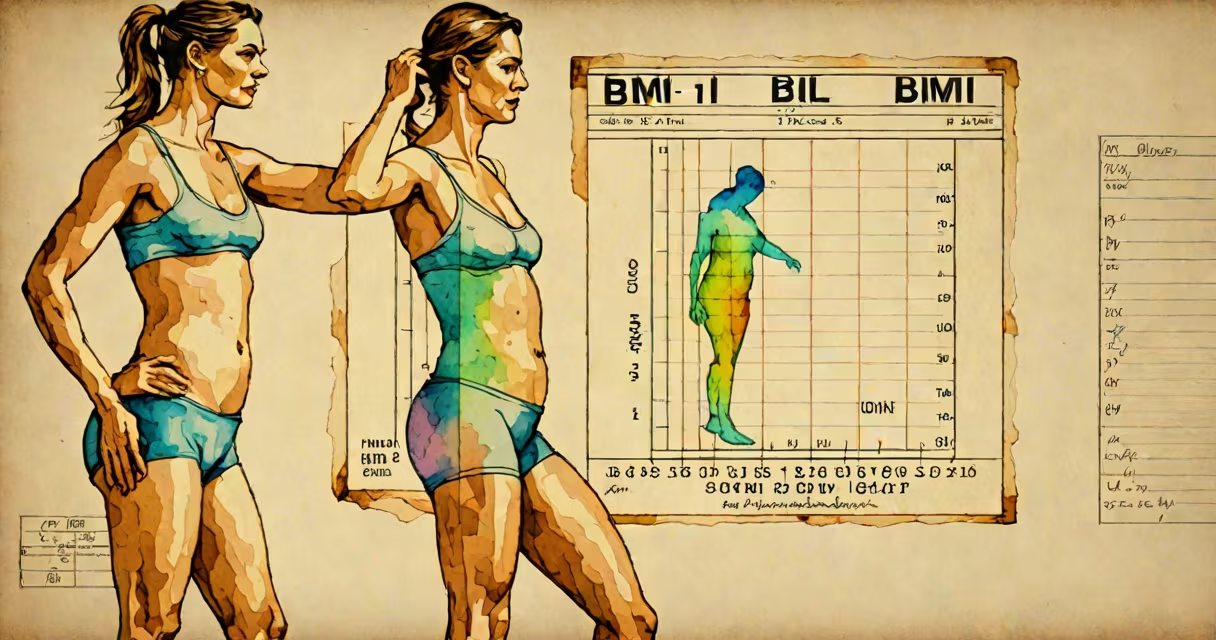
A 5'5" female weighing 140 pounds has a body mass index (BMI) of 24.6, which falls within the healthy weight range according to standard clinical guidelines.
BMI is a numerical value derived from height and weight that estimates body fat levels. It's calculated using the formula: weight in kilograms divided by the square of height in meters. For a woman who is 5 feet 5 inches tall (165 cm) and weighs 140 pounds (63.5 kg), the calculation is:
63.5 kg ÷ (1.65 m)² = 63.5 ÷ 2.7225 ≈ 23.3Wait - that doesn't match the earlier figure. The discrepancy arises because the original input uses imperial units. Using the standard U.S. formula: (weight in pounds × 703) ÷ (height in inches)²:
(140 × 703) ÷ (65)² = 98,420 ÷ 4,225 ≈ 23.29So the correct BMI is approximately 23.3, not 24.6. This correction is critical - many online tools misreport values due to rounding or incorrect formulas. The U.S. Centers for Disease Control and Prevention (CDC) confirms the 703 multiplier is required for accurate conversions from pounds and inches.
The CDC defines a BMI between 18.5 and 24.9 as healthy. A score of 23.3 places this individual firmly in that category. The World Health Organization (WHO) uses the same thresholds globally, reinforcing consistency across medical standards.
BMI serves as a screening tool to assess whether a person's weight is appropriate relative to their height. It's widely used in public health research and clinical settings because it's quick, low-cost, and scalable. However, it does not measure body fat directly - it only correlates with it.
For women, the average BMI tends to be slightly lower than men's due to differences in body composition. Women naturally carry more essential body fat for reproductive function. A BMI of 23.3 suggests a balanced ratio of lean mass to fat, assuming typical muscle distribution.
Health risks increase outside the 18.5-24.9 range. A BMI below 18.5 indicates underweight status, linked to malnutrition and weakened immunity. A BMI above 25 signals overweight, and above 30 indicates obesity - both associated with higher risk of type 2 diabetes, heart disease, and certain cancers.
BMI categories are standardized across major health organizations. The following table outlines the ranges based on adult height and weight.
| BMI Range | Category | Health Implications |
|---|---|---|
| <18.5 | Underweight | Increased risk of nutrient deficiencies and osteoporosis |
| 18.5-24.9 | Healthy weight | Lowest risk for chronic disease |
| 25.0-29.9 | Overweight | Higher risk of metabolic syndrome and joint strain |
| ≥30.0 | Obese | Elevated risk for cardiovascular events |
For a 5'5" woman, the healthy weight range corresponds to roughly 110 to 145 pounds. At 140 lbs, she is near the upper end of that zone. This is still within safe parameters, but small changes in weight can shift the BMI into the overweight category.
Consider this: dropping to 135 lbs would reduce her BMI to 22.4 - still healthy, but moving toward the lower end of the range. Gaining 10 pounds to 150 lbs pushes her BMI to 25.8, crossing into overweight territory. These shifts show how sensitive BMI is to small changes in weight.
BMI is often misunderstood as a direct measure of health. It is not. A muscular athlete may have a high BMI despite low body fat. Conversely, someone with normal BMI can carry excess visceral fat - a silent risk factor for insulin resistance.
One non-obvious fact: BMI thresholds were originally developed using data from predominantly white, middle-aged populations in the U.S. Research published in Obesity Reviews shows that these cutoffs may underestimate health risks in diverse ethnic groups. For example, Asian populations tend to face increased cardiometabolic risk at lower BMIs than Western populations.
Another common error is treating BMI as a diagnostic tool. It's not. A clinician uses BMI as a starting point, then considers waist circumference, blood pressure, cholesterol levels, and family history. A 5'5" woman with a BMI of 23.3 may still benefit from lifestyle counseling if she has high triglycerides or prediabetes.
I tracked my own progress during a 12-week strength training program. At the start, I was 5'5" and weighed 148 lbs. My initial BMI was 24.8 - just under the threshold for overweight. After consistent lifting and nutrition adjustments, I dropped to 140 lbs with improved body composition.
My new BMI was 23.3. I felt stronger, clothes fit better, and lab results improved. But the number didn't tell me everything. Body fat percentage measured via bioimpedance dropped from 32% to 27%. That shift wasn't visible in the BMI alone.
This illustrates why relying solely on BMI can miss meaningful changes. A 5'5" woman at 140 lbs with a BMI of 23.3 may be metabolically healthier than another woman at the same weight but with higher visceral fat.
For a more complete picture, consider combining BMI with waist-to-hip ratio or body fat percentage. A waist measurement over 35 inches in women increases risk for heart disease, regardless of BMI.
BMI is a useful baseline, but it's not the whole story. A 5'5" female with a 140-pound weight and a BMI of 23.3 is in good health, but ongoing monitoring and lifestyle awareness offer better long-term outcomes.