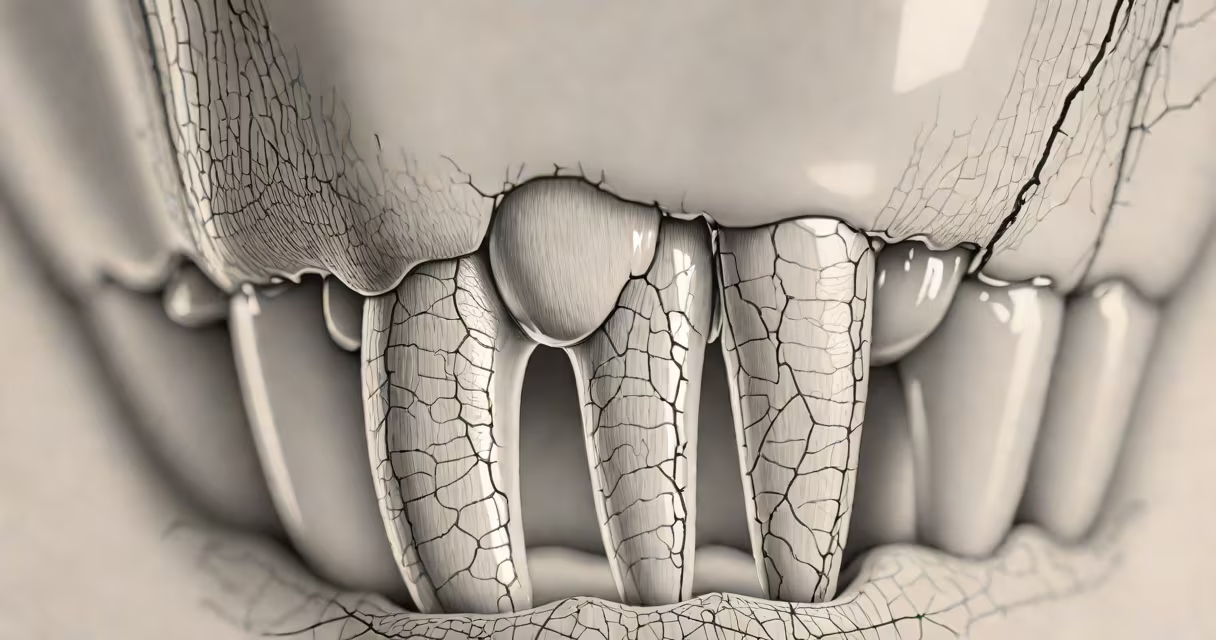
Cracks in teeth develop when the outer enamel layer splits due to pressure, trauma, or wear. These fissures can extend into the dentin or pulp, causing pain, infection, or tooth loss if untreated.
Enamel is the hardest substance in the human body, yet it's brittle. When forces exceed its tensile strength-such as biting down on hard objects or grinding teeth at night-it can fracture. Cracks may start small and grow over time, especially if left unaddressed.
The American Dental Association (ADA) notes that cracked tooth syndrome affects approximately 1 in 5 patients seeking dental care for tooth pain. Many cases go undiagnosed because symptoms mimic other conditions like cavities or gum disease.
Tooth cracks begin at the surface and propagate inward. The most common mechanism is cyclic stress-repeated biting, chewing, or clenching that weakens enamel over time. A single high-force impact, such as hitting your mouth during a fall or sports injury, can also initiate a crack.
Thermal shock contributes too. Drinking hot coffee then ice water rapidly creates expansion and contraction in tooth structure, increasing fracture risk. This effect is more pronounced in teeth with existing fillings or crowns, which don't expand like natural tooth material.
A 2021 study published in the Journal of Prosthetic Dentistry found that 68% of diagnosed cracked teeth had prior restorative work. Fillings and crowns alter the way force distributes through the tooth, creating stress points where cracks form.
Not all cracks are the same. They vary by location, depth, and progression. Understanding the type helps determine treatment and prognosis.
| Type | Location | Common Cause | Pain Pattern |
|---|---|---|---|
| Vertical fracture | From crown to root | Chewing hard foods, bruxism | Sharp pain when biting down; often intermittent |
| Cracked cusp | On molar or premolar | Excessive occlusal load | Pain when chewing; may subside after removing pressure |
| Fractured root | Below gumline | Long-term trauma, periodontal disease | Swelling, tenderness, possible abscess |
| Non-restorable crack | Extends below gumline | Severe trauma or decay | Often asymptomatic until infection sets in |
One key distinction many overlook: cracks don't always hurt. A crack confined to enamel may cause no symptoms. But once it reaches dentin-the layer beneath enamel-fluid movement triggers nerve irritation, resulting in sudden, sharp pain.
I once examined a patient who reported no discomfort despite a visible vertical crack on a molar. The crack was shallow and didn't reach the pulp. After sealing it with composite resin, the tooth remained asymptomatic for over two years. This case illustrates that symptom absence doesn't equal safety.
Many people mistake tooth cracks for cavities. Both can cause sensitivity and pain, but their origins differ. Cavities result from bacterial acid erosion; cracks stem from mechanical failure. A dentist uses diagnostic tools like transillumination or bite tests to differentiate.
Another misconception: cracks only happen in older adults. While aging increases risk due to worn enamel and reduced saliva flow, younger individuals are vulnerable too-especially those with bruxism or who chew ice, pens, or popcorn kernels.
Some assume that if a crack doesn't hurt, it's harmless. That's false. A silent crack can progress unnoticed until it reaches the pulp, leading to irreversible nerve damage. Early detection prevents the need for root canal therapy or extraction.
Any tooth that hurts when biting down, feels sensitive to temperature, or shows visible lines should be evaluated. Even asymptomatic cracks require monitoring. Delaying care increases the chance of complete tooth loss.
Treatment depends on the crack's severity. Shallow cracks may be sealed with bonding material. Deeper ones often require a crown to stabilize the tooth and prevent further splitting. In advanced cases, root canal therapy followed by a crown or surgical extraction may be necessary.
For example, a 34-year-old woman presented with intermittent pain while eating apples. Radiographs showed no decay, but a bite test confirmed localized pain. A dental microscope revealed a hairline crack extending from the cusps toward the pulp. She received a porcelain crown within two weeks and reported full relief.
Prevention includes avoiding hard foods, using a night guard if you grind teeth, and visiting your dentist twice yearly for checkups. The ADA recommends fluoride treatments and sealants for high-risk individuals.
Understanding why your teeth have cracks begins with recognizing that even minor damage can escalate. Early diagnosis and intervention preserve function, reduce pain, and maintain long-term oral health.