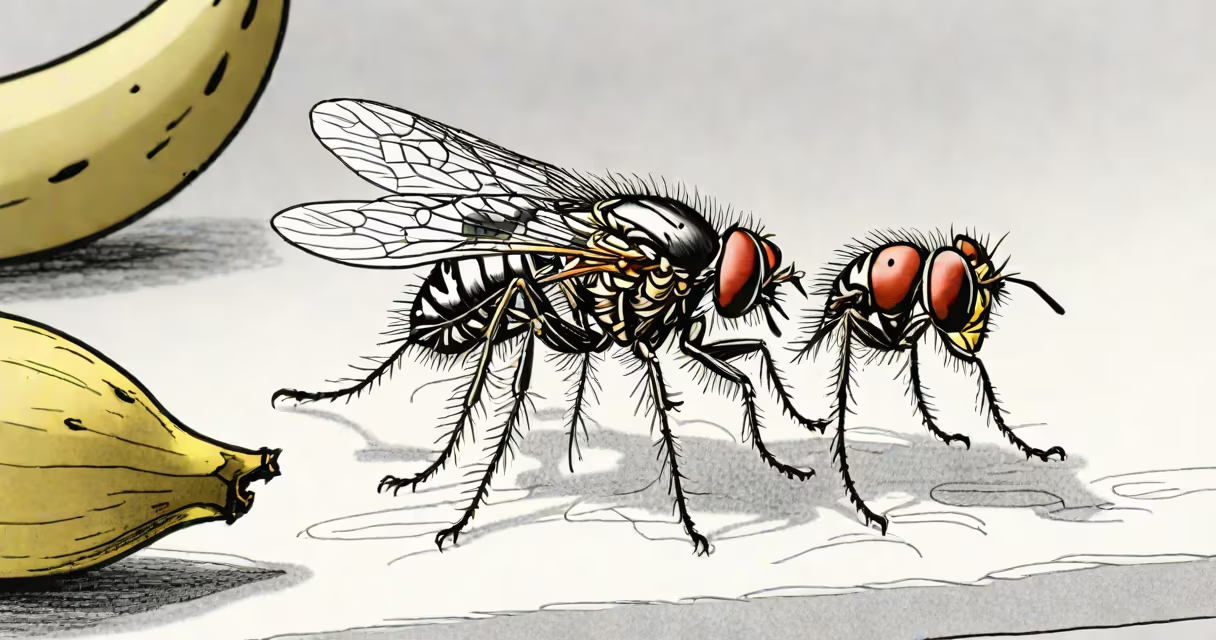
Fruit flies are tiny insects drawn to fermenting organic material, especially ripe or decaying fruits and vegetables. They reproduce rapidly in moist, sugary environments and often reappear if their breeding sites aren't fully eliminated.
These insects measure about 3-4 millimeters long, with red eyes and translucent wings. They're attracted to the smell of alcohol and acetic acid-byproducts of fermentation. A single female can lay up to 500 eggs in her lifetime, which hatch in 24-30 hours under warm conditions. This rapid life cycle explains why infestations grow quickly and persist if untreated.
The most common breeding grounds are sink drains, garbage disposals, compost bins, and unwashed produce. Even a small amount of leftover juice in a fruit bowl or a forgotten glass of wine left out overnight can trigger a new outbreak. You don't need visible rot to attract them-fermentation begins within hours of exposure to air.
Fruit flies lay eggs in moist, fermenting material. The larvae feed on microbes and yeast in the substrate, completing development in 5-7 days. Once adults emerge, they live 30-50 days and begin laying eggs again. This cycle can repeat multiple times per month during warm seasons.
They don't require direct contact with food to spread. Adults can travel up to 10 meters indoors through vents, open windows, or even on clothing. A single fly entering your home from a grocery bag can start a new colony within a week.
One study published in Journal of Economic Entomology found that fruit flies can detect fermenting odors from over 10 meters away using specialized antennae receptors. This sensitivity allows them to locate breeding sites efficiently-even in sealed kitchens.
Most people focus on obvious spots like overripe bananas or spilled juice. But hidden sources cause recurring infestations:
A common mistake is cleaning only the surface. If the drain trap remains clogged with food particles, flies will return within days. The USDA recommends flushing drains with boiling water weekly and using enzyme-based cleaners monthly to break down biofilm.
Trapping alone doesn't solve the problem. You must remove the source. Here's a proven method:
For persistent cases, use sticky traps placed near suspected entry points. These capture adults but won't stop reproduction unless the source is removed.
One homeowner reported eliminating a six-week infestation by replacing a cracked sink seal and cleaning the dishwasher's filter. After removing the old rubber gasket, which had trapped food debris for years, no new flies appeared in 90 days.
Fruit flies are not the same as fungus gnats. Fungus gnats are slightly larger, darker, and breed exclusively in damp soil. Confusing them leads to ineffective treatment. Fruit flies prefer fermenting fruit; fungus gnats target plant roots.
Also, fruit flies do not come from spoiled meat or trash. Their presence in kitchens is almost always linked to sugar-rich, moist organic matter. If you see them around meat, it's likely because a nearby fruit was left out and attracted them.
Another misconception: fruit flies are not carriers of human disease. They don't bite or transmit pathogens. However, they can transfer bacteria like E. coli and Salmonella from surfaces to food. The CDC notes that cross-contamination is a risk when flies land on ready-to-eat foods.
If traps fail after two weeks and you still see flies, consider professional pest control. Some infestations stem from structural issues-cracks in walls, broken seals around appliances, or shared drainage systems in apartment buildings.
For recurring issues despite clean-up, consult a licensed exterminator. They may use targeted insect growth regulators or heat treatments to destroy eggs and larvae in hard-to-reach areas.
Prevention is simpler than eradication. Store food properly, clean drains weekly, and inspect new produce before bringing it inside. A single missed spot can restart the cycle.
Understanding the root cause of why you keep getting fruit flies prevents repeated effort. Eliminate the breeding site, not just the adult insects. Once the source is gone, populations collapse within 10-14 days.