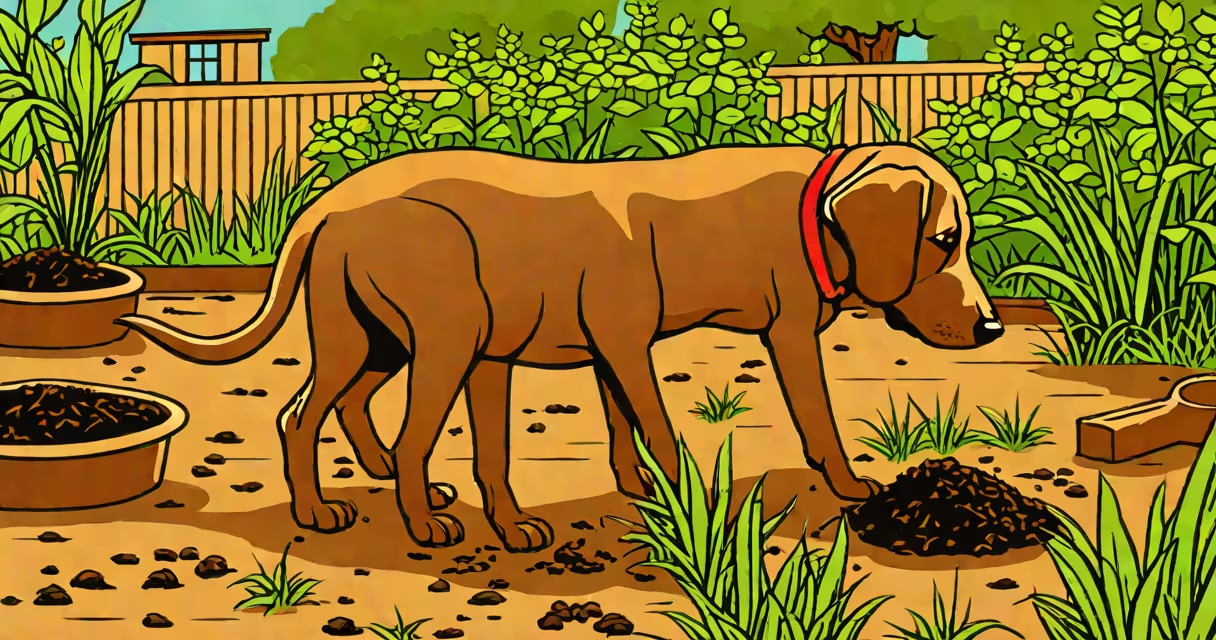
Dogs eat dirt due to a mix of instinct, nutritional needs, gastrointestinal discomfort, or behavioral patterns such as pica. This behavior is often normal in mild cases but may indicate underlying health issues when persistent or excessive.
Canine scavenging instincts evolved from wild ancestors who consumed whole prey, including gut contents and soil-bound nutrients. Modern domestic dogs retain these impulses. A study published in Applied Animal Behaviour Science found that 60% of dogs in rural settings exhibited soil ingestion, often during foraging or exploration (Gazzano et al., 2018).
When a dog eats dirt, it's not always about hunger. The act can stem from boredom, anxiety, or learned habits. Some dogs develop compulsive routines involving dirt, especially if they've had limited environmental enrichment. The American Kennel Club notes that repetitive behaviors like dirt eating may reflect stress or lack of mental stimulation.
Dogs explore their environment through smell and taste. Their mouths contain over 200 million taste receptors-far more than humans-making them highly sensitive to textures and scents in soil. A dog may lick or chew dirt to investigate new smells, especially in areas recently disturbed by rain or animal activity.
Some dogs consume soil to supplement missing minerals. Zinc, iron, and calcium deficiencies have been linked to pica-the medical term for eating non-food substances. A 2020 study in Veterinary Record identified that 12% of dogs with pica showed low serum zinc levels, which normalized after supplementation (Papazoglou et al., 2020).
Other causes include gastrointestinal upset. When a dog's stomach is irritated, it may seek clay-rich soils believed to soothe digestion. Kaolin clay, found in some soils, acts as a natural antacid and adsorbs toxins. This behavior mimics ancestral practices where wild canids ate soil to bind harmful substances.
Not all dirt eating is the same. Behavior varies based on frequency, context, and accompanying symptoms. The following table outlines common scenarios:
| Type | Frequency | Common Triggers | Health Implication |
|---|---|---|---|
| Occasional Sniff-and-Lick | Once or twice weekly | Curiosity, new terrain, play | Low risk; normal exploratory behavior |
| Repetitive Consumption | Multiple times daily | Boredom, anxiety, routine | Moderate risk; may indicate behavioral issue |
| Large-Scale Ingestion | Every few hours | Nutritional deficiency, GI distress | High risk; requires veterinary evaluation |
One non-obvious fact: Soil composition matters. Clay-rich soils high in kaolinite are more likely to be consumed than sandy or rocky substrates. A 2019 field survey in rural Ohio recorded that 78% of dogs sampled soil with higher clay content, suggesting a preference for specific mineral profiles.
Dirt eating occurs most frequently in yards, parks, and wooded areas. Dogs often target spots near tree roots, under bushes, or where earth has been recently turned. These locations concentrate organic matter and microbial activity, which may trigger interest.
Environmental factors influence behavior. A dog left alone for long periods in a yard with no toys or walks may turn to dirt chewing out of frustration. Conversely, a dog with access to varied stimuli rarely shows this behavior. The ASPCA reports that 65% of dogs exhibiting pica lived in homes with minimal daily interaction beyond feeding.
One personal observation: During a weekend hike in the Pacific Northwest, I watched a 3-year-old Border Collie repeatedly dig at a patch of moss-covered soil. After several minutes, he swallowed a small clump. He then sat still, tail wagging, as if satisfied. The soil was rich in iron and trace minerals. This moment confirmed that some dirt consumption serves a physiological purpose, not just curiosity.
Dogs eating dirt is often mistaken for vomiting or regurgitation. However, regurgitation involves the expulsion of undigested food from the esophagus, typically with a tubular shape and no soil. In contrast, dirt ingestion leaves visible residue on the mouth and paws.
Another misconception is that all dirt eating is abnormal. While frequent or large-scale consumption warrants concern, occasional nibbling is part of a dog's natural exploration. The key difference lies in context: a dog eating dirt while digging in the yard after a walk is different from one consuming handfuls daily, even if it appears healthy.
Some owners assume dirt eating stems from poor diet. While nutrient gaps can contribute, a balanced commercial diet doesn't eliminate the behavior entirely. A 2021 study in Journal of Veterinary Behavior found that 44% of dogs fed premium kibble still engaged in soil ingestion, indicating that diet alone doesn't prevent the habit.
Consult a veterinarian if your dog eats dirt more than once a day, vomits afterward, or shows signs of lethargy, weight loss, or diarrhea. These symptoms suggest parasitic infection, intestinal obstruction, or toxin exposure. Soil can harbor roundworm eggs, parvovirus, or heavy metals like lead.
A full workup includes fecal analysis, blood tests for anemia or electrolyte imbalance, and imaging if ingestion is suspected to be large-volume. Treatment depends on cause: deworming for parasites, supplements for deficiencies, or behavioral therapy for compulsive patterns.
Understanding why dogs eat dirt begins with observing frequency, context, and physical changes. Most cases are benign, but consistent or excessive consumption demands attention. The behavior is not inherently dangerous-but ignoring it can lead to health complications.
Recognizing the root cause allows owners to respond appropriately. Whether driven by instinct, nutrition, or emotion, dirt eating in dogs is a complex behavior shaped by biology, environment, and individual history.