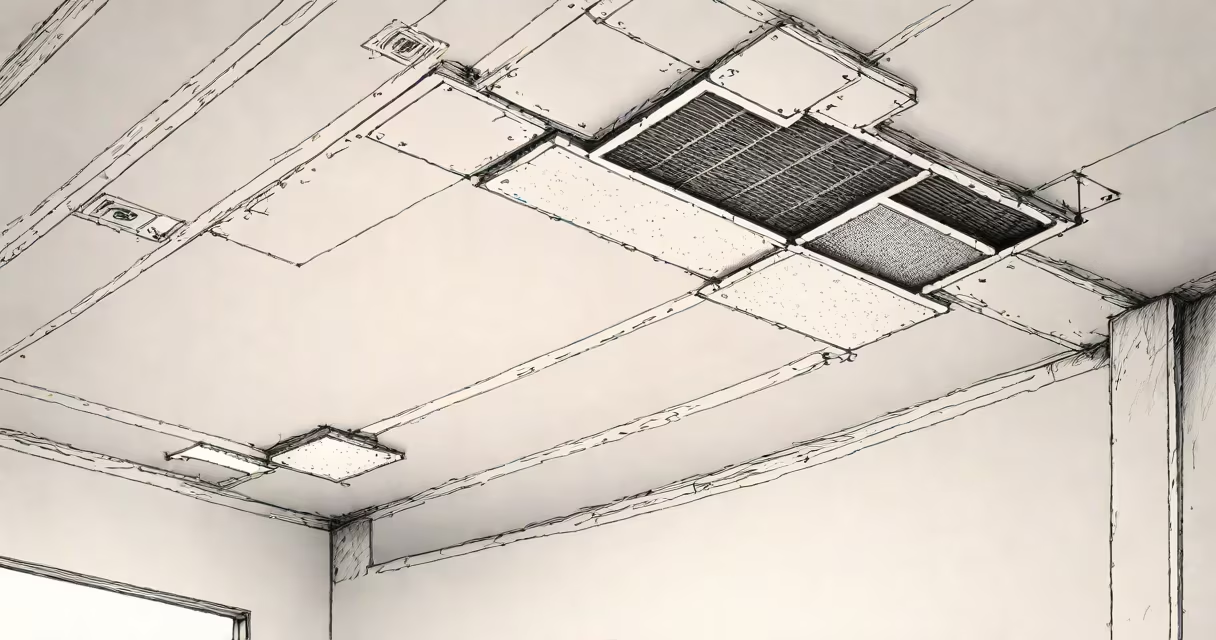
A return air duct is a component of a forced-air HVAC system that draws indoor air from rooms back to the central furnace or air handler for temperature adjustment. It completes the air cycle by returning used air to the system's core, enabling consistent climate control.
Return air ducts are typically made of galvanized steel, aluminum, or flexible fiberglass-lined tubing. They connect to grilles or registers located on walls, ceilings, or floors, often near the center of a room or in high-traffic zones. The duct then feeds into the main trunk line, leading to the HVAC unit.
According to the U.S. Department of Energy, properly sized and sealed return ducts reduce energy waste by maintaining balanced pressure within the home. A mismatched or blocked return path forces the system to work harder, increasing utility costs and shortening equipment lifespan.
The return air duct operates on the principle of negative pressure. When the HVAC blower activates, it pulls air from the living space through intake grilles and into the return duct network. This air travels through the ductwork to the air handler, where it passes over cooling coils (in summer) or heating elements (in winter).
After conditioning, the air is pushed out through supply ducts and delivered via vents into rooms. Without a dedicated return path, air would have no way to exit the space, creating stagnant pockets and uneven temperatures. The system relies on this closed-loop design to maintain comfort and efficiency.
For example, in a typical 2,000 sq ft home with a central AC unit, return ducts handle approximately 400-600 cubic feet per minute (CFM) of airflow. If the return path is undersized or obstructed-say, by a dropped ceiling fan or furniture blocking a grille-the system may struggle to meet thermostat settings, leading to longer run times and higher energy bills.
Return air ducts come in several forms based on installation method and environment:
| Type | Material | Best For | Typical Use Case |
|---|---|---|---|
| Sheet Metal | Galvanized steel or aluminum | Permanent installations, new construction | Most residential HVAC systems; durable and easy to seal |
| Flexible Duct | Fiberglass-lined plastic or foil-wrapped material | Hard-to-reach areas, retrofitting | Attic or crawlspace runs; less efficient but easier to install |
| Plenum Duct | Sheet metal with fire-resistant coating | Between ceiling and floor joists | Used in drop ceilings; meets fire safety codes |
Sheet metal ducts offer the highest airflow efficiency and lowest static resistance. Flexible ducts, while convenient, degrade faster and trap dust more easily. The EPA notes that improperly installed flexible ducts can reduce system efficiency by up to 15% due to kinks and poor sealing.
Many homeowners assume that larger return grilles improve performance. This is incorrect. The size of the grille must match the duct's capacity and the system's CFM rating. An oversized grille creates turbulence and noise, while an undersized one restricts airflow.
Another frequent error is placing return grilles in hallways or near exterior walls. These locations draw in cooler or warmer air from outside, reducing system effectiveness. The American Society of Heating, Refrigerating and Air-Conditioning Engineers (ASHRAE) recommends installing return grilles in interior spaces away from windows and doors.
I once observed a renovation project where a homeowner replaced a small wall-mounted return grill with a large ceiling grille. The system began cycling too frequently, and the thermostat never reached setpoint. After measuring airflow, we found the new grille was drawing in unconditioned attic air. Replacing it with a correctly sized wall unit restored balance.
Return air ducts play a key role in filtering indoor pollutants. As air enters the return system, it passes through the building's filter-typically a MERV 8 to MERV 13 filter in residential units. This captures dust, pet dander, pollen, and mold spores before they recirculate.
If the return duct is leaky or poorly sealed, outdoor air can infiltrate the system. A study by Lawrence Berkeley National Laboratory found that unsealed return ducts increased indoor particulate levels by 22% during high-wind events. Sealing joints with mastic or foil tape reduces infiltration and improves filtration efficiency.
Return ducts can harbor microbial growth if moisture accumulates. Insulating ducts in unconditioned spaces prevents condensation. The EPA advises inspecting return ducts annually for signs of mold, especially in humid climates.
A return air duct is essential for proper HVAC function, ensuring even temperature distribution and efficient energy use. It's not just a pipe-it's part of a controlled airflow system that affects comfort, health, and utility costs.