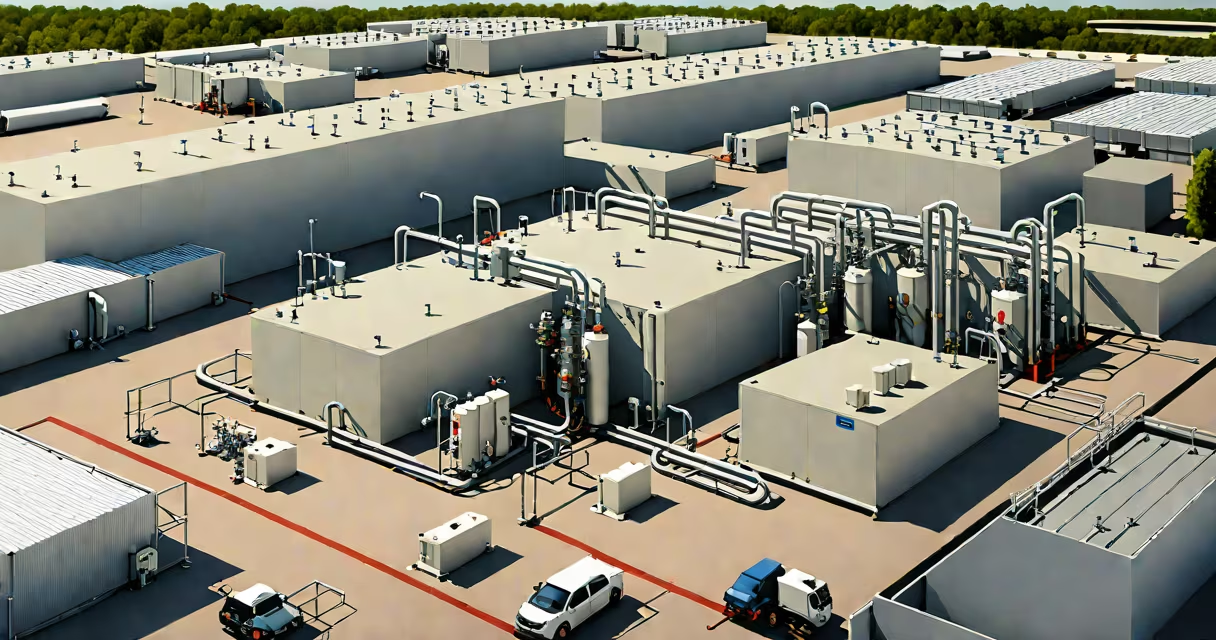
A qualified fuel cell property is a tangible personal property used to generate electricity through fuel cell technology, meeting specific criteria set by the Internal Revenue Code (IRC) Section 48. It must be placed in service for use in a qualified facility and meet performance, efficiency, and operational standards established by the U.S. Department of Energy and IRS guidelines.
These properties qualify for the federal investment tax credit (ITC), which allows businesses and developers to claim up to 30% of the cost of installing qualifying fuel cell systems. The credit applies to systems placed in service after December 31, 2022, and before January 1, 2035, under the Inflation Reduction Act (IRA).
The IRS defines a qualified fuel cell property as equipment that converts chemical energy from a fuel-typically hydrogen-into electrical energy through electrochemical reactions. This includes fuel cell stacks, balance-of-system components (like inverters and controllers), and related infrastructure required for integration into a power grid or building.
To qualify, a fuel cell system must meet minimum efficiency thresholds. According to the U.S. Department of Energy's National Renewable Energy Laboratory (NREL), a system must achieve a minimum electrical efficiency of 40% when operating at full load. Systems below this threshold do not qualify for the ITC, even if they are otherwise compliant with installation and certification standards.
The fuel cell must be fueled by hydrogen or another approved fuel such as natural gas, biogas, or ammonia, depending on the version of the IRA. Hydrogen-fueled systems receive the highest credit rate-30%-while those using renewable biogas or synthetic fuels may receive reduced rates based on carbon intensity.
For example, a 250-kilowatt (kW) solid oxide fuel cell (SOFC) system installed at a manufacturing plant in California was certified as a qualified fuel cell property after passing a third-party audit. The system achieved 52% electrical efficiency and used green hydrogen produced via electrolysis. The developer claimed a $1.8 million ITC, reducing project costs by nearly 30%.
Not all parts of a fuel cell installation qualify. Only components integral to the conversion of fuel into usable electricity are included. The IRS specifies that the following elements are considered part of a qualified fuel cell property:
| Type | Eligible Components | Excluded Items |
|---|---|---|
| Fuel Cell Stack | Electrolyte, electrodes, bipolar plates, seals | Replacement parts not installed at original commissioning |
| Balance of System (BOS) | Inverters, control systems, cooling units, fuel delivery lines | General building HVAC or unrelated site wiring |
| Installation & Integration | Mounting structures, safety enclosures, grid interconnection hardware | Land acquisition, permits, or legal fees |
The IRS excludes costs associated with site preparation, land, or administrative overhead. Only direct capital expenditures tied to the physical installation of the fuel cell system count toward the credit.
One common mistake is including auxiliary batteries or thermal storage systems as part of the qualified property. While these improve system reliability, they are classified separately under IRC Section 48(c)(6) as "energy storage systems" and require separate qualification. A system using both a fuel cell and battery storage must be evaluated independently for each component.
Qualified fuel cell properties are deployed primarily in industrial facilities, data centers, hospitals, and commercial buildings requiring continuous, low-emission power. Their ability to operate continuously with minimal noise and high efficiency makes them ideal for backup power and base-load applications.
For example, a major tech campus in Texas installed a 1.2 megawatt (MW) proton exchange membrane (PEM) fuel cell range to support server operations. The system runs on hydrogen supplied via a nearby electrolyzer. Because it met all eligibility requirements-including a 48% efficiency rating and on-site monitoring compliance-it qualified for the full 30% ITC. The project reduced annual CO₂ emissions by 1,100 metric tons compared to diesel generators.
Another use case involves remote microgrids. In Alaska, a village off-grid community installed a 50 kW fuel cell system powered by locally produced biogas from organic waste. The system qualified for the ITC because it operated at 44% efficiency and used renewable feedstock. The credit covered 28% of the $1.4 million installation cost, making the project financially viable.
Many assume that any fuel-powered generator counts as a qualified fuel cell property. This is incorrect. A diesel generator, even if retrofitted with a fuel cell hybrid system, does not qualify unless the fuel cell itself meets all technical and documentation standards.
Also, the term "fuel cell" is often conflated with "hydrogen fuel cell." While most qualified properties use hydrogen, the IRS allows other fuels under certain conditions. For instance, a natural gas-fueled fuel cell system may qualify if it operates at a minimum efficiency of 40% and demonstrates a lifecycle greenhouse gas reduction of at least 50% compared to baseline fossil generation.
A key distinction missed by many developers is that the property must be "placed in service" by the taxpayer claiming the credit. The IRS defines this as the date when the system is ready and capable of performing its intended function. A system installed but not commissioned cannot claim the credit until actual operation begins.
I once observed a solar-plus-fuel cell project in Colorado where the team claimed the ITC on a fuel cell stack that had been idle for six months due to delayed permitting. The IRS rejected the claim because the system was not placed in service until after the deadline. The lesson: timing matters. Documentation must reflect actual operational status, not planned deployment.
The definition and eligibility rules for qualified fuel cell property come from two primary sources: the Internal Revenue Code (IRC) Section 48, as amended by the Inflation Reduction Act of 2022, and guidance issued by the U.S. Department of Energy (DOE).
According to the DOE's Office of Energy Efficiency and Renewable Energy (EERE), "Fuel cell systems must demonstrate consistent performance and durability under real-world conditions to qualify for tax incentives." The agency maintains a database of certified systems through its Fuel Cell Technology Pathway program, which verifies compliance with efficiency and emissions benchmarks.
The IRS Publication 583 (2023) outlines the documentation required for claiming the credit. It states that taxpayers must provide a written statement confirming the system's placement in service, efficiency certification from an accredited lab, and proof of fuel source sustainability. Failure to submit these documents results in disallowance of the credit.
For example, a company in New Jersey submitted a claim for a 300 kW fuel cell system but failed to include a third-party efficiency report. The IRS denied the credit until the report was provided. The delay caused a six-month extension of the filing deadline and added $12,000 in penalties.
A qualified fuel cell property is a tangible, operational fuel cell system that generates electricity through electrochemical processes and meets efficiency, fuel source, and placement-in-service criteria under IRC Section 48. It enables significant tax savings through the federal investment tax credit, especially when paired with renewable fuels.
Understanding the distinction between eligible components and excluded costs prevents costly errors. Developers must verify efficiency ratings, document commissioning dates, and ensure fuel sourcing aligns with IRS standards. Projects that follow these rules see faster approval and greater financial returns.