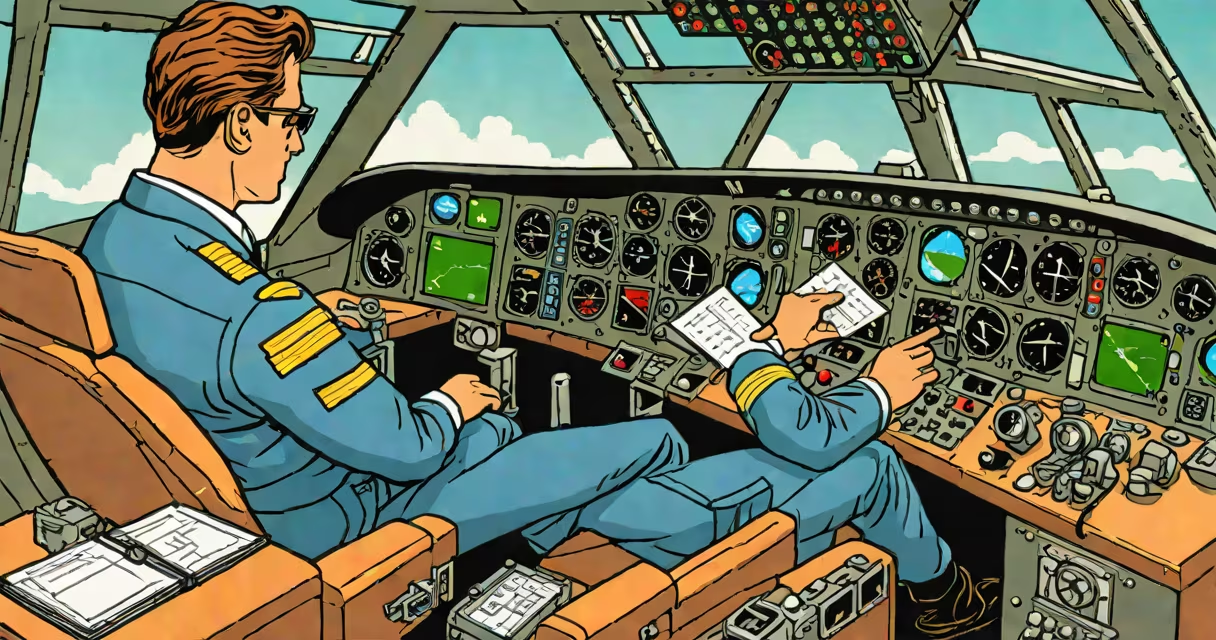
To become a commercial pilot in the United States, you must earn a Federal Aviation Administration (FAA)-issued pilot certificate, meet strict medical standards, complete a minimum of 1,500 flight hours, and pass written and practical exams. This process includes ground school, flight training, and ongoing skill development.
The process begins with a private pilot license (PPL), which requires at least 40 hours of flight time, including 20 hours of dual instruction and 10 hours of solo flying. After earning your PPL, you progress through instrument rating, commercial pilot license (CPL), and finally, the airline transport pilot (ATP) certificate. Each step builds on the last, with increasing responsibility and technical complexity.
Flight schools accredited by the FAA provide structured training. These programs typically cost between $10,000 and $20,000, depending on location and aircraft type. Many aspiring pilots finance their training through loans or scholarships. The FAA mandates that all pilots hold a valid Class 1 medical certificate, issued by an aviation medical examiner (AME), confirming physical and mental fitness to operate aircraft safely.
Pilots follow a tiered certification system. The FAA defines four main levels: Private Pilot (PPL), Instrument Rating (IR), Commercial Pilot (CPL), and Airline Transport Pilot (ATP). Each level unlocks new privileges and operational responsibilities.
| Certification Level | Minimum Flight Hours | Primary Purpose | FAA Regulation |
|---|---|---|---|
| Private Pilot (PPL) | 40 | Personal flying, non-commercial operations | 14 CFR §61.105 |
| Instrument Rating (IR) | 50 additional hours (total ~90) | Flying in low visibility using instruments only | 14 CFR §61.65 |
| Commercial Pilot (CPL) | 250 | Compensated flying, such as flight instructing | 14 CFR §61.125 |
| Airline Transport Pilot (ATP) | 1,500 | Operating large aircraft for airlines | 14 CFR §61.159 |
Most airline hiring standards now require 1,500 hours, though the FAA reduced this threshold to 1,000 hours for pilots hired by regional airlines under Part 121. This change, effective since 2013, was prompted by the Colgan Air crash investigation, which highlighted the need for better training and experience thresholds.
Some pilots pursue a degree in aviation science or a related field. While not mandatory, a bachelor's degree improves job prospects, especially with major carriers. According to the Bureau of Labor Statistics, 62% of airline pilots held a bachelor's degree or higher in 2022.
All pilots must maintain a current FAA Class 1 medical certificate. This requires annual exams for pilots under 40 and biennial exams thereafter. The exam assesses vision, hearing, cardiovascular health, and neurological function.
Corrective lenses are permitted for vision, but uncorrected visual acuity must be at least 20/100 in each eye. Color blindness disqualifies applicants unless they pass a specific color vision test approved by the FAA. A history of epilepsy, heart disease, or psychiatric disorders may lead to disqualification or temporary suspension.
I flew my first solo cross-country flight in a Cessna 172 during a summer program at a community college flight school. My instructor reviewed my logbook daily. On the third day of solo training, I flew from my home airport to a nearby city with no weather delays. That flight confirmed I had internalized navigation, fuel management, and radio communication skills.
Many assume that becoming a pilot requires a wealthy family or elite education. This is false. While flight training costs money, scholarships, military enlistment, and loan programs make the path accessible. The U.S. Air Force offers full tuition coverage for cadets who commit to service, and many universities have aviation departments with funding packages.
Another myth is that pilots don't need math or science. In reality, understanding aerodynamics, weight and balance calculations, and performance charts demands solid math skills. Pilots calculate crosswind components, descent rates, and fuel burn using formulas taught in ground school.
Some confuse a pilot with a copilot. A copilot is a second-in-command pilot on multi-crew aircraft, often holding an ATP certificate. The term "co-pilot" is outdated; the FAA uses "first officer" for the second-in-command role.
Consider Alex Rivera, a 24-year-old who completed a bachelor's degree in aerospace engineering at Embry-Riddle Aeronautical University. He earned his PPL at 19, completed 150 hours of flight time through a flight school partnership, and obtained his CPL at 21. He then worked as a flight instructor for two years, logging 500 additional hours.
At 23, he applied to a regional airline through a pilot hiring program. His application included a logbook with 1,200 hours, a Class 1 medical certificate, and a clean background check. He passed a computer-based test covering air law, meteorology, and aircraft systems. After a simulator assessment and interview, he was hired as a first officer on a Bombardier CRJ-200.
Alex's path reflects the standard progression: education, flight hours, certifications, and airline screening. His total training cost was approximately $38,000, funded through federal student loans and a $5,000 scholarship from the National Business Aviation Association.
What does it take to be a pilot? It takes consistent training, discipline, and meeting measurable standards set by the FAA. The process is rigorous but structured, with clear benchmarks at each stage. Aspiring pilots must understand that success hinges on both technical skill and personal accountability.