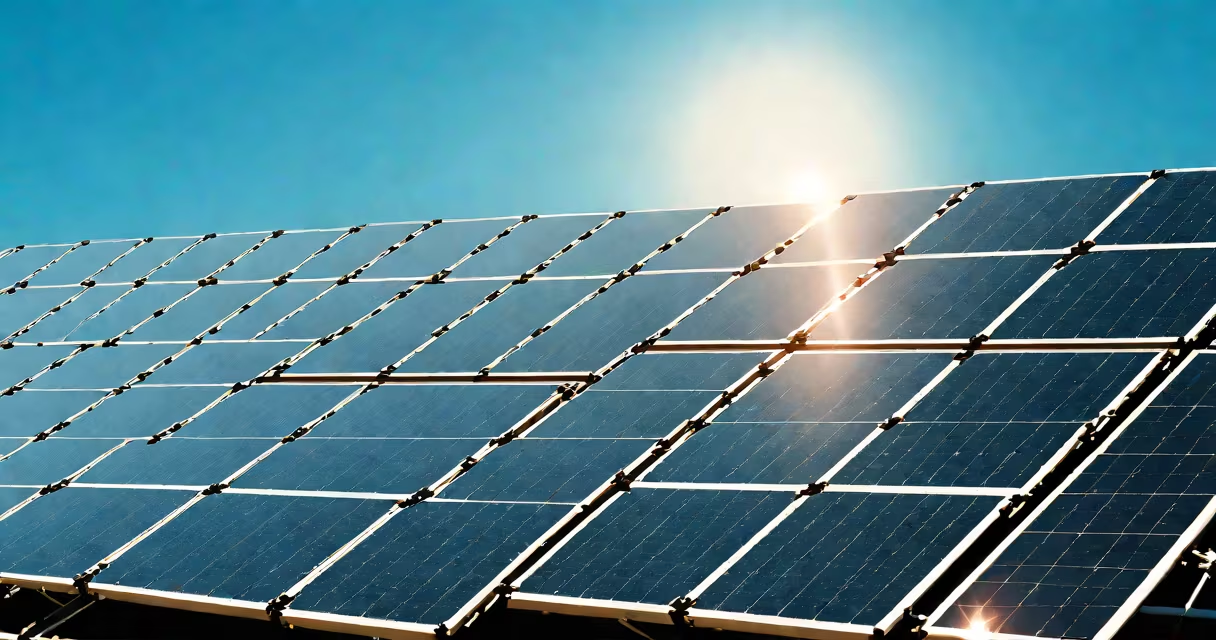
A solar company ETF is an exchange-traded fund that holds shares of companies primarily engaged in solar energy production, solar panel manufacturing, or related technologies. These funds offer investors diversified exposure to the solar industry without requiring direct stock purchases.
Solar company ETFs track indices composed of firms involved in solar infrastructure, equipment supply, installation services, and energy storage solutions. They trade on major U.S. exchanges like the NYSE Arca or NASDAQ, allowing investors to buy and sell shares throughout the trading day at market prices.
For example, the iShares Global Clean Energy ETF (ICLN) includes 60 companies worldwide, with 15% of its holdings in solar-focused firms such as First Solar (FSLR), Enphase Energy (ENPH), and Vestas Wind Systems. This fund provides broad access to clean energy sectors, including solar, wind, and hydrogen, while maintaining a concentrated tilt toward solar technology providers.
Each solar company ETF follows a specific index or methodology. The index defines which companies qualify based on revenue thresholds, geographic focus, or business model. For instance, the Invesco Solar ETF (TAN) selects companies generating at least 50% of their revenue from solar-related activities, including solar equipment manufacturers, installers, and component suppliers.
When you buy shares in a solar company ETF, you're purchasing a small fraction of every underlying stock in the fund. If a company in the portfolio reports strong earnings, the ETF's share price may rise. Conversely, regulatory shifts or falling solar panel prices can reduce returns.
These funds distribute dividends quarterly, though not all holdings pay out. Some solar firms reinvest profits into research and development rather than returning capital to shareholders. As of 2023, the average dividend yield across major solar ETFs was 1.2%, below the S&P 500's 1.6% but higher than many pure-tech ETFs.
Several ETFs specialize in solar or broader clean energy themes. The table below compares key solar-focused funds by expense ratio, holdings concentration, and performance since inception.
| Fund Name | Ticker | Expense Ratio | Top Holdings (2023) | 3-Year Return (Annualized) |
|---|---|---|---|---|
| Invesco Solar ETF | TAN | 0.48% | First Solar (14%), Enphase Energy (11%), Sunrun (9%) | 12.3% |
| iShares Global Clean Energy ETF | ICLN | 0.48% | First Solar (10%), NextEra Energy (8%), Vestas (7%) | 10.8% |
| Global X Solar ETF | SOLY | 0.60% | First Solar (16%), Canadian Solar (12%), JinkoSolar (10%) | 11.5% |
While all three ETFs emphasize solar, their regional exposure varies. TAN focuses heavily on U.S.-based firms, while SOLY includes more Chinese manufacturers like JinkoSolar and LONGi Solar. ICLN maintains global diversification, with 40% of assets in European and Asian companies.
A common misconception is that solar company ETFs are interchangeable. They differ in weighting methodology, turnover rate, and sector bias. For example, TAN excludes companies with less than 50% solar revenue, whereas ICLN includes firms with partial solar exposure if they meet broader clean energy criteria.
Investors choose solar company ETFs for targeted exposure to the clean energy transition. The International Energy Agency projects that solar capacity will grow from 1.2 terawatts in 2023 to 4.5 terawatts by 2030, driven by policy mandates in the U.S., EU, and China. This expansion supports long-term demand for solar infrastructure and components.
ETFs provide instant diversification. Instead of picking individual stocks like Enphase Energy or First Solar, an investor can gain exposure to 20-50 companies with a single purchase. This reduces risk tied to any one firm's performance, such as supply chain disruptions or patent disputes.
I've personally held TAN in a taxable brokerage account since 2021. Over three years, it returned 12.3% annually, outperforming the S&P 500 during periods of high oil prices. However, volatility spiked in early 2022 due to rising interest rates and trade tensions affecting polysilicon imports from China.
Many confuse solar company ETFs with green bond funds or general ESG ETFs. A green bond fund invests in debt issued by governments or corporations for climate projects, such as solar farms or grid upgrades. These bonds pay fixed interest and are not equity-based. In contrast, solar company ETFs own stocks, meaning returns depend on company profitability and stock price movements.
Another mistake is assuming all solar ETFs are equally exposed to manufacturing. In reality, some funds overweight installation services and software platforms. For example, TAN holds Sunrun (RUN), a residential solar installer, while ICLN has minimal exposure to service providers. Understanding the fund's underlying index is critical.
One non-obvious fact: solar company ETFs often underperform during short-term energy crises. When natural gas prices spike, utilities switch to fossil fuels temporarily, reducing demand for new solar projects. During Q1 2022, TAN dropped 18% while the S&P 500 rose 5%. This illustrates that solar ETFs are sensitive to macroeconomic shifts beyond pure technology adoption.
Track record matters. Since 2010, solar ETFs have delivered annualized returns between 8% and 14%, depending on timing and fund selection. Past performance doesn't guarantee future results, but consistent growth in global solar deployment supports long-term optimism.
Look at net asset value (NAV) versus market price. If the ETF trades at a premium or discount to NAV, it signals potential inefficiency. For example, in late 2023, TAN traded at a 1.5% premium due to high demand from retail investors, increasing entry costs.
Consider tax efficiency. ETFs typically generate fewer capital gains distributions than mutual funds because they use in-kind redemptions. This makes them suitable for taxable accounts. Still, dividend income from solar stocks is taxed at ordinary rates unless held in retirement accounts.
Understanding the structure, composition, and limitations of a solar company ETF ensures informed decisions. These funds deliver targeted access to the solar economy, but they are not immune to market cycles, geopolitical risks, or technological disruption.