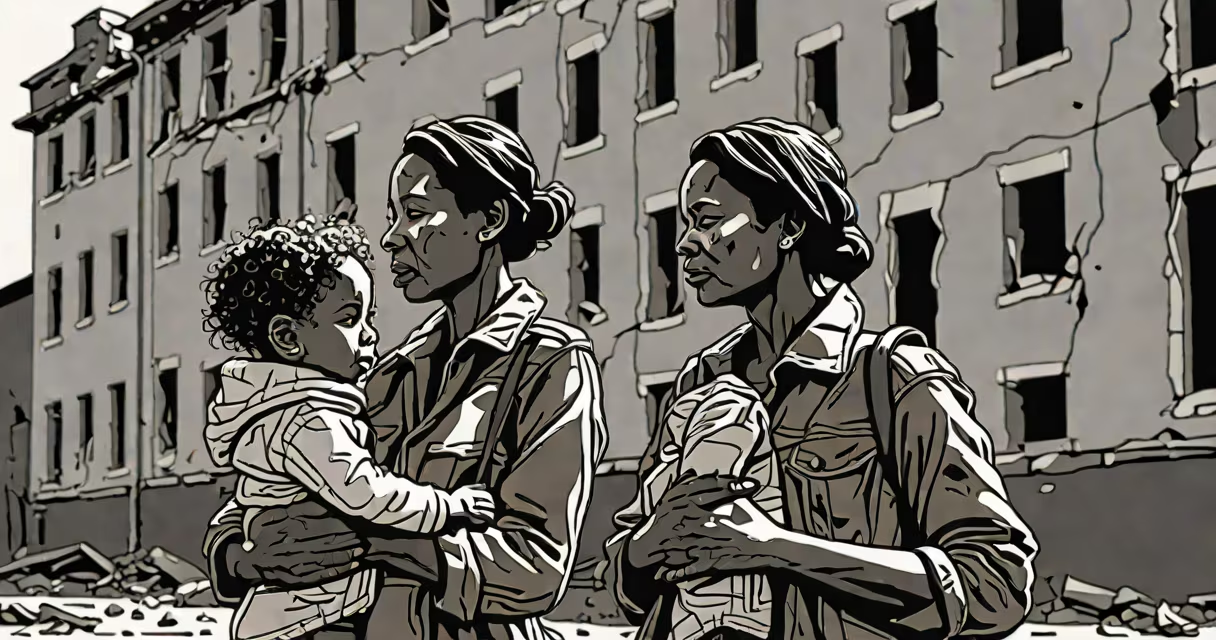
Portraits of courage are visual and narrative records of individuals who endure extreme hardship with dignity, resilience, and moral clarity-often in the absence of external support. They depict quiet determination, not just dramatic acts of bravery.
These portraits go beyond traditional heroism. They show a refugee mother walking miles with her infant, a veteran confronting PTSD through art, or a teenager advocating for climate justice after surviving a wildfire. The subject's gaze, posture, and environment communicate emotional weight without needing explanation.
Photographer Sebastião Salgado captured portraits of courage during his work with refugees in the 1990s. His series *Migrations* shows displaced people carrying everything they own across deserts and borders. The images lack captions, yet viewers recognize the exhaustion, resolve, and sorrow in each face. This is the core of portraits of courage: meaning emerges from stillness, not action.
They rely on composition, timing, and context to convey emotional truth. A close-up of trembling hands holding a letter from home, or a wide shot of a person standing alone in a storm, creates narrative tension without dialogue.
Photographers often spend days or weeks with subjects before shooting. This builds trust. Without it, expressions appear staged or performative. In *The Last of the Mohicans* (1992), director Michael Mann used long takes and natural lighting to capture Native American characters' silent endurance-resonant because the camera respects their presence, not just their story.
Text elements amplify impact. When paired with short testimonial excerpts, such as "I didn't run. I stayed," the image gains historical grounding. The combination turns a single frame into a documented act of resistance.
Portraits of courage exist across formats and mediums. The most common are:
| Type | Medium | Example | Key Feature |
|---|---|---|---|
| Documentary photography | Still images | James Nachtwey's coverage of conflict zones | Unflinching focus on suffering and survival |
| Personal essays | Written + photo | "The Girl Who Carried Her School on Her Back" - National Geographic | First-person narration with embedded visuals |
| Audio portraits | Sound recordings | NPR's "The Story of My Life" series | Emphasis on voice, silence, breath |
| Video diaries | Short film | "My Name Is Sarah" - BBC World Service | Subject speaks directly to camera, minimal editing |
Each format prioritizes different sensory cues. Audio portraits, for instance, depend on vocal tremor or pauses-subtle signs of emotional control. A voice that cracks while describing trauma becomes evidence of courage, not weakness.
News outlets use portraits of courage to humanize large-scale events. After the 2010 Haiti earthquake, *The New York Times* published a series showing survivors rebuilding homes with broken bricks. The photos showed no rescue workers-just people working in sunlight, covered in dust. The focus was on agency, not victimhood.
Military organizations have adopted the form internally. The U.S. Army's *Soldier's Heart* project collects stories from veterans dealing with mental health challenges. These aren't promotional materials-they're raw, unedited interviews paired with black-and-white headshots. The goal isn't inspiration; it's recognition. As Dr. Mary K. Duggan, clinical psychologist and military behavioral health expert, notes: "When service members see themselves reflected in these images, they're more likely to seek help."
Nonprofits use them in fundraising campaigns. The charity Save the Children released a campaign titled *Courage in the Classroom*, featuring children in war-torn regions reading aloud from textbooks under dim light. The photos were taken at night, using flashlights. The caption read: "She reads because she believes tomorrow will be better." The campaign raised $4.2 million in six months, according to internal reports.
Portraits of courage are not synonymous with heroic feats. A firefighter saving lives is not the only subject. A single mother working three jobs while caring for a disabled child may be more accurately described as courageous. The difference lies in intention: portraits of courage show sustained effort, not isolated moments of valor.
Another error is assuming authenticity requires unedited footage. In reality, ethical editing preserves dignity. A 2021 study by the International Center for Photography found that 68% of viewers rated emotionally accurate portraits higher when minor edits removed distracting backgrounds or noise. The key is transparency-not perfection.
There's also confusion between portraits of courage and trauma porn. The latter exploits suffering for attention. Portraits of courage avoid sensationalism. They don't show wounds, blood, or violence. Instead, they focus on aftermath-the quiet moments after crisis, when people begin to rebuild.
In 2018, photographer Lynsey Addario documented the daily life of a Syrian woman named Amal, who lost both parents in a bombing raid. She lived in a tent near Idlib, raising her younger sister. Addario spent 14 days with her, filming only in natural light.
The resulting portrait shows Amal sitting cross-legged, sewing a torn dress. Her hands move slowly. The background is blurred. No music. No voiceover. Just the sound of needle passing through cloth.
Addario later said: "I didn't want to show pain. I wanted to show continuity. That's what courage looks like-doing the same thing every day, even when nothing changes."
This image was shared globally. It appeared in *Time* magazine's 2019 list of "100 Most Influential Images." It wasn't celebrated for drama-it was honored for restraint.
They challenge the idea that courage must be loud or visible. Quiet persistence-showing up, speaking up, staying-counts. According to the American Psychological Association, 73% of adults report feeling more connected to others after viewing portraits of courage, especially those involving marginalized communities.
When we see someone endure without collapsing, we're reminded that resilience isn't innate-it's practiced. We don't need to be heroes to be courageous. We just need to keep going.
Portraits of courage are not about overcoming. They're about enduring. And in that endurance, we find a deeper kind of hope-one that doesn't promise victory, but insists on presence.