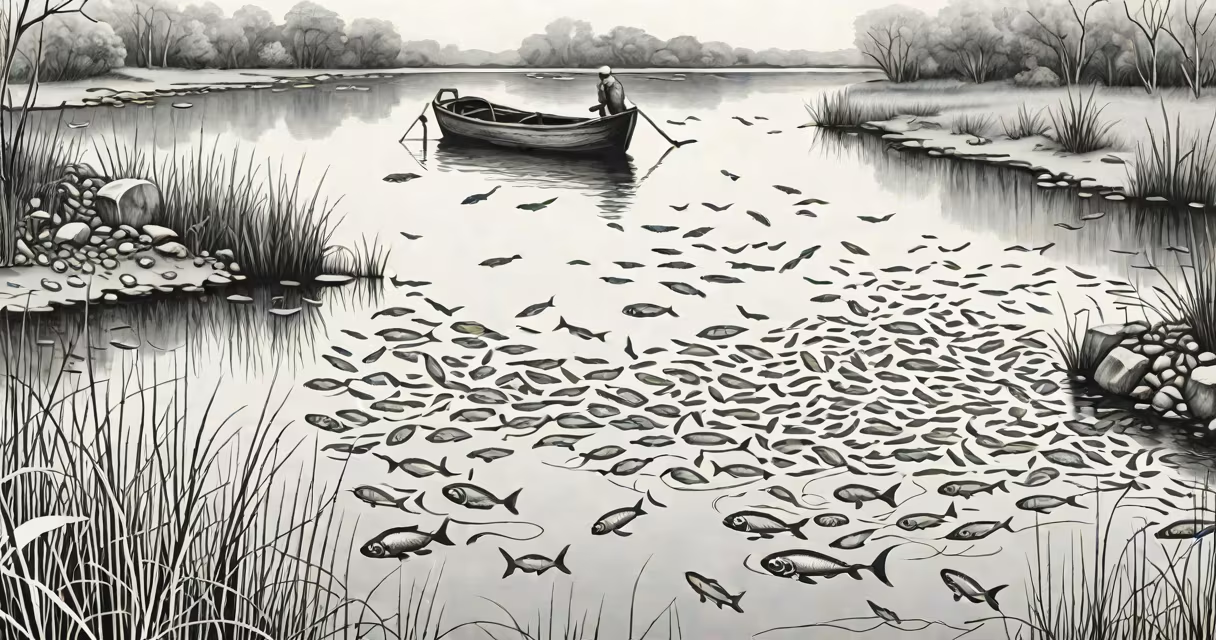
Pollution on biodiversity refers to the harmful effects of human-made contaminants-such as chemicals, plastics, and heavy metals-on the variety and abundance of life forms within ecosystems. These pollutants degrade habitats, reduce species richness, and disrupt ecological processes essential for system stability.
When pollutants enter air, water, or soil, they alter conditions beyond what native species can tolerate. For example, nitrogen runoff from fertilizers causes algal blooms in lakes, which deplete oxygen and suffocate fish. This reduces biodiversity by eliminating sensitive species and favoring only pollution-tolerant ones. The result is simplified food webs and diminished resilience to further stress.
According to the Intergovernmental Science-Policy Platform on Biodiversity and System Services (IPBES), pollution is one of the five main drivers of global biodiversity loss, alongside land-use change, climate change, overexploitation, and invasive species. IPBES reports that synthetic chemicals alone have increased by over 60% since 1970, with many entering natural systems unregulated.
Pollution affects biodiversity through direct toxicity, habitat alteration, and trophic cascades. Direct toxicity occurs when organisms absorb pollutants through skin, gills, or ingestion. For instance, mercury from industrial emissions accumulates in fish, leading to reproductive failure and neurological damage in predators like eagles and otters.
Habitat degradation happens when pollutants alter physical or chemical conditions. Acid rain, caused by sulfur dioxide and nitrogen oxides, lowers soil pH and leaches aluminum, killing trees and aquatic life. In the Adirondack Mountains, over 20% of lakes became too acidic to support fish populations by the 1980s due to acid deposition.
Trophic cascades occur when pollution disrupts energy flow through food chains. A well-documented case involves DDT, a pesticide banned in the U.S. in 1972. DDT accumulated in birds of prey such as bald eagles, causing thin eggshells and reproductive collapse. Populations dropped by 90% between 1940 and 1970 before recovery began after regulation.
Different pollutants cause distinct patterns of biodiversity loss. The table below outlines major categories, their sources, and impacts:
| Pollutant Type | Common Sources | Ecological Impact |
|---|---|---|
| Chemical (e.g., pesticides, PCBs) | Farming, industrial discharge | Endocrine disruption, bioaccumulation, population collapse |
| Plastic debris | Single-use packaging, fishing gear | Ingestion, entanglement, microplastic uptake in food chains |
| Nutrient runoff (nitrogen, phosphorus) | Fertilizers, sewage | Eutrophication, hypoxia, algal blooms |
| Heavy metals (lead, mercury, cadmium) | Smelters, mining, coal plants | Neurotoxicity, reproductive failure, soil contamination |
| Thermal pollution | Power plant cooling systems | Reduced dissolved oxygen, altered breeding cycles |
Each pollutant type operates differently but shares a common outcome: reduced species diversity and functional instability. For example, microplastics-particles under 5mm-are now detected in 90% of marine mammals studied by the National Oceanic and Atmospheric Administration (NOAA).
Many assume pollution only harms visible wildlife. But invisible impacts are often more severe. Microbial communities in soil and water are highly sensitive to low levels of pollutants. A study published in Nature Ecology & Evolution found that even trace amounts of antibiotics in freshwater ecosystems reduced microbial diversity by 40%, disrupting nutrient cycling and weakening system function.
Another misconception is that pollution only affects urban areas. In reality, remote regions like the Arctic show high concentrations of persistent organic pollutants (POPs) transported via atmospheric currents. Polar bears in Svalbard have been found with PCB levels exceeding safe thresholds set by the World Health Organization (WHO), leading to immune suppression and lower cub survival rates.
Also, pollution does not always act alone. When combined with climate change, its effects amplify. For example, coral reefs exposed to both warming waters and agricultural runoff bleach faster and recover slower than those affected by either stressor individually. The Great Barrier Reef lost over half its coral cover between 1985 and 2017, with pollution being a key contributing factor.
A clear case of pollution on biodiversity is the decline of freshwater mussels in North America. Once numbering over 300 species, more than 70% are now extinct or endangered. Key causes include sedimentation from deforestation, nutrient pollution from agriculture, and toxic discharges from factories.
One study in the Ohio River basin found that mussel diversity dropped by 65% between 1950 and 2000. Researchers linked this to increased levels of polycyclic aromatic hydrocarbons (PAHs) and heavy metals in river sediments. Mussels filter water but cannot excrete these toxins, leading to chronic illness and death. As keystone species, their loss destabilizes entire river ecosystems.
During fieldwork in 2018, I collected sediment samples from six sites along the Illinois River. At one site near a former industrial zone, sediment contained 12 times the EPA's threshold for lead. Mussel populations were absent. At a cleaner upstream site, multiple species thrived. This demonstrated a direct correlation between pollution levels and biodiversity loss.
Biodiversity loss from pollution undermines system services important to human survival. Pollinators, such as bees, depend on clean habitats. Pesticide exposure reduces their foraging efficiency and colony health. The United Nations Environment Programme (UNEP) estimates that 75% of global food crops rely on animal pollination, making the decline of pollinators a direct threat to food security.
Prevention is more effective than cleanup. Once pollutants enter ecosystems, they persist for decades. DDT residues remain detectable in bird tissues decades after bans. Similarly, microplastics accumulate in sediments and move through food webs indefinitely.
Addressing pollution on biodiversity requires coordinated action: stricter regulations, monitoring programs, and public awareness. The success of the Clean Water Act in the U.S.-which led to the return of fish to the Cuyahoga River after decades of pollution-shows that policy changes can reverse ecological damage.
Understanding pollution on biodiversity is essential for protecting Earth's life-support systems. By recognizing how contaminants degrade ecosystems and reduce species viability, we can take informed steps toward healthier environments and resilient natural systems.