Parasitism is a biological relationship in which one organism, the parasite, lives on or inside a host organism and derives nutrients at the host's expense, often causing harm but rarely killing it immediately. This interaction is a form of symbiosis where one partner benefits and the other is negatively affected.
Parasites range from microscopic organisms like protozoa and viruses to larger entities such as tapeworms and ticks. They rely on their hosts for survival, reproduction, and energy. Unlike predators that kill prey quickly, parasites typically maintain their hosts alive long enough to complete their life cycle.
The term "parasitism" originates from Greek roots meaning "beside food," reflecting the parasite's reliance on a living host for sustenance. It is distinct from predation, where the predator kills its prey outright, and mutualism, where both partners benefit. Parasitism is widespread across ecosystems and plays a key role in shaping population dynamics and evolutionary adaptations.
Parasites enter hosts through various routes: ingestion, skin penetration, or vector transmission via insects. Once inside, they establish residence in specific tissues or organs-such as the intestines, blood, or brain-where they absorb nutrients or manipulate host physiology.
For example, the malaria-causing protozoan *Plasmodium falciparum* enters humans through the bite of an infected Anopheles mosquito. The parasite travels to the liver, multiplies, then invades red blood cells, leading to fever, anemia, and in severe cases, death. The host suffers significant health impacts while the parasite reproduces and spreads to new hosts.
Some parasites alter host behavior to increase transmission. The fungus *Ophiocordyceps unilateralis* infects ants, taking control of their nervous system. Infected ants climb vegetation and clamp onto leaves with their mandibles before dying. This positioning increases the likelihood of spore dispersal to new hosts below.
Parasitism is categorized by location and duration of the relationship. The most common types are ectoparasitism and endoparasitism.
| Type | Location | Examples | Host Impact |
|---|---|---|---|
| Ectoparasite | On the surface of the host | Ticks, lice, fleas | Blood loss, skin irritation, disease transmission |
| Endoparasite | Inside the host body | Tapeworms, *Plasmodium*, roundworms | Nutrient depletion, organ damage, immune suppression |
| Parasitoid | Eventually kills the host | Parasitic wasps (e.g., *Cotesia glomerata*) | Host is consumed from within, usually dies during development |
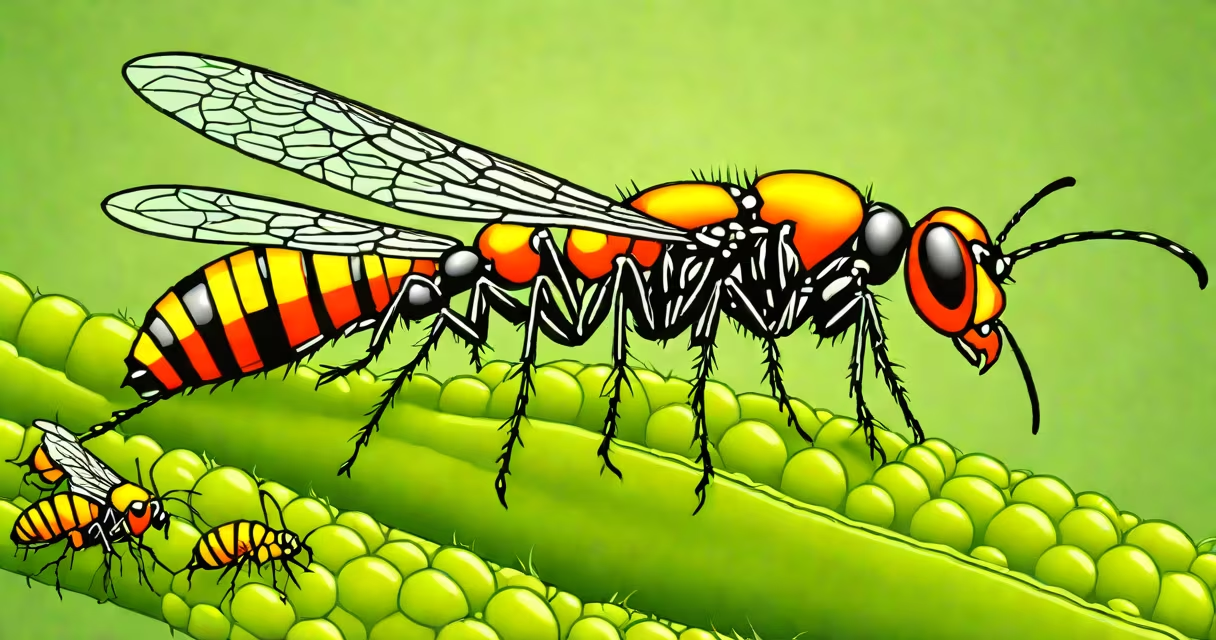
Parasitoids differ from typical parasites because they kill their host. A female parasitic wasp lays eggs inside a caterpillar. The larvae feed on the host's internal tissues, avoiding important organs until the final stage. When mature, they emerge and pupate, leaving the caterpillar dead. This strategy maximizes resource use while ensuring offspring survival.
Another non-obvious distinction: not all parasitic relationships are harmful. Some parasites cause minimal damage and may even confer indirect benefits. For instance, certain gut microbes in mammals suppress pathogenic bacteria, reducing infection risk. However, this does not negate the fundamental imbalance-parasites still extract resources without providing equivalent return.
Parasitism is often confused with commensalism, where one organism benefits and the other is unaffected. But in parasitism, the host experiences measurable negative effects, such as reduced growth, fertility, or lifespan. A study published in *Nature Ecology & Evolution* found that parasitized birds had 30% lower reproductive success compared to uninfected individuals.
Another misconception is that all parasites are small. While many are microscopic, others-like the parasitic wasp *Glyptapanteles*-are visible to the naked eye. Its larvae develop inside caterpillars, emerging later to spin cocoons. The host remains alive for days after emergence, continuing to move occasionally-a phenomenon observed in field studies across North America.
Parasitism is not synonymous with disease. A parasitic infection becomes a disease only when it disrupts normal function. A person may carry *Toxoplasma gondii* asymptomatically for years. The parasite alters brain chemistry slightly, increasing risk-taking behavior in rodents and possibly influencing human personality traits-but only in rare cases does it lead to clinical illness.
Parasites regulate host populations and drive evolutionary innovation. Hosts evolve defenses such as immune responses, behavioral avoidance, or physical barriers. In turn, parasites evolve countermeasures-like antigenic variation in *Trypanosoma brucei*, which changes its surface proteins to evade detection.
This arms race shapes biodiversity. Research from the University of California, Santa Barbara, shows that parasite diversity correlates strongly with species richness in marine environments. Areas with high parasite diversity tend to have more stable food webs and greater resilience to environmental change.
During fieldwork in Costa Rica, I observed a single *Cephalotes* ant colony infested with parasitic phorid flies. The flies laid eggs on worker ants, and larvae developed inside the host's head. When mature, the larvae caused the ant to detach from the nest and fall to the ground-where the fly emerged. This behavior altered colony movement patterns and increased mortality among workers, demonstrating how parasites influence social insect dynamics.
Understanding parasitism definition biology helps explain disease spread, conservation challenges, and agricultural threats. Crop pests like aphids and nematodes reduce yields by feeding on plant sap and roots. In livestock, parasites such as *Haemonchus contortus* cause severe anemia and death in sheep. Control strategies often involve targeted treatments, breeding resistant animals, or using natural predators.
Parasitism is not just a biological curiosity-it's a foundational process in nature. From the smallest protozoan to the largest parasitic wasp, these interactions shape life on Earth. Recognizing them enables better management of health, agriculture, and ecosystems.