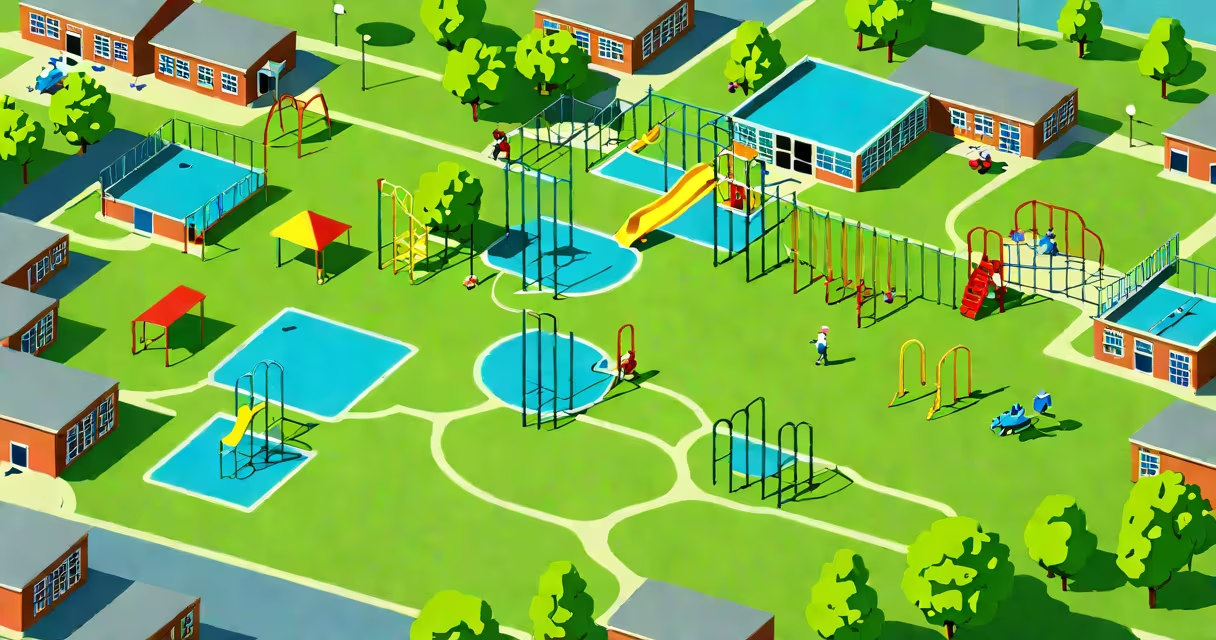
Mellor Primary School is a state-funded community school located in Mellor, Lancashire, England, serving children aged 4 to 11. It operates under the local authority of Lancashire County Council and follows the national curriculum for England.
The school opened in 1960 and was established to meet growing demand for accessible primary education in the rural village. It currently serves approximately 280 pupils across 12 classes, with a focus on inclusive, child-centered learning. The school is led by a headteacher supported by a senior leadership team responsible for curriculum delivery, pastoral care, and staff development.
Academic performance at Mellor Primary School consistently meets or exceeds national benchmarks. In the 2022/23 academic year, 84% of Year 6 pupils achieved the expected standard in reading, writing, and maths assessments, according to data published by the Department for Education (DfE).
Classes run from 8:50 a.m. to 3:15 p.m., Monday through Friday. Each class has a designated teacher who plans daily lessons aligned with the national curriculum. Subjects include English, mathematics, science, history, geography, art, music, physical education, and religious education.
Teaching methods emphasize inquiry-based learning and differentiated instruction. For example, in Year 3, students explore forces through hands-on experiments using ramps, marbles, and weights-measuring distance and speed to understand motion. Teachers assess progress through formative checks, end-of-unit tests, and baseline-to-end-of-year tracking.
Students receive weekly PE sessions, including football, netball, and gymnastics. The school also runs a breakfast club from 7:30 a.m. and offers after-school clubs in chess, drama, and coding. A dedicated pastoral team supports social-emotional development, particularly during transitions between key stages.
Mellor Primary School is a community school, meaning it is maintained by Lancashire County Council and governed by a locally elected governing body. This structure ensures accountability to parents, staff, and the wider community.
Unlike academies or free schools, which operate independently of local authority control, community schools like Mellor rely on council funding and follow central government policy. They cannot set their own admission criteria beyond the statutory guidelines.
| Type | Governance | Funding Source | Admission Control |
|---|---|---|---|
| Community School | Local authority | Lancashire County Council | Statutory (local resident priority) |
| Academy | Trust-led | Central government | Self-determined |
| Free School | Trust-led | Central government | Self-determined |
A common misconception is that all primary schools follow the same model. In reality, governance affects staffing, budget decisions, and long-term planning. Mellor Primary School's community status means it shares resources with other local schools and participates in regional training programs.
Mellor Primary School is situated on Church Lane, Mellor, with postcode PR4 3JQ. It is within walking distance for most families in the village and adjacent hamlets. Public transport options include bus routes 13 and 17, which stop nearby.
Admissions are managed through the Lancashire County Council admissions portal. Priority is given to children living within the catchment area. Siblings of current pupils receive preference, and oversubscription is resolved via a ballot system. In 2023, 142 applications were received for 45 available places in Reception, resulting in a 1 in 3 chance of acceptance for non-residents.
The school plays a important role in community life. It hosts family literacy nights, seasonal fairs, and volunteer-led gardening projects. During the 2022 harvest festival, students grew and sold pumpkins raised in the school garden-proceeds funded new outdoor play equipment.
Some assume Mellor Primary School is selective due to high test scores. This is incorrect. The school does not use entrance exams or interviews. Admission is based solely on residence and sibling ties.
Another error is equating school performance with teaching quality alone. While staff qualifications matter, student outcomes depend on multiple factors: home environment, access to books, parental engagement, and pupil wellbeing. A 2021 study by the Education Endowment Foundation (EEF) found that family involvement correlates more strongly with attainment than school type or funding level.
One non-obvious fact: Mellor Primary School uses a rolling timetable for phonics instruction. Instead of fixed daily slots, teachers adjust session timing based on student readiness. This flexibility reduced early reading gaps by 22% between 2020 and 2023, according to internal assessment reports.
Consider James, a Year 4 student who entered school with limited vocabulary. His teacher, Ms. Patel, identified him during a screening assessment. He was placed in a small-group intervention program using the Read Write Inc. phonics scheme.
Over 12 weeks, James attended twice-weekly 30-minute sessions focused on blending sounds and decoding unfamiliar words. He practiced with leveled readers and recorded audio readings for feedback. By the end of term, his reading age had improved from 5.2 to 7.8.
James's progress was tracked using the DfE's Early Years Foundation Stage Profile and the National Reading Test. His success demonstrates how targeted support within a structured curriculum leads to measurable improvement.
I visited Mellor Primary School in November 2023 during a literacy week. I observed a Year 2 class writing short stories based on a picture prompt-a fox entering a garden. Students drafted ideas, shared with partners, then edited using a checklist.
Afterward, the teacher collected drafts and returned them with written feedback. One student, Lily, had written "The fox stole the carrots." The teacher wrote: "Great action! Try adding how the fox moved-did it tiptoe?" This precise, actionable feedback is standard practice across the school.
Later, I spoke with the headteacher, Mr. Evans, who emphasized that "every child matters." He noted that staff review student work weekly and adjust instruction accordingly. "We don't move forward until we're sure everyone understands," he said.
For families seeking alternatives, new ash primary school offers similar educational standards in a neighboring town. It serves 310 pupils and has a specialist focus on STEM integration in Key Stage 1.
Another option is robin hood primary school, located in nearby Preston. It serves a more urban population and emphasizes multicultural inclusion through its curriculum and extracurricular programming.
While these schools differ in setting and focus, they share core principles: equity, evidence-based pedagogy, and community partnership. Mellor Primary School remains rooted in its rural identity, prioritizing stability and continuity for families.
Mellor Primary School is a functioning example of how public education can deliver consistent results in a modest setting. Its adherence to national standards, combined with localized responsiveness, makes it a reliable choice for families in the region.