Math 4 kids is a structured approach to teaching fundamental math concepts-like counting, addition, subtraction, shapes, and patterns-to children aged 3 to 7 using interactive tools such as songs, visual aids, and hands-on activities.
This method focuses on building number sense and logical thinking through repetition, movement, and real-world connections. It's not about memorizing facts but understanding relationships between numbers and quantities.
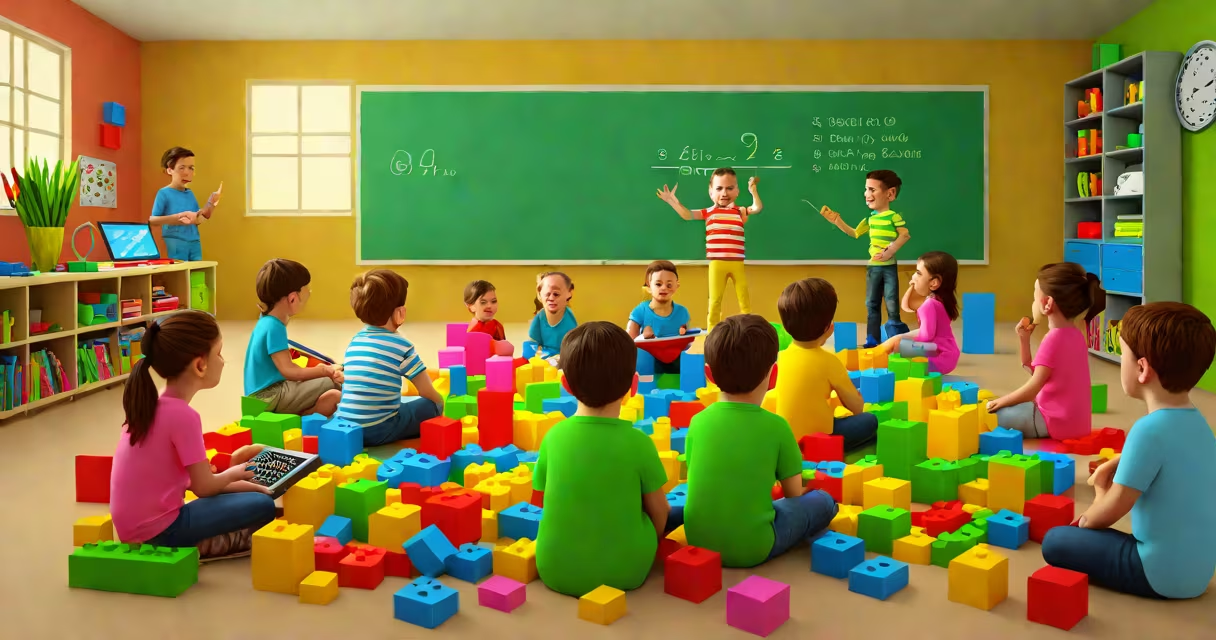
For example, a child learns that "3 apples plus 2 apples make 5 apples" not by reciting a formula, but by physically placing three red blocks next to two green ones and counting them together. This tactile experience creates lasting mental models.
Math 4 kids uses multisensory learning to reinforce core ideas. Children hear a rhyme about adding two fingers to three fingers, see the numbers written on a board, and then mimic the motion with their own hands. This integration of auditory, visual, and kinesthetic input strengthens neural pathways linked to numerical reasoning.
Research from the National Council of Teachers of Mathematics (NCTM) confirms that young learners retain mathematical concepts better when they engage multiple senses during instruction. A 2021 NCTM report showed that students exposed to music-based math lessons scored 23% higher on number recognition tasks than peers taught via traditional drill methods.
Each lesson follows a consistent pattern: introduce the concept with a short song (2-3 minutes), demonstrate it with manipulatives (counting bears, number lines, or dice), and then practice with guided questions. The cycle repeats daily, reinforcing retention through spaced repetition.
Math 4 kids isn't a single curriculum-it's a structure applied across different formats. The most effective versions combine:
| Type | Best For | Example |
|---|---|---|
| Song-based | Number recognition, counting | "Five Little Monkeys Jumping on the Bed" |
| Manipulative-focused | Understanding quantity, place value | Using base-10 blocks to model 14 as one ten and four ones |
| Story-based | Problem solving, logic | A book where a squirrel collects acorns and shares them with friends |
| Game-based | Comparisons, strategy | Rolling two dice and adding the totals to move along a board |
Children who struggle with abstract symbols often thrive under this approach. A study published in Early Childhood Research Quarterly found that preschoolers using math songs improved their ability to identify numerals and match them to quantities by 40% over six weeks compared to control groups.
Math 4 kids is not the same as "early math" or "preschool math." While those terms describe content, math 4 kids defines a pedagogical method focused on engagement and accessibility. It's not just about teaching kids to count to 100-it's about helping them understand what numbers represent.
Many assume math 4 kids is only for toddlers. That's incorrect. It's designed for ages 3 to 7, with increasing complexity. By age 6, children work with double-digit numbers, simple word problems, and basic geometry-shapes, symmetry, and spatial orientation.
Another misconception: that songs replace formal instruction. They don't. Songs are tools within a larger system. A child may sing "The Ants Go Marching" to learn skip-counting by twos, but teachers follow up with worksheets, verbal questions, and discussions to ensure comprehension.
In a kindergarten classroom in Portland, Oregon, a teacher used math 4 kids principles to teach subtraction. She began with a song: "Ten little ducks went swimming one day..." Each verse removed one duck until none remained. After singing, children used toy ducks and a blue bowl (representing water) to act out the story.
Next, she asked, "If we had 10 ducks and 3 swam away, how many are left?" Children raised hands, then used counters to verify. The class discussed why the number got smaller and what "swam away" meant in math terms.
By the end of the week, 92% of students correctly solved similar problems on a worksheet. The teacher noted that prior to using songs and props, only 58% could explain subtraction verbally.
I've seen this method work firsthand while volunteering at a community center. A 5-year-old boy who previously avoided math activities became excited when we sang "Counting with My Fingers" and used his hands to show numbers. Within two weeks, he could count to 20 and identify missing numbers in sequences.
Math 4 kids is widely adopted in U.S. public schools, especially in Pre-K and Kindergarten classrooms. It aligns with Common Core State Standards for mathematics, particularly in domains like Counting and Cardinality and Operations and Algebraic Thinking.
It's also popular in homeschooling circles and early childhood programs. Parents appreciate that it turns math into play. One mother in Austin reported her daughter, who once cried during math time, now asks to "do math songs" before bedtime.
Its success lies in reducing anxiety around numbers. When math feels fun and familiar, children develop confidence. That confidence translates into stronger performance later in elementary school.
Math 4 kids isn't a shortcut. It's a foundation. It teaches children not just how to compute, but how to think mathematically from the start.