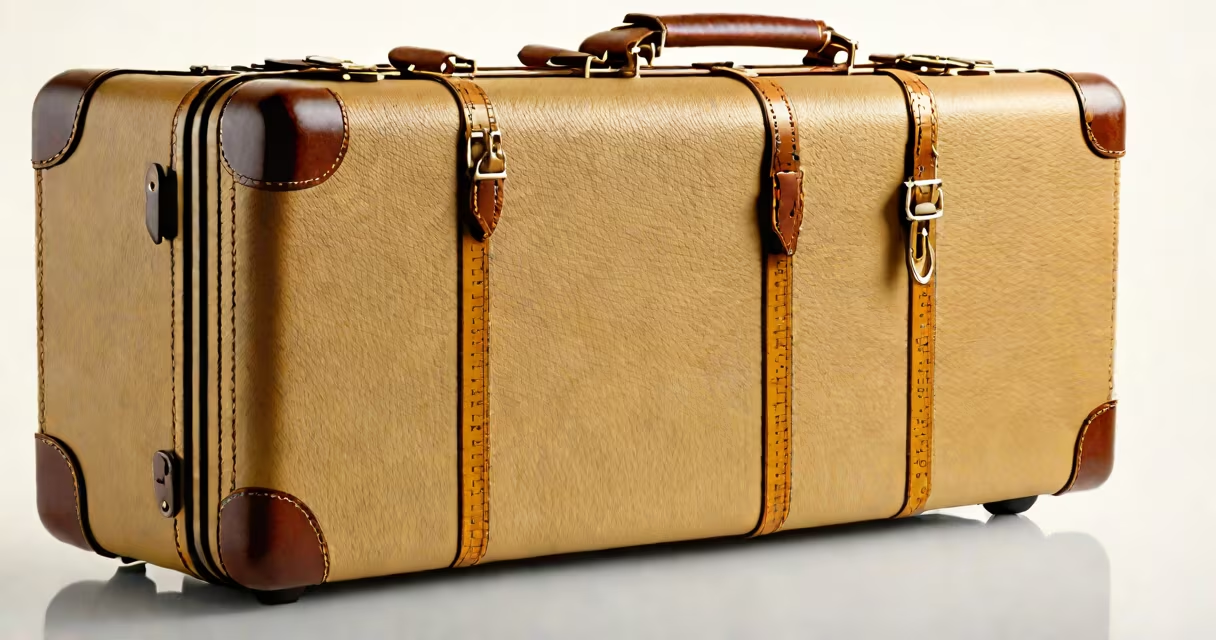
Luggage linear dimensions refer to the sum of a bag's height, width, and depth measured in inches or centimeters. This total determines whether a piece qualifies as carry-on or must be checked. Airlines use this metric to enforce size limits and prevent oversized bags from being stowed in overhead bins.
Carry-on bags must stay under a specific linear dimension threshold set by each airline. For example, Delta requires carry-ons to not exceed 45 linear inches (114 cm). If your bag measures 22 inches tall, 14 inches wide, and 9 inches deep, the total is 45 inches - the maximum allowed. Exceeding this limit results in a fee or forced check-in.
Linear dimensions are calculated by adding the three external measurements: height, width, and depth. The sum is compared against airline policy. This method prevents confusion between different shapes - a long, thin bag and a short, wide one both follow the same rule. It ensures consistency across all luggage types, regardless of form.
Airlines measure linear dimensions using the bag's outermost points, including wheels, handles, and external pockets. The tape measure runs from the highest point on the top edge to the lowest point on the bottom edge (height), then across the widest part (width), and finally from front to back (depth).
For example, a standard 24-inch rolling suitcase may have a 20-inch base, 14-inch side panel, and 9-inch handle extension. When closed, the height is 24 inches, width is 16 inches (including side wheels), and depth is 10 inches (including front-facing zipper and side pockets). Adding those gives 50 inches - too large for most domestic carry-on allowances.
Some airlines allow larger bags if they meet specific criteria. United allows 22 x 14 x 9 inches (45 inches total) for domestic flights. International flights often permit slightly larger sizes, such as 24 x 16 x 10 inches (50 inches total), depending on route and class of service. Always verify the current policy before travel.
Different luggage types have distinct size profiles. Most airlines define carry-on limits based on the total linear inches, not individual dimensions. The table below shows common carry-on size ranges by airline.
| Airline | Max Linear Inches (Domestic) | Max Linear Inches (International) | Common Bag Size Example |
|---|---|---|---|
| Delta | 45 | 50 | 22 x 14 x 9 inches |
| United | 45 | 50 | 22 x 14 x 9 inches |
| Southwest | 45 | 45 | 24 x 16 x 9 inches |
| JetBlue | 45 | 50 | 22 x 14 x 9 inches |
| Alaska Air | 45 | 50 | 22 x 14 x 9 inches |
Smaller personal items like backpacks or laptop bags may be allowed even if they exceed 45 inches in total, as long as they fit under the seat. These are typically limited to 18 x 14 x 8 inches (40 inches total). Airlines often accept them as "personal items" rather than carry-ons.
Checked baggage has higher limits. Most domestic flights allow up to 62 linear inches (157 cm) for standard checked bags. International routes may allow up to 70 inches (178 cm), depending on destination and fare class. Overweight or oversized bags incur additional fees.
Many travelers assume that a bag's height alone determines carry-on eligibility. This is incorrect. A 24-inch tall bag with narrow width and depth may still exceed 45 inches total. Conversely, a 20-inch tall bag with wide sides and thick padding can surpass the limit.
Another misconception is that airlines measure only the interior space. They do not. All external features - wheels, handles, straps, and zippers - count toward the total. A bag with extendable handles that stick out 3 inches beyond the main shell adds to the height measurement.
One non-obvious fact: Some airlines allow bags that slightly exceed the limit if they fit in the bin. This is rare and not guaranteed. Delta's gate agents may accept a 46-inch bag if it fits vertically, but this is discretionary and not policy. Relying on gate acceptance risks delays or denied boarding.
Consider a traveler preparing for a Delta flight from Atlanta to Seattle. They pack a 22-inch suitcase with a 14-inch width and 9-inch depth. The total is 22 + 14 + 9 = 45 inches - within the 45-inch carry-on limit.
They add a small duffel bag (16 x 12 x 8 inches) as a personal item. Total: 16 + 12 + 8 = 36 inches - well under the 45-inch cap. Both bags are permitted in the cabin.
On the way back, they bring a larger 24-inch rolling bag with 16-inch width and 10-inch depth. Total: 24 + 16 + 10 = 50 inches. This exceeds Delta's 45-inch limit. The bag must be checked, resulting in a $30 fee for the first bag.
Weight is secondary to size. A 20-pound bag can be carried on if it stays under 45 inches. A 50-pound bag that measures 44 inches total may still be accepted - though it may require assistance at the gate.
Airlines prioritize overhead bin space. Over-sized bags block access and delay loading. Even if weight is acceptable, a bag that doesn't fit in the bin forces staff to check it manually, increasing turnaround time.
I once saw a passenger try to board with a 48-inch bag. It was rejected at the gate. The agent said, "This won't fit in the bin." The passenger had assumed the weight was the issue. It wasn't. The linear dimensions were the problem.
Always measure your bag before leaving home. Use a soft tape measure or a ruler with clear markings. Measure from the farthest point on the top to the bottom, widest point across the side, and deepest point from front to back.
Choose a bag designed to fit within airline limits. Many manufacturers label their products with the exact linear inch total. Look for "carry-on approved" or "45-inch max" on packaging.
Understanding luggage linear dimensions prevents extra fees, delays, and lost time. It's not about the bag's weight or brand - it's about the sum of its three physical dimensions. Knowing this keeps your trip smoother and your wallet intact.