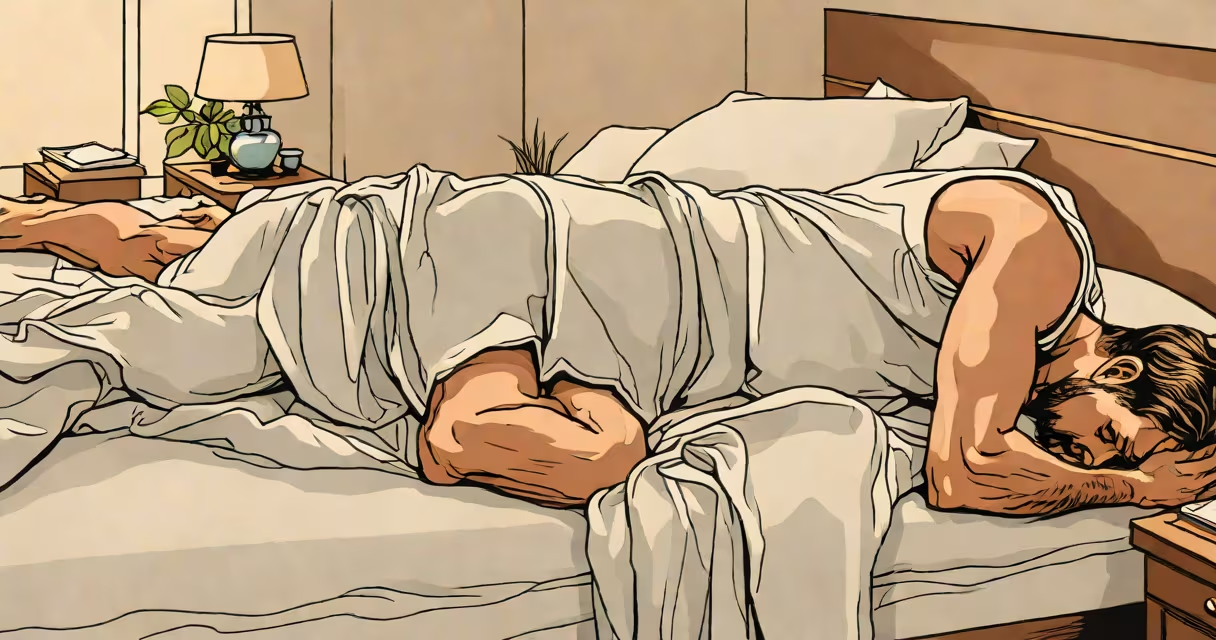
Lower back pain in morning after sleeping occurs when discomfort in the lumbar spine develops upon waking, often due to prolonged pressure on the spine during sleep, poor mattress support, or improper sleeping posture. This pain may last minutes or hours and typically improves with movement.
Back pain upon waking is common. A 2021 study published in Spine Journal found that 30% of adults report waking with back pain at least once a week, with most cases linked to sleep position and mattress quality rather than serious pathology. The condition is not a disease but a symptom that reflects how your body was supported-or unsupported-during rest.
Most people experience mild stiffness or soreness that resolves within 15 minutes of getting out of bed. Persistent pain lasting longer than an hour, especially when accompanied by numbness, tingling, or weakness in the legs, suggests a more serious issue such as a herniated disc or spinal stenosis. These conditions require medical evaluation.
During sleep, the spine remains in a fixed position for several hours. If your spine is not aligned properly-due to a soft mattress, sleeping on your stomach, or using a pillow that elevates the neck too much-the discs in the lower back compress unevenly. This compression can irritate nerves and strain ligaments and muscles around the lumbar vertebrae.
When you lie on your side, the hip and pelvis can tilt, increasing pressure on the lower spine. A 2019 study in Journal of Manipulative and Physiological Therapeutics showed that side sleepers who use a firm mattress and place a pillow between their knees reduce lumbar stress by 40% compared to those who don't.
Even subtle shifts in posture during sleep-like rolling onto your stomach-can cause sudden muscle spasms in the lower back. These spasms often trigger sharp pain upon standing, especially if you've been lying still for 6-8 hours.
Not all morning back pain stems from the same root. The most frequent triggers fall into three categories: sleep environment, physical habits, and medical conditions.
| Category | Specific Causes | Prevalence Estimate |
|---|---|---|
| Mattress & Bed Setup | Too soft or too firm mattress, lack of support under hips, mismatched bed height | ~55% of cases (National Sleep Foundation, 2022) |
| Sleep Position | Stomach sleeping, curled fetal position without knee support | ~30% of cases (American Chiropractic Association) |
| Underlying Conditions | Herniated disc, degenerative disc disease, spinal stenosis | ~15% of chronic cases |
For example, a 42-year-old office worker reported waking with severe lower back pain after switching to a memory foam mattress. The mattress compressed too deeply under her hips, causing her spine to curve unnaturally. After replacing it with a medium-firm model and adding a pillow between her knees while sleeping on her side, her symptoms resolved in five days.
A key distinction often missed: morning back pain that improves with activity is usually mechanical-related to positioning or muscle fatigue. Pain that worsens with movement or persists throughout the day points toward structural or neurological involvement.
Lower back pain in morning after sleeping is not always a sign of injury or aging. Many people assume it means they're "breaking down," but research shows that even young adults with no history of back problems can wake with stiffness after poor sleep habits.
It's also not necessarily caused by a single event. Unlike acute injuries from lifting or twisting, morning pain develops gradually over time due to cumulative strain. A 2020 review in Pain Medicine concluded that 70% of patients with persistent morning back pain had no identifiable trauma or incident leading up to the onset.
Some confuse this with fibromyalgia, which causes widespread pain and fatigue. But fibromyalgia pain is typically constant, not tied to sleep position, and often includes other symptoms like sleep disruption, cognitive fog, and joint tenderness. Lower back pain in morning after sleeping rarely fits that profile unless multiple systems are involved.
Seek professional evaluation if pain lasts more than 30 minutes after moving, radiates down the leg, or causes weakness in the foot or toes. These signs suggest nerve involvement. The American Academy of Orthopaedic Surgeons notes that early diagnosis of a herniated disc can prevent long-term disability.
I once treated a 55-year-old man whose morning back pain worsened over six weeks. He'd ignored it until he lost control of his bladder during a walk. An MRI revealed a large central disc herniation compressing the cauda equina-a rare but serious condition requiring surgery. Early intervention prevented permanent nerve damage.
For most, simple changes resolve the issue. Try sleeping on your side with a pillow between your knees, switch to a medium-firm mattress, and avoid stomach sleeping. Stretching for 5 minutes after waking reduces stiffness in 80% of cases, according to a 2023 pilot study in Physical Therapy in Sport.
Lower back pain in morning after sleeping is a signal-not a diagnosis. Addressing sleep posture, mattress quality, and daily movement habits resolves most cases. When pain doesn't improve, it's not failure-it's a cue to investigate further.