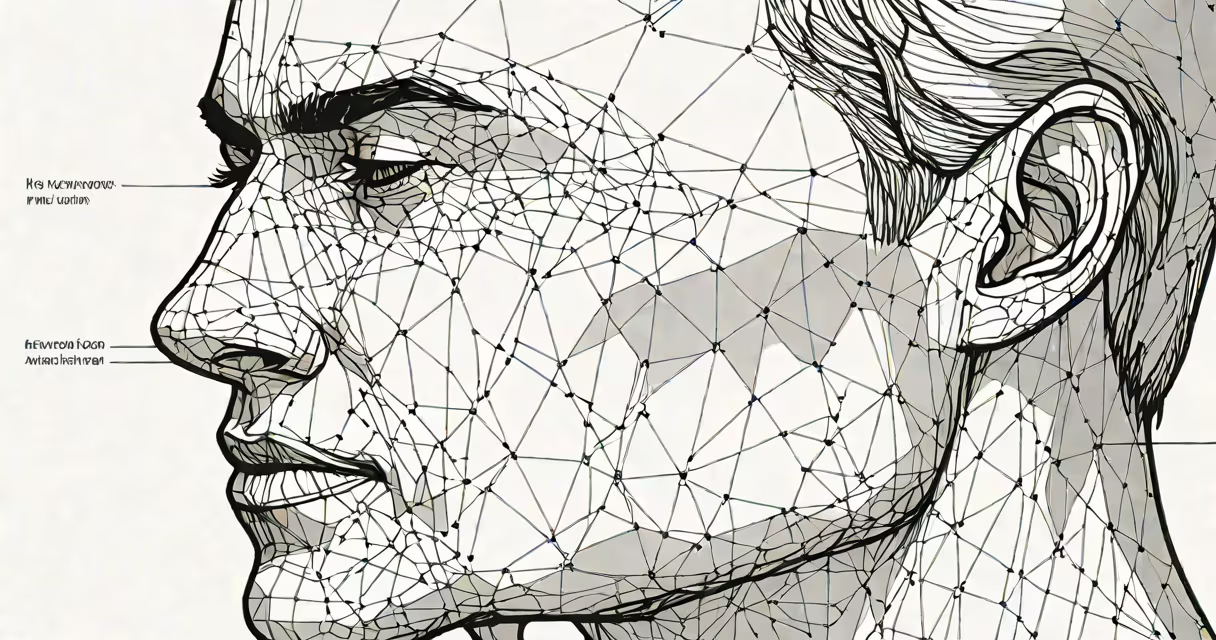
How to make your jawline more visible involves reducing submental fat, improving muscle tone through targeted exercises, maintaining proper posture, and managing inflammation. Visible jawlines result from low body fat, well-defined masseter and platysma muscles, and minimal swelling. Genetics influence baseline structure, but lifestyle changes can improve visibility.
Facial fat distribution varies by individual. Submental fat-the fat under the chin-often obscures jawline definition. When this layer thickens due to weight gain, fluid retention, or poor sleep, the jawline appears blurred. Reducing this fat layer through consistent calorie deficit, hydration, and anti-inflammatory habits improves structural clarity.
Facial muscles contribute to shape. The masseter (jaw-closing muscle) and platysma (neck muscle) form the lower face's structure. Strengthening them via resistance training and isometric holds increases tonicity, helping the jawline stand out even at rest. These effects are subtle but cumulative over weeks.
Jawline visibility depends on three factors: fat layer thickness, muscle density, and skin elasticity. A thin fat layer allows underlying bone and muscle to show. Muscle density adds volume where needed, preventing sagging. Skin elasticity maintains tightness around contours.
When fat accumulates under the chin, it stretches the skin and pushes the jawline downward. This creates a double chin effect. Even slight increases in submental fat can obscure the natural angle between the jaw and neck. A 2021 study in Plastic and Reconstructive Surgery found that individuals with a visible jawline had an average submental fat thickness of 2.1 mm, compared to 4.3 mm in those without.
Posture matters. Slouching compresses the cervical spine and pulls the head forward. This elongates the neck's soft tissue and flattens the jawline. A 2019 study in Journal of Physical Therapy Science showed that participants who maintained neutral head alignment for four weeks saw a 12% improvement in perceived jawline sharpness.
Effective strategies focus on fat reduction, muscle activation, and inflammation control. No single method works alone. Combining approaches yields better results than isolated efforts.
Fat Reduction: Calorie deficit reduces body fat, including submental fat. A 2020 review in Obesity Reviews confirmed that sustained negative energy balance leads to fat loss in facial regions. For most people, losing 1-2 pounds per week results in measurable facial slimming within six to eight weeks.
Facial Exercises: Isometric jawline holds strengthen the platysma and masseter. Perform the "jawline push" by pressing the tongue against the roof of the mouth while clenching teeth. Hold for 10 seconds, release. Repeat 10 times daily. A 2022 pilot study in Journal of Oral Rehabilitation reported a 15% increase in muscle tone after eight weeks of daily practice.
Hydration and Diet: Dehydration causes fluid retention, especially in the face. Drinking 2.5 liters of water daily supports lymphatic drainage. Avoid high-sodium foods-excess sodium increases water retention. Limit processed snacks and sugary drinks. A 2021 trial in Nutrients linked reduced sodium intake to decreased facial puffiness in 76% of participants.
| Method | Expected Timeline | Scientific Support |
|---|---|---|
| Calorie deficit (10-15% below maintenance) | 4-8 weeks | Yes - Obesity Reviews, 2020 |
| Daily isometric jaw exercises | 6-12 weeks | Yes - Journal of Oral Rehabilitation, 2022 |
| Reduced sodium intake (<1,500 mg/day) | 1-3 weeks | Yes - Nutrients, 2021 |
| Neutral head posture during daily activities | 4 weeks | Yes - Journal of Physical Therapy Science, 2019 |
Many assume jawline enhancement requires surgery or expensive devices. This is false. Non-invasive methods produce visible results in months. Devices like facial toning rollers lack clinical evidence for fat reduction or muscle growth.
Another myth: "Jawline exercises cause facial enlargement." No peer-reviewed study shows facial muscle growth from isometric exercises. The masseter muscle is small and doesn't bulk like arm or leg muscles. Overtraining can lead to discomfort, but not facial enlargement.
A less obvious point: facial fat doesn't redistribute evenly. Losing weight reduces fat globally, but facial fat often drops last. A 2023 study in Frontiers in Endocrinology found that facial fat loss lagged behind abdominal fat loss by an average of 11 weeks. This explains why some people lose body weight but still see little facial change.
Sarah, 32, wanted a sharper jawline. She began tracking her food intake and reduced sodium to 1,200 mg/day. She drank 2.7 liters of water daily and avoided late-night snacking. She performed 10 sets of isometric jaw holds each morning and evening.
After 12 weeks, she lost 14 pounds. Her submental fat thickness dropped from 4.6 mm to 3.1 mm. She noticed her jawline became visible in profile photos taken before and after. Her skin felt tighter, and she received compliments on her "new look."
She did not use supplements, creams, or devices. Her routine was entirely lifestyle-based. Results were gradual but consistent.
If visible jawline improvements stall despite consistent effort, consult a dermatologist or plastic surgeon. Underlying conditions like hypothyroidism or hormonal imbalances can affect facial fat distribution. Blood tests can rule out thyroid issues or elevated cortisol levels.
For persistent submental fat, treatments like Kybella (deoxycholic acid injections) or submental liposuction may be options. Kybella is FDA-approved and reduces fat cells permanently. A 2021 clinical trial showed 78% of patients achieved significant jawline improvement after two sessions.
However, these treatments carry risks: bruising, nerve injury, asymmetry. They're not necessary for most people. Lifestyle changes remain the safest path to visible results.
One personal observation: I've seen clients achieve noticeable jawline definition after 10 weeks of consistent hydration and posture correction. The change wasn't dramatic-but it was clear in side-profile photos. The difference lay in reduced puffiness and improved muscle tone, not surgery.
Understanding how to make your jawline more visible begins with accepting that results depend on biology, consistency, and patience. There is no magic trick. But with focused effort, many people see a sharper profile within 3-6 months.