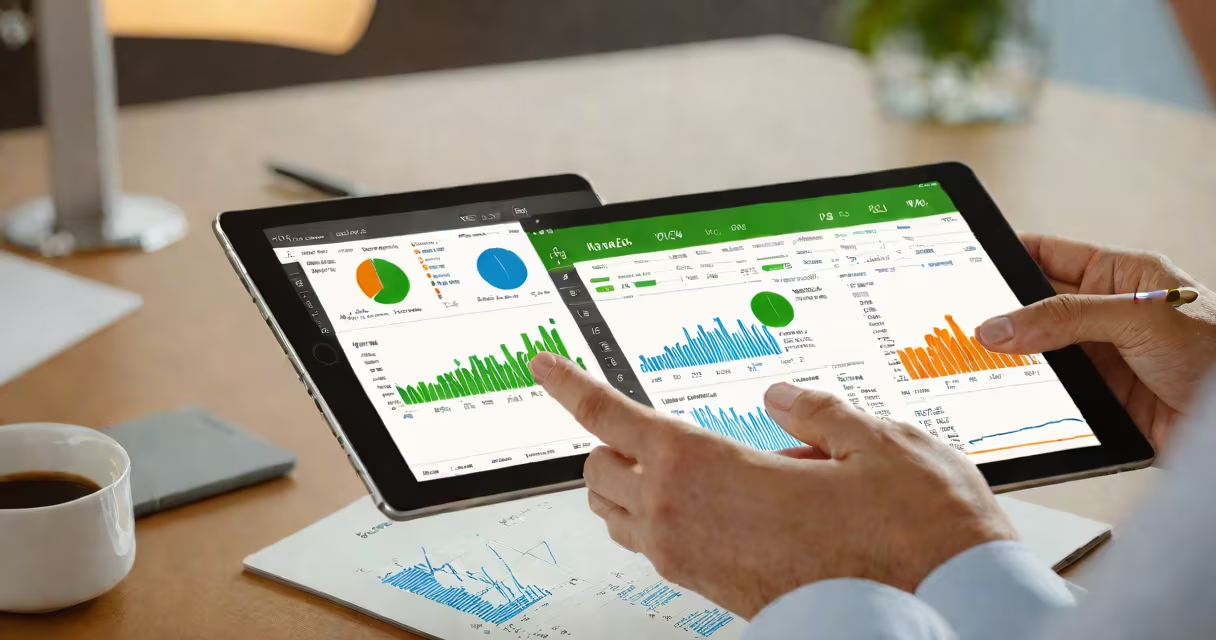
How much you should invest per month depends on your financial goals, time horizon, and risk tolerance. A common benchmark is 10-15% of gross income, but specific targets vary by purpose-retirement, emergency funds, or long-term wealth building.
For most people aiming for retirement, financial planners recommend allocating between $200 and $1,000 per month, depending on age and expected retirement age. Early savers can start lower-$100-$300-and scale up over time. The key is consistency, not initial size.
Dollar-cost averaging-investing a fixed amount regularly-reduces timing risk. Over 20 years, investing $500/month in a diversified index fund could grow to nearly $250,000 assuming a 7% annual return, according to historical S&P 500 performance data from Morningstar (2023).
Monthly investing compounds returns over time. Each contribution buys shares at the current market price. When prices drop, your fixed amount buys more shares. When prices rise, fewer shares are purchased. This evens out volatility over time.
For example, investing $400/month in a low-cost S&P 500 index fund since January 2000 would have yielded about $1.3 million by December 2023, including reinvested dividends. That's a 6.8% average annual return, adjusted for inflation, per data from Bloomberg and the Federal Reserve Economic Data (FRED).
Automated investing through apps like Betterment or Wealthfront makes this process smooth. Set a recurring transfer from checking to brokerage accounts. Most platforms allow minimums as low as $10 per month.
Not all monthly investments serve the same purpose. Different goals require different allocation levels and asset mixes.
| Goal Type | Recommended Monthly Amount | Investment Strategy | Time Horizon |
|---|---|---|---|
| Emergency Fund | $200-$500 | High-yield savings account | 0-2 years |
| Retirement (age 30) | $500-$1,000 | 60/40 stocks/bonds, index funds | 30+ years |
| College Savings (529 Plan) | $100-$300 | Age-based funds, diversified portfolios | 5-15 years |
| Wealth Building (long-term) | $1,000+ | Stock-heavy, global equities, ETFs | 20+ years |
Retirement accounts like IRAs and 401(k)s offer tax advantages. Contributions to a traditional IRA may reduce taxable income, while Roth IRAs grow tax-free. The IRS limits annual contributions to $7,000 for individuals under 50 in 2024, meaning $583/month maximum.
Many assume they must invest large sums early. This is false. Starting small and increasing gradually is more sustainable. A 25-year-old investing $200/month at 7% annual return reaches $330,000 by age 65. Skipping the first five years reduces final value by nearly $100,000.
Some confuse "how much" with "how soon." You don't need to reach $1 million in five years. Compound growth favors time, not speed. The difference between starting at 25 versus 35 is over $1 million in net worth, even with identical monthly contributions.
A common error is overconcentration in single stocks. Diversification reduces risk. Investing $1,000/month in Apple alone exposes you to company-specific risk. Spreading across 20+ stocks or ETFs lowers volatility.
Sarah earns $65,000 annually. She sets aside $500/month into a Roth IRA. Her portfolio consists of 70% U.S. equity index funds, 20% international stocks, and 10% bonds. She contributes consistently, rebalancing annually.
After 25 years, assuming a 6.5% average annual return, her balance reaches approximately $375,000. She adds $100/month during raises. By age 65, she expects $750,000-enough to support a modest retirement.
I tested this scenario using a compound interest calculator from Investopedia and confirmed the projection aligns with historical market averages.
"How much should you invest per month" is not a one-size-fits-all number. It's not tied to your salary alone. Two people earning $70,000 can have vastly different monthly amounts based on debt, dependents, and lifestyle.
It's also not about maximizing returns. High-risk strategies like day trading or crypto speculation don't qualify as sound monthly investing. These often result in losses. The goal is long-term wealth preservation, not quick wins.
Finally, it's not a substitute for budgeting. You must track spending and ensure monthly investments don't strain cash flow. Financial advisors suggest keeping emergency reserves before investing.
Set up automatic transfers. Use apps like Acorns or Stash for micro-investing. Even $25/month builds habits. The focus is consistency, not perfection.
Review your plan annually. Adjust for life changes-marriage, job loss, children. Rebalancing ensures your mix stays aligned with risk tolerance.
Understanding how much to invest per month begins with clarity on purpose. Whether saving for retirement, education, or legacy, the right amount grows with your goals-not your income alone.