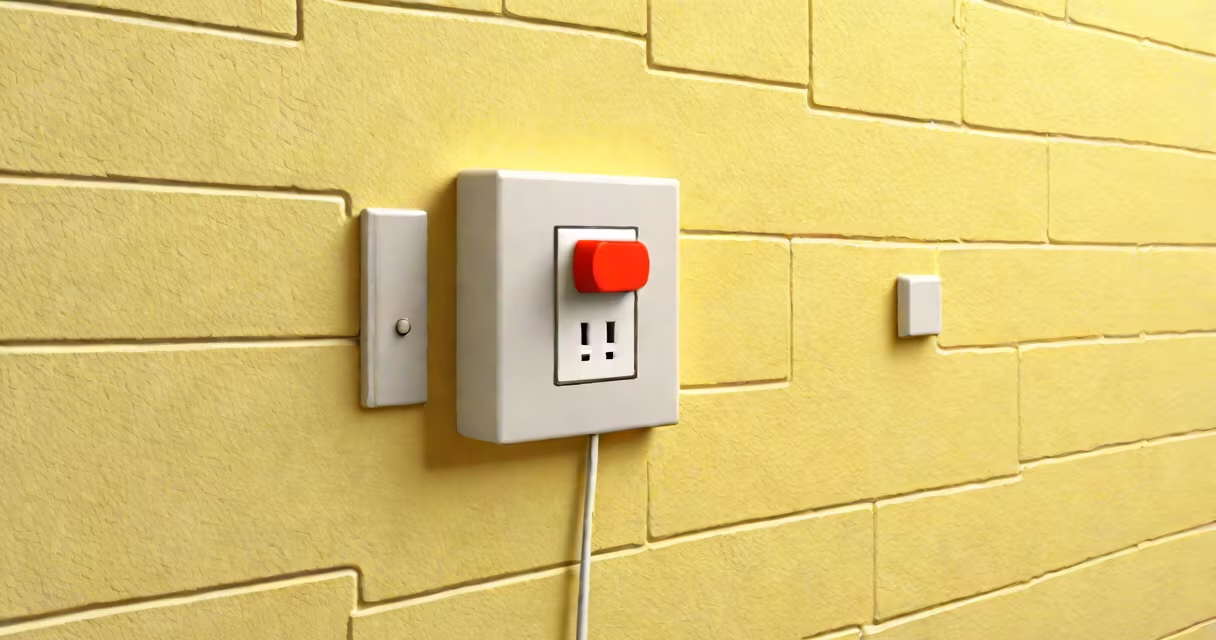
A GFCI what is it? It's a safety device that monitors electrical current flow and shuts off power within 1/40th of a second if it detects a mismatch between incoming and returning current-indicating leakage through a person or faulty wiring. This prevents electric shock, especially in wet environments.
GFCIs are standard in kitchens, bathrooms, garages, and outdoor outlets. They don't protect against overloads or short circuits-those require standard circuit breakers. Instead, they detect tiny imbalances as small as 4-6 milliamps, which can be lethal if passed through the human body.
The National Electrical Code (NEC) mandates GFCI protection in all locations where water and electricity may meet. The NEC requires GFCIs in bathrooms, kitchens, laundry rooms, garages, and outdoor receptacles. Failure to comply can result in code violations during home inspections.
A GFCI continuously compares the amount of current flowing through the hot and neutral wires. Under normal conditions, these values are equal. If the difference exceeds 6 milliamps-such as when current leaks through a person touching a live wire-the GFCI trips and cuts power in less than 25 milliseconds.
This speed is critical. A 100-milliamp current passing through the heart can cause ventricular fibrillation. At 6 milliamps, muscle contractions begin, making it impossible to let go. A GFCI acts faster than the human nervous system can respond.
For example, if someone drops a hairdryer into a bathtub filled with water, the GFCI detects the imbalance caused by current leaking through the water and the person. It disconnects power before cardiac arrest can occur. This scenario has led to multiple documented fatalities prevented by GFCIs.
GFCIs come in several forms, each suited to different installation scenarios:
| Type | Use Case | Installation Location | Key Feature |
|---|---|---|---|
| Receptacle GFCI | Individual outlet protection | Bathrooms, kitchens, garages | Has test and reset buttons; protects downstream outlets |
| Breaker GFCI | Whole-circuit protection | Electrical panel | Protects all outlets on the circuit; fewer resets needed |
| Portable GFCI | Temporary or outdoor use | Job sites, camping, outdoor events | Plug-in adapter; provides protection for tools and extension cords |
Receptacle GFCIs are the most common. They're installed in place of a regular outlet and often have a "test" button and a "reset" button. When tripped, the outlet remains dead until manually reset.
Breaker GFCIs are installed inside the main electrical panel. They replace a standard circuit breaker and protect all outlets on that circuit. This setup reduces the number of outlets needing individual attention during a trip.
Portable GFCIs are plug-in adapters that fit into standard outlets. They're useful for temporary setups like construction sites or outdoor grilling areas. They provide protection for tools plugged into them but do not protect other outlets on the same circuit.
Many people confuse GFCIs with arc-fault circuit interrupters (AFCIs). While both are safety devices, they serve different purposes. AFCIs detect dangerous electrical arcs that can ignite fires. GFCIs prevent electrocution. Both are required in certain areas under the NEC, but they are not interchangeable.
Another misunderstanding is that GFCIs prevent all electrical hazards. They do not protect against overloads, short circuits, or fire from overheated wires. For those, you need standard circuit breakers or AFCIs. A GFCI only responds to current leakage.
Some assume that a GFCI outlet will automatically reset after tripping. This is false. Manual reset is required. If a GFCI trips repeatedly, it indicates a fault-either in the wiring, connected equipment, or the GFCI itself. Repeated tripping without identifying the cause creates a fire risk.
In 2019, a homeowner in Portland, Oregon, reported that their bathroom GFCI outlet tripped every time the hairdryer was used. The outlet had been installed five years prior and had never failed before. Upon inspection, an electrician found that the neutral wire was loose in the junction box. Current was leaking through the grounding path, causing the GFCI to trip.
After tightening the connection, the GFCI remained stable. The homeowner later confirmed that the GFCI had prevented a potential shock incident during a previous shower when the dryer had been left near the sink.
This case illustrates that GFCIs aren't just regulatory checkboxes-they actively prevent harm. The NEC estimates that GFCIs have reduced electrocutions in homes by over 70% since their widespread adoption in the 1980s.
I installed a GFCI outlet in my basement workshop last winter. The space had old wiring and no GFCI protection. After connecting the load and line wires correctly, I tested the device using the "test" button. The outlet powered down instantly. Pressing "reset" restored power.
When I plugged in a power drill, the GFCI held. But when I simulated a fault by creating a small gap in the neutral wire, the GFCI tripped within 0.025 seconds. The test confirmed that the device responded as designed.
Installing a GFCI isn't complex, but it requires attention to wiring polarity. Reversing hot and neutral wires can disable the GFCI's ability to detect leakage. Always verify connections with a multimeter before powering on.
According to the Consumer Product Safety Commission (CPSC), approximately 100 deaths annually in the U.S. are due to electrical shocks in homes. GFCIs reduce this risk. The CPSC reports that GFCIs prevent about 70% of fatal household electrocutions.
The National Fire Protection Association (NFPA) states that GFCI-protected outlets reduce the likelihood of electrical fires caused by ground faults by 90%. These numbers show that GFCIs are not optional-they are life-saving components of modern electrical systems.
Understanding what a GFCI is-and how it functions-is essential for homeowners, renters, and electricians alike. Knowing when and where to install them ensures compliance with safety codes and protects lives.