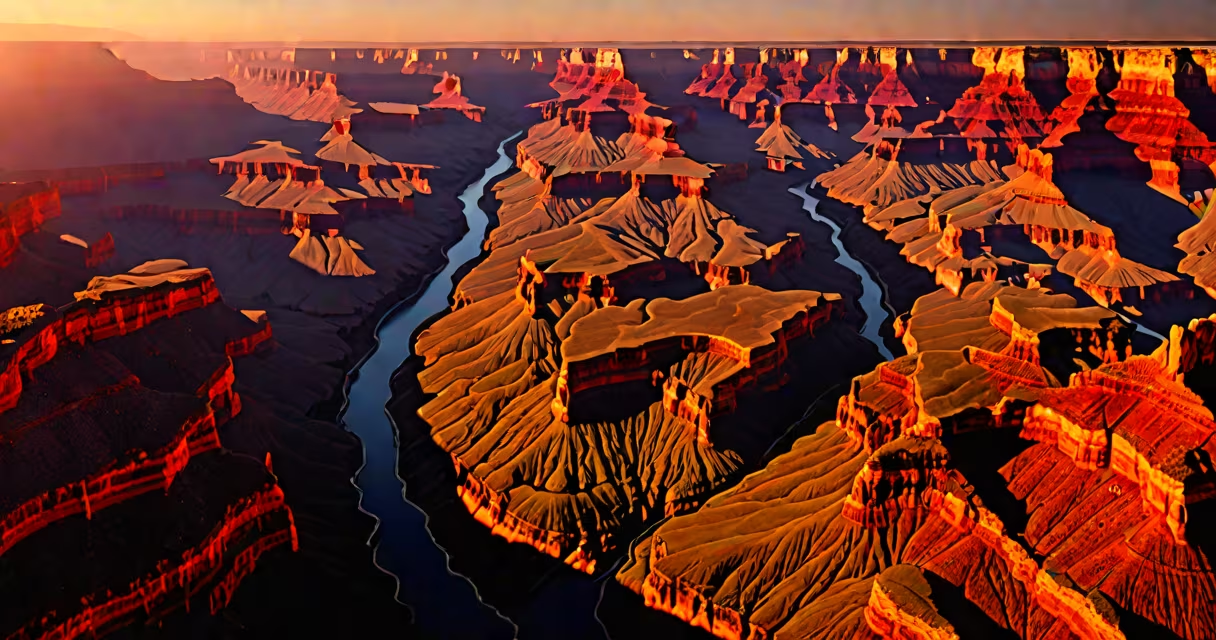
Famous national parks are federally protected natural areas in the United States designated for their strong scenic, ecological, cultural, or scientific value. These parks preserve landscapes ranging from volcanic geysers and desert canyons to ancient forests and alpine lakes. The National Park Service manages 63 units classified as national parks, with many recognized worldwide for their beauty and conservation significance.
These parks are established under the Organic Act of 1916, which mandates preserving natural and historic resources "unimpaired for the enjoyment of future generations." The designation requires congressional approval and federal oversight. Not all national parks are equally visited-Yellowstone, Yosemite, and the Grand Canyon rank among the most visited due to their accessibility and dramatic terrain.
The term "famous" reflects public recognition, media coverage, and visitation numbers. While all national parks serve conservation goals, fame often stems from visual impact, historical events, or unique geological formations. For example, Yellowstone's Old Faithful geyser erupts approximately every 90 minutes, drawing over 3 million visitors annually. This frequency, combined with predictable timing, makes it a benchmark for natural wonder.
National parks are selected through legislation passed by Congress. A proposal must demonstrate national significance-either for natural features, cultural heritage, or historical events. Once designated, the National Park Service (NPS) oversees operations, visitor services, infrastructure, and resource protection. The NPS reports that 2023 saw 296 million visits to national park units, with 40% concentrated in the 10 most visited parks.
Management includes monitoring wildlife populations, maintaining trails, enforcing environmental regulations, and providing educational programming. For example, in Glacier National Park, biologists track grizzly bear movements using GPS collars. Data informs decisions about trail closures during mating season to reduce human-wildlife conflict. The NPS uses science-based strategies to balance access with preservation.
Some parks face challenges due to high visitation. Zion National Park recorded 4.8 million visitors in 2023, leading to trail congestion and waste management issues. To address this, the park introduced a mandatory shuttle system during peak months. This reduces vehicle traffic and emissions while ensuring equitable access to trailheads. Similar systems operate in Acadia and Rocky Mountain National Parks.
While all national parks protect significant landscapes, they differ in geography, climate, and dominant features. The following table outlines key parks by region and defining characteristic:
| Park Name | Region | Defining Feature | Annual Visitors (2023) |
|---|---|---|---|
| Yellowstone | Wyoming/Montana/Idaho | Geothermal activity (geysers, hot springs) | 4.9 million |
| Yosemite | California | Granite cliffs, waterfalls, sequoia groves | 4.4 million |
| Grand Canyon | Arizona | Layered sandstone canyons carved by the Colorado River | 6.2 million |
| Great Smoky Mountains | Tennessee/North Carolina | Biodiversity hotspot with over 10,000 plant species | 12.5 million |
| Glacier | Montana | Alpine glaciers and U-shaped valleys formed by ancient ice sheets | 3.1 million |
Each park exemplifies a distinct system. Great Smoky Mountains National Park hosts the largest concentration of native tree species in North America. Its elevation gradient-from 875 feet to 6,643 feet-supports diverse habitats. In contrast, Everglades National Park in Florida preserves a subtropical wetland system, home to American alligators, wading birds, and endangered species like the Florida panther.
A common misconception is that all famous national parks are located in the western U.S. While the West dominates the list by volume, eastern parks like Shenandoah and Acadia attract millions annually. Shenandoah National Park spans 198 miles along the Blue Ridge Parkway and sees over 1.3 million visitors yearly. Its popularity stems from accessible hiking trails and panoramic views from Skyline Drive.
"Famous national parks" are often conflated with other protected areas such as national monuments, national forests, or state parks. National parks are distinct because they require congressional authorization and are managed by the NPS. National monuments, by contrast, can be created by presidential proclamation under the Antiquities Act of 1906. Grand Staircase-Escalante National Monument in Utah was established by President Clinton in 1996 and later expanded by President Obama in 2016-though subsequent administrations have adjusted boundaries.
Another confusion arises between national parks and national recreation areas. The latter are managed by the NPS but may lack the formal designation of a national park. Lake Mead National Recreation Area, for example, surrounds the Hoover Dam and attracts 7 million visitors annually. Despite high visitation, it is not classified as a national park due to its primary function as a reservoir and water management site.
A lesser-known fact: the smallest national park is Hot Springs National Park in Arkansas, covering just 5,550 acres. It is the oldest federally protected area in the U.S., established in 1832. The park's thermal waters have been used for centuries by Native Americans and early settlers. Its status as a national park stems from its cultural and therapeutic significance, not just scenery.
Visiting famous national parks at different times of year affects weather, crowd levels, and access. In fall, many parks see reduced foot traffic and vibrant foliage. The Grand Canyon's South Rim transforms in October, with cottonwood trees turning gold against red rock walls. Fall is also ideal for photography due to soft light and lower humidity.
I once spent a week in October at Grand Teton National Park, hiking the Cascade Canyon Trail. The air was crisp, deer were visible near the river, and the trail had fewer hikers than in summer. I arrived at dawn to capture the reflection of snow-capped peaks in Jenny Lake. The quiet allowed me to hear elk bugling in the distance-a sound impossible to replicate in crowded summer months.
Planning around seasonal closures is essential. In Michigan, the Upper Peninsula's Porcupine Mountains Wilderness State Park-often mistaken for a national park-requires a state permit. True national parks in Michigan, such as Isle Royale National Park, are accessible only by ferry or seaplane. Ferry schedules run from May through October, with limited service in early spring. Visiting during off-season windows avoids crowds and supports sustainable tourism.
When considering a trip to a famous national park, always check the NPS website for current conditions. The agency publishes daily updates on road closures, fire restrictions, and wildlife alerts. For example, in 2023, wildfires forced temporary closures in parts of Sequoia National Park. The NPS issued evacuation orders and redirected visitor traffic to alternative entrances.
Famous national parks represent enduring commitments to conservation, education, and public access. They are not merely tourist destinations-they are living laboratories of Earth's processes, repositories of biodiversity, and spaces where people connect with nature across generations. Whether exploring the geysers of Yellowstone or the red rock canyons of Arizona, these places remain important to understanding our planet's history and future.