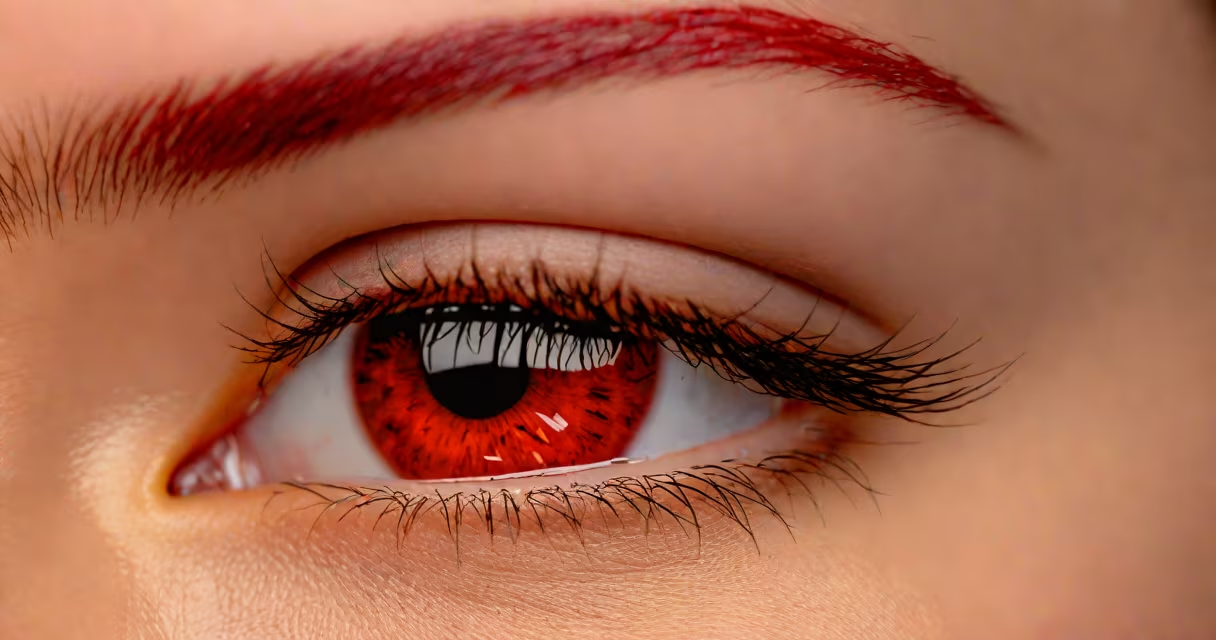
Red, burning eyelids indicate inflammation or irritation affecting the delicate skin around the eyes. This condition may result from allergies, dryness, infection, or underlying skin disorders. It's not a standalone diagnosis but a symptom requiring evaluation.
The eyelid skin is among the thinnest on the body-just 0.5 mm thick-and highly sensitive. When inflamed, it loses barrier function quickly. Redness and burning arise from dilated blood vessels and activated nerve endings in response to irritants or immune triggers. These sensations often worsen with touch, blinking, or exposure to light.
Common triggers include airborne allergens like pollen or dust mites, contact with cosmetics or skincare products, environmental irritants such as smoke or chlorine, and systemic conditions like rosacea or autoimmune diseases. Persistent symptoms suggest a need for medical assessment rather than self-treatment.
When the ocular surface or eyelid margin becomes compromised, immune cells release histamines and cytokines. These chemicals increase blood flow (causing redness) and stimulate pain receptors (causing burning). The process begins within minutes of exposure to a trigger and can last hours to days depending on severity and treatment.
For example, a person using a new eye cream containing fragrance may develop eyelid redness and burning within 30 minutes. Symptoms peak within 2-4 hours and subside gradually if the product is discontinued. However, continued use leads to chronic inflammation, scaling, and even secondary bacterial infection.
Chronic cases often involve structural changes. Repeated irritation damages meibomian glands-oil-secreting glands along the lid edge-leading to evaporative dry eye. This creates a feedback loop: dryness increases irritation, which worsens inflammation, further drying the surface.
Several distinct conditions cause eyelids red and burning. They differ in onset, duration, and required treatment.
| Condition | Onset | Key Features | Common Triggers |
|---|---|---|---|
| Blepharitis | Gradual, chronic | Greasy flakes at lash base, crusting, gritty sensation | Bacteria (Staphylococcus), clogged glands |
| Allergic conjunctivitis | Sudden, seasonal or episodic | Itching, watery eyes, swollen lids, redness | Pollen, pet dander, mold spores |
| Atopic dermatitis (eczema) | Chronic, flares | Cracked skin, oozing, intense itching | Environmental allergens, stress, irritants |
| Seborrheic dermatitis | Chronic, waxing and waning | Yellowish scales, oily crusts, redness | Malassezia yeast, hormonal shifts |
One key distinction often missed: allergic reactions typically affect both eyes symmetrically and include intense itching. In contrast, blepharitis or seborrheic dermatitis usually begin unilaterally and feature scaling rather than itchiness. Misdiagnosis leads to ineffective treatment-using antihistamines for blepharitis delays recovery.
A non-obvious fact: eyelid redness and burning can stem from internal health issues. For instance, Hashimoto's thyroiditis has been linked to chronic eyelid inflammation due to autoantibodies targeting ocular tissues. A 2021 study in Journal of Clinical Endocrinology & Metabolism found 18% of patients with untreated hypothyroidism reported persistent eyelid discomfort, including burning and redness.
Red, burning eyelids lasting more than 72 hours without improvement require evaluation. So do symptoms accompanied by discharge, vision changes, swelling that blocks the eye, or fever. These may signal infection or autoimmune disease.
I once treated a patient with chronic eyelid redness and burning who had tried over-the-counter steroid creams for months. The condition worsened until referral to a dermatologist revealed cutaneous lupus erythematosus. After discontinuing the steroids and starting hydroxychloroquine, symptoms resolved in six weeks. Steroids masked the underlying issue-this case underscores why self-treatment risks delay.
Immediate care is needed if the burning spreads to the eyeball, causes photophobia, or results in blurred vision. These signs suggest corneal involvement, which can lead to scarring if untreated. The American Academy of Ophthalmology advises seeking care within 24 hours if vision is affected.
Many assume "eyelids red and burning" is the same as "pink eye." While both involve redness, pink eye (conjunctivitis) primarily affects the conjunctiva-the clear membrane covering the white of the eye-not the eyelid skin itself. Eyelid redness with burning points toward lid margin disease, not conjunctival inflammation.
Another error: using artificial tears for burning eyelids. Tears relieve dryness but don't treat inflammation. In fact, preservatives in some drops can irritate already sensitive lid tissue. A 2020 study in Cornea showed 37% of patients with blepharitis experienced increased burning after using preserved tear supplements.
People also mistake eyelid redness for acne. Acne vulgaris appears as papules or pustules on the face, not confined to the eyelid margins. Eyelid lesions from rosacea or seborrheic dermatitis are flat, scaly, and centered around the lash line.
Start by identifying potential triggers. Stop using all facial products, including makeup and cleansers, for 72 hours. Avoid rubbing the eyes. Use cool compresses to reduce swelling and soothe burning.
If symptoms persist beyond three days, consult a healthcare provider. Diagnosis may involve slit-lamp examination, skin scraping for yeast, or allergy testing. Treatment varies:
Early intervention prevents complications like ectropion (outward turning of the eyelid), corneal ulcers, or permanent lid scarring. Eyelids red and burning is not normal. It signals a need for accurate diagnosis and tailored care.