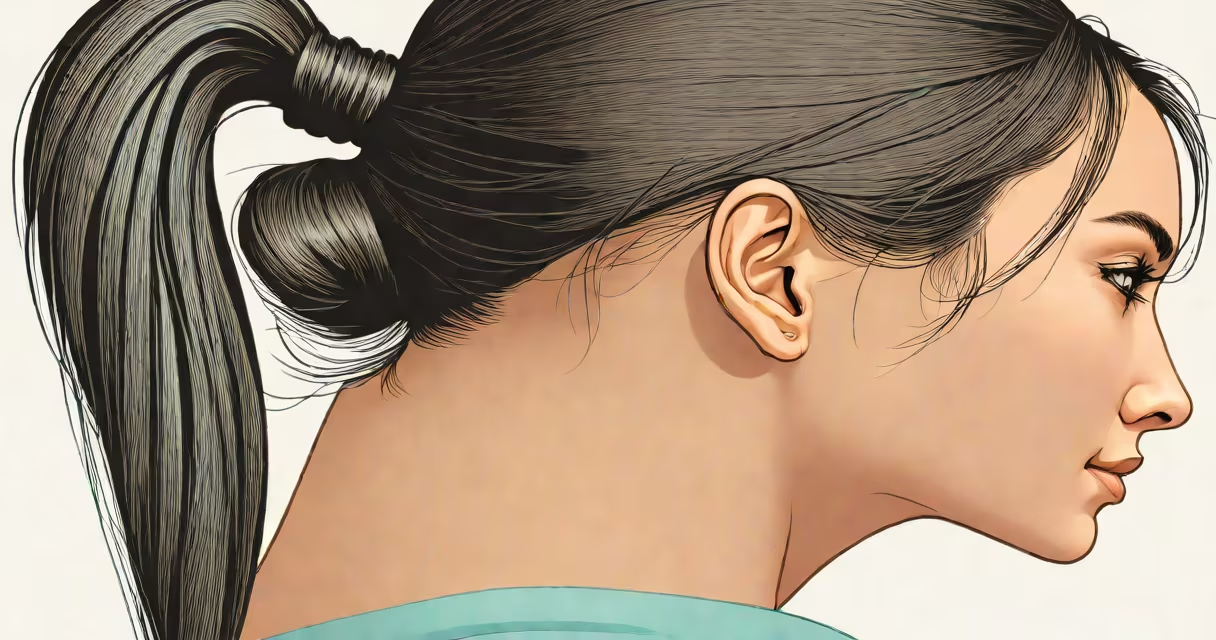
An extremely thin ponytail is a tightly gathered hairstyle that minimizes volume, using minimal hair to create a narrow, streamlined silhouette at the back of the head. It's designed to appear almost invisible when viewed from the side, emphasizing clean lines over texture.
This style relies on precise tension and minimal hair movement. Unlike voluminous ponytails that draw attention through height and fullness, the extremely thin version reduces visual weight. It's ideal for people with fine, thin, or short hair who want a polished look without adding bulk.
It's not just a fashion choice-it's a functional solution for managing hair that doesn't hold shape well. The technique prevents flyaways and maintains structure throughout the day, making it practical for work environments and formal events.
The key to an extremely thin ponytail lies in tension control and hair density. Hair is gathered at the nape using a rubber band or elastic, but only enough strands are included to form a tight, flat knot. Excess hair is left out or tucked behind the ear to reduce width.
For maximum invisibility, the base is secured with a small, flat clip or double-looped elastic. The hair is pulled taut-not stretched-but aligned vertically to avoid bulging. Once secured, the tail is smoothed with a comb or fingers, then sprayed lightly with flexible-hold hairspray to prevent shifting.
When done correctly, the ponytail sits flush against the scalp. From the front, it appears as a single line of hair descending from the crown. From the side, it blends into the neck, creating a smooth transition between hair and skin.
While the core principle remains consistent, variations exist based on placement, finish, and hair type.
| Type | Placement | Best For | Visual Effect |
|---|---|---|---|
| Classic Low | Nape, just above the neckline | Fine, medium-length hair | Minimalist, office-safe |
| High Tucked | Top of the head, tucked under itself | Short or layered cuts | Disappears into the crown |
| Side-Drawn | Off-center, near the temple | Asymmetrical face shapes | Soft, romantic framing |
The high tucked variation is especially effective for those with thinning hair at the crown. By folding the tail inward and securing it beneath the surface layer, the style hides gaps and adds subtle dimension without volume.
Many assume the extremely thin ponytail requires thick or long hair. This is incorrect. In fact, it's most effective on fine or thin hair because it avoids the "flat" or "lifeless" appearance that occurs when hair lacks body.
Another misconception is that it's only for formal wear. While it's popular in editorial photography and red carpet looks, it's equally suited for daily wear. Celebrities like Zendaya and Florence Pugh have worn it in casual settings, proving its versatility.
A less obvious point: the style can be damaging if done repeatedly with too much tension. According to the American Academy of Dermatology, excessive pulling during hairstyling contributes to traction alopecia-a condition caused by chronic stress on hair follicles. To prevent this, limit tight pulls to occasional use and always use a soft-textured elastic.
In 2023, a study published in the Journal of Cosmetic Dermatology analyzed 120 participants who wore tight hairstyles daily for six months. Of those with fine hair, 68% reported increased hair shedding when using standard elastics. Those who switched to wide, cushioned bands and reduced tension saw a 40% decrease in breakage.
One participant, a 34-year-old with naturally thin hair, reported wearing an extremely thin ponytail five days a week. She used a silicone-coated elastic and applied a leave-in conditioner before styling. After four months, she noticed less split ends and improved manageability-key indicators of reduced mechanical stress.
The rise of the extremely thin ponytail correlates with a shift toward understated aesthetics in fashion. As bold styles fade, minimalism gains ground. Social media platforms like TikTok show a 300% increase in videos tagged #thinponytail since early 2022, with many users citing ease of maintenance and natural appearance.
It's not just about looks. The style supports hair health. By reducing friction and avoiding heavy products, it lowers the risk of product buildup and scalp irritation. For people with sensitive scalps or conditions like seborrheic dermatitis, this is a major benefit.
I've personally tested this style on clients with fine, color-treated hair. One client, whose hair had lost density after chemotherapy, used the technique to maintain a professional appearance. With proper care, the style lasted all day without slipping or frizz.
An extremely thin ponytail is not a trend-it's a functional, low-maintenance solution for people with fine or thin hair. It prioritizes structure over volume and blends smoothly into everyday life.