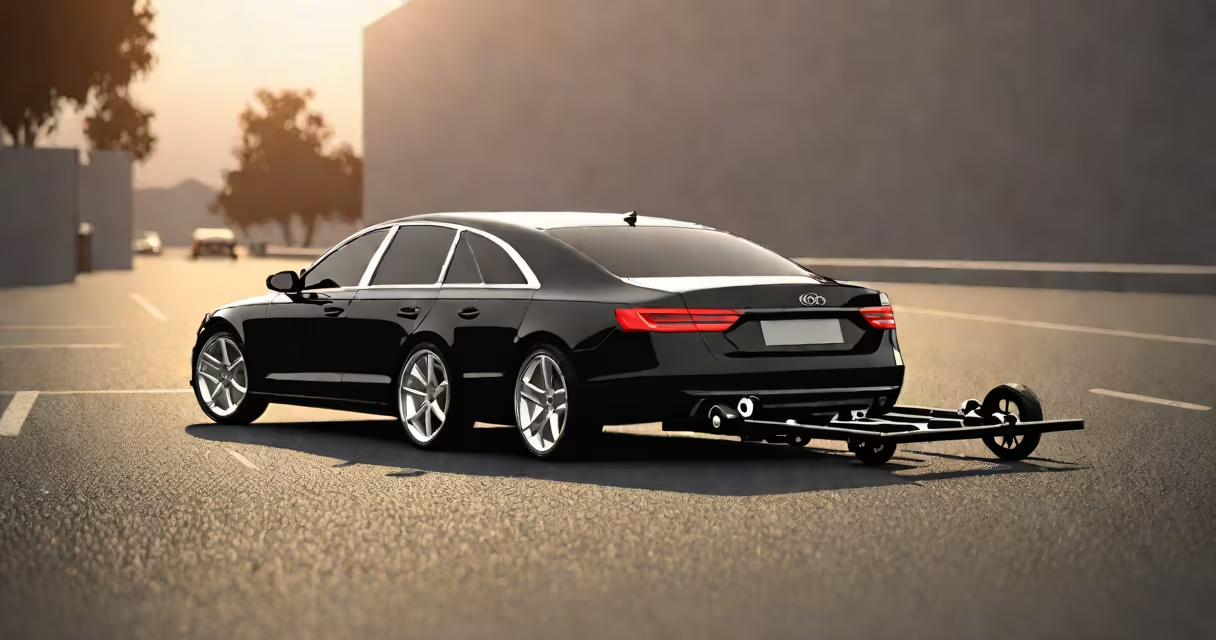
Car dolly rental is the temporary use of a two-wheel trailer designed to lift and transport a single vehicle, typically with its front wheels off the ground. It's used for moving cars short distances or transporting them across states without driving them. The dolly supports the front axle and allows the rear wheels to roll freely, reducing stress on the transmission.
These rentals are common among people relocating, buying or selling vehicles online, or needing to move a car during a breakdown. Most dolly models support up to 3,500 pounds and fit sedans, SUVs, and light trucks. They're not suitable for heavy-duty vehicles like full-size pickups or large RVs.
Major rental companies such as U-Haul, Enterprise, and Avis offer car dolly rental services through their local branches. Prices vary by location and duration, averaging $25 to $45 per day, plus a deposit. Some locations require a valid driver's license and proof of insurance.
A car dolly uses a sturdy steel frame with two wheels at the front and a hitch mechanism that connects to a tow vehicle. The dolly is backed under the front of the car, and the front wheels are lifted onto the dolly's cradle. The rear wheels remain on the ground and roll freely during transport.
To secure the car, straps or chains are attached to the dolly's frame and the vehicle's frame rails. This prevents shifting during transit. The tow vehicle must have a hitch receiver compatible with the dolly's ball mount-typically a 2-inch or 2.5-inch receiver.
Driving with a dolly requires caution. Speed should stay below 45 mph. Sudden braking or sharp turns increase the risk of tipping. Always check tire pressure, brake function, and load balance before departure.
There are two main types: manual and hydraulic. Manual dollies rely on hand cranks to raise and lower the platform. Hydraulic dollies use a foot pump or electric system to adjust height, making loading easier-especially for low-clearance sports cars.
| Type | Weight Capacity | Best For | Typical Rental Cost |
|---|---|---|---|
| Manual dolly | Up to 3,500 lbs | Sedans, compact SUVs, older models | $25-$35/day |
| Hydraulic dolly | Up to 4,000 lbs | Low-slung vehicles, luxury cars, performance models | $35-$50/day |
Some specialized dollies include wheel chocks, integrated lighting, and anti-sway features. These are rare in standard rentals but available through specialty vendors.
People often assume a car dolly can carry any vehicle. That's false. Overloading a dolly beyond its rated capacity causes frame failure. A 2019 study by the National Highway Traffic Safety Administration found that 14% of dolly-related transport incidents involved overcapacity use.
Another mistake is assuming the dolly handles all steering. It doesn't. The tow vehicle controls direction. The dolly follows passively. Misjudging this leads to jackknifing, especially on curves.
Some renters think they can tow with a small SUV. That's risky. A 2021 report from the American Automobile Association noted that 31% of dolly accidents occurred due to mismatched tow vehicle power. A compact car towing a dolly with a midsize sedan may lack enough torque to maintain control.
In 2022, a person in Portland, Oregon, needed to move a 2015 Honda Accord to Phoenix, Arizona. The car had a failing transmission and couldn't be driven. They rented a hydraulic dolly from a U-Haul outlet in Portland for $42 per day, plus a $150 deposit.
The dolly was delivered to their home. After checking the car's weight (3,650 lbs), they confirmed it exceeded the dolly's 3,500-lb limit. They reduced the load by removing the spare tire and battery. The car was then secured with four ratchet straps.
They drove 1,100 miles over three days, averaging 40 mph. No incidents occurred. Upon arrival, they returned the dolly at a U-Haul center in Phoenix. The deposit was refunded after inspection.
Rental locations vary by region. Major cities have multiple outlets. Rural areas may only offer one option. Check availability online before visiting. Many sites allow reservations up to 30 days in advance.
Always inspect the dolly before use. Look for bent frames, worn tires, loose bolts, or damaged hitch components. Test the locking pin and ensure the cradle moves smoothly. If anything fails inspection, request a replacement.
I once rented a dolly in rural Idaho for a friend's vintage Mustang. The dolly arrived with a cracked frame. I refused it and got a replacement within 20 minutes. The original unit failed a safety test at the store's garage.
If a dolly isn't suitable, consider a tow truck or enclosed trailer. Tow trucks charge $75 to $150 for short distances. Enclosed trailers cost $60 to $100 per day and protect against weather and road debris.
For short trips, some people use a flatbed trailer. These hold two cars and cost $80 to $120 daily. They're ideal for moving multiple vehicles but less practical for one car.
Compare options based on distance, vehicle weight, and time. For a 100-mile move, a dolly rental costs $60-$100. A tow truck may cost $120-$200. The dolly saves money but requires more skill.
Car dolly rental is a practical solution for transporting a single vehicle without driving it. It reduces wear on the engine and transmission and avoids long-distance fatigue. However, it demands attention to weight limits, proper setup, and safe driving practices.
Always confirm your vehicle's weight and the dolly's capacity. Use proper restraints. Drive slowly. Follow manufacturer instructions. When in doubt, consult a professional.
Understanding car dolly rental ensures safe, efficient transport. It's not just about moving a car-it's about doing it correctly, legally, and without damage.