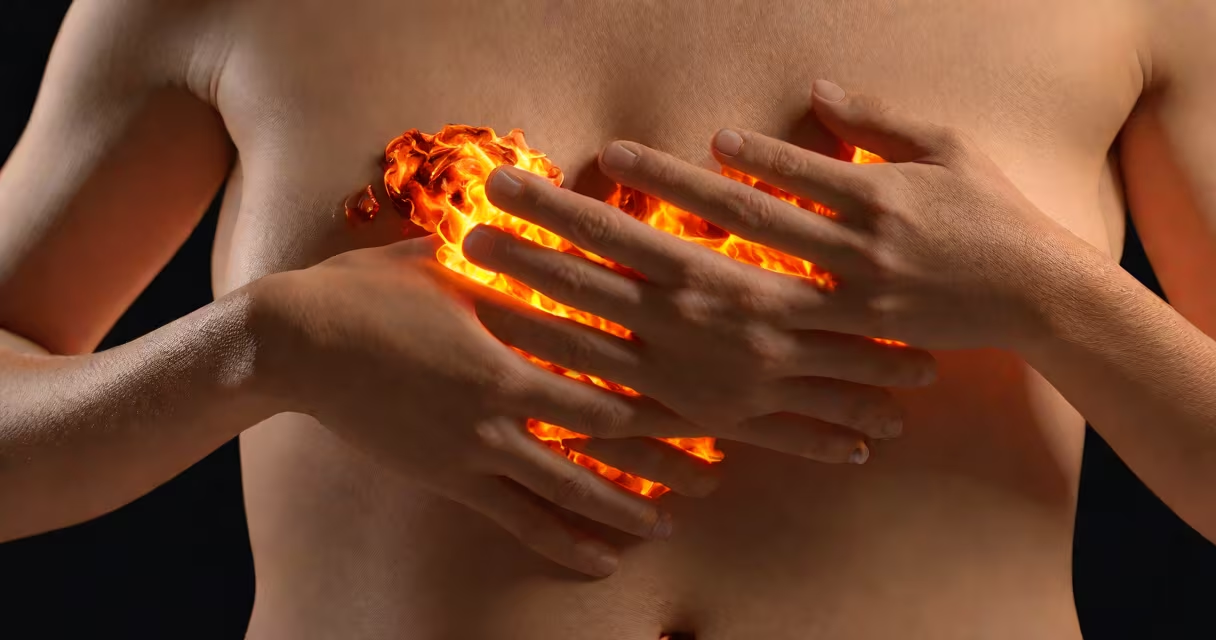
Burning pain below the left breast typically arises from gastrointestinal reflux, musculoskeletal strain, or nerve-related conditions such as intercostal neuralgia. It often feels sharp or hot and may worsen when lying down or bending forward.
This symptom is frequently misattributed to heart issues, but most cases involve non-cardiac origins. The location-just beneath the left breastbone and ribs-points toward structures like the esophagus, chest wall muscles, or nerves running between the ribs. Pain in this region rarely indicates a heart attack unless accompanied by radiating pain to the arm, jaw, or shortness of breath.
According to the American College of Gastroenterology, gastroesophageal reflux disease (GERD) accounts for up to 60% of chest pain cases initially suspected to be cardiac. A 2021 study in Alimentary Pharmacology & Therapeutics found that 42% of patients presenting with left-sided chest discomfort had reflux as the primary cause, even without typical heartburn.
The sensation results from irritation or inflammation of tissues in the upper abdomen or lower chest wall. Acid reflux occurs when stomach contents flow backward into the esophagus, which runs behind the breastbone. The lining of the esophagus lacks protective mucus, making it sensitive to acid. This triggers a burning feeling that can radiate upward and outward, sometimes mimicking heart pain.
Musculoskeletal causes include strained intercostal muscles-those between the ribs-or costochondritis, an inflammation of the cartilage connecting the ribs to the sternum. These conditions often flare after physical exertion, repetitive movements, or sudden twisting motions. Nerve compression, such as from a pinched nerve in the thoracic spine, can also produce localized burning pain.
A 2020 case series published in Journal of Clinical Medicine documented 14 patients with persistent burning pain below the left breast who were initially referred to cardiology. All were later diagnosed with non-cardiac causes: 7 with GERD, 4 with costochondritis, and 3 with nerve entrapment.
Not all burning pain below the left breast stems from the same source. The following table outlines key differences:
| Condition | Typical Sensation | Triggers | Relief Factors |
|---|---|---|---|
| GERD | Burning, rising from stomach to chest | After meals, lying down, bending | Antacids, upright posture |
| Costochondritis | Sharp, localized pain at rib-sternum junction | Deep breathing, pressure on chest | Rest, NSAIDs, heat |
| Intercostal neuralgia | Burning, tingling along rib line | Twisting, coughing, trauma | Topical lidocaine, nerve blocks |
| Muscle strain | Dull to sharp, worsens with movement | Overuse, poor posture | Stretching, ice, rest |
One non-obvious distinction: GERD-related pain often improves when standing or leaning forward. Musculoskeletal pain typically worsens with movement or direct pressure. Neuralgic pain may follow a specific nerve path-such as wrapping around the torso-and can persist beyond acute injury.
Seek immediate care if the burning pain is accompanied by sweating, nausea, dizziness, or pain spreading to the left arm or jaw. These signs suggest a possible cardiac event, even if the pain feels localized.
For persistent or worsening symptoms, consult a healthcare provider. A physical exam can differentiate between muscle strain and inflammatory conditions. Endoscopy may be needed if GERD is suspected. Imaging like X-ray or MRI helps rule out structural issues such as hernias or spinal nerve impingement.
I once evaluated a patient with chronic burning pain below the left breast who had been told "it's just stress" for six months. After a targeted physical exam, we identified tenderness at the second rib's costochondral junction. A diagnosis of costochondritis was confirmed with ultrasound-guided injection. Pain resolved within four days. This case highlights how easily musculoskeletal causes are overlooked.
Many assume that any chest pain must be heart-related. The National Heart, Lung, and Blood Institute reports that only 15-20% of chest pain in emergency departments is due to cardiac causes. Most are benign and originate in the digestive tract or musculoskeletal system.
Another misconception: burning pain below the left breast always means acid reflux. While GERD is common, it doesn't explain all cases. For example, a 2019 study in Pain Medicine found that 28% of patients with left-sided burning chest pain had no evidence of acid exposure during pH monitoring.
Also, women often delay seeking care due to fear of being dismissed. A 2022 survey in JAMA Internal Medicine showed that 37% of women with non-cardiac chest pain reported being told "it's anxiety" before receiving a correct diagnosis. Persistent burning pain below the left breast warrants investigation regardless of gender or age.
Burning pain below left breast is usually not life-threatening but requires accurate identification to avoid unnecessary testing or delayed treatment. Understanding the source-whether it's acid reflux, a strained muscle, or nerve irritation-allows for effective management and relief.